
Planning for logistics access
The European sustainable mobility landscape is undergoing a profound transformation as cities and regions across the continent seek to reconcile increasing demands for efficient logistics with ambitious climate and liveability goals. Two cutting-edge initiatives — the UNCHAIN project, funded under the EU’s Horizon programme, and the MoLo Hubs project, supported through the Interreg North Sea Region programme — have each advanced innovation in urban logistics and mobility. Although they operate under different funding frameworks and regional priorities, their core missions converge on enabling sustainable, people-centred urban systems.
UNCHAIN is a Horizon Europe project enabling seamless cooperation between public authorities and logistics stakeholders. UNCHAIN has developed a suite of data-driven services designed to optimise logistics operations. The services developed aim to optimise urban operations, plan for smart cities, and move towards climate-neutrality. MoLo Hubs, operating within the Interreg North Sea Region, has taken a complementary but distinct approach, integrating logistics and shared mobility services into urban mobility hubs to reduce commercial traffic and make shared mobility more attractive and functional.
Amongst other tools, UNCHAIN develops a monitoring tool that, in real-time, monitors the occupancy status of parking spaces and regulates their use to avoid potential abuse, or tools that support the decision on the most appropriate location for new distribution and consolidation centres. A detailed presentation will be held on the FELU guidebook, a useful tool for planners for the Freight Efficient Land Use process. These Digital tools and services can be used in the planning stage of Mobility Hubs proposed by the MoLo Hubs project, supporting the optimisation of their land-use allocation and the efficiency of their operations.
This session will bring together MoLo Hubs and UNCHAIN to explore complementarities between physical urban logistics solutions and data-driven planning approaches. By combining these perspectives, the session will enable a discussion on how local pilots can inform wider urban freight strategies and how planning tools can support the scaling and replication of hub-based logistics solutions across European cities
Speakers
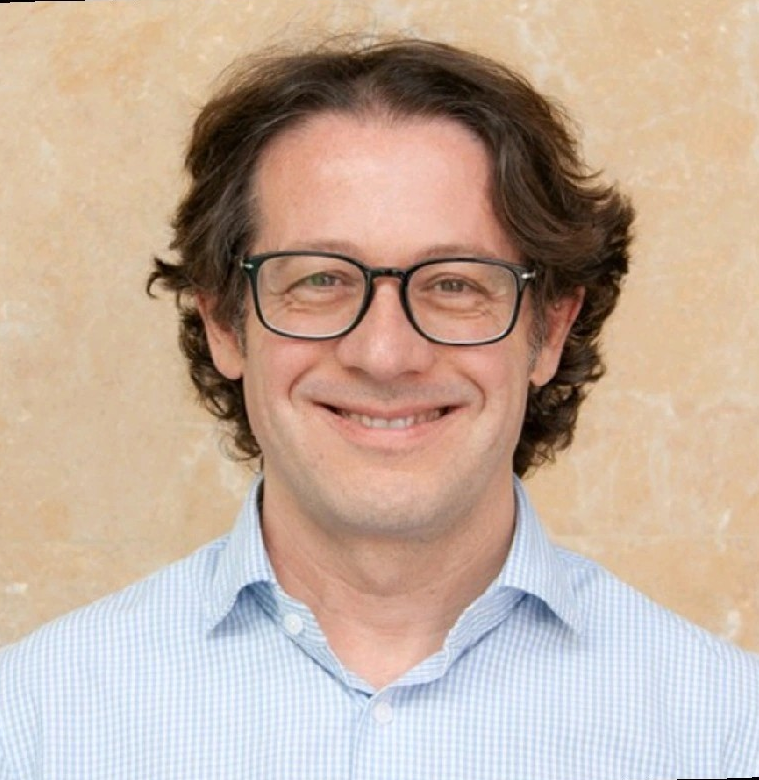
PhD. in Mechanical Engineering, Head of Innovation in Mobility and Smart Cities since 2007 in IBV (Instituto de Biomecánica). His activity has been closely related with the transport sector, involved in EU initiatives like UPPER or USER-CHI. The main focus of its work is the analisys of the interaction between the citizen and the new forms of transportation, its impact and how technology can bring solutions that improve the quality of life of all the actors in the mobility, from drivers to any kind of pedestrian. The last initiatives in which he has been involved are the leadership of the Spanish national initivative MEDUSA (Technology network applied to the development of intelligent solutions for human-centered autonomous driving) and the deployment of the Virtual Reality Laboratory of urban environments IMOLAB.

Melina is an experienced project manager of EU funded and large-scale complex transport and energy efficiency projects, smart cities strategy advisor, mobility strategist, transport planner and user-centric designer. Over 16 years’ experience in the transport industry, working for UK and international projects, IFI funded projects related to mobility business models, public transport systems, EV infrastructure, sustainable transport and large scale urban development projects and masterplans. In her current role, Melina leads the Access Cluster at POLIS and co-coordinates the Urban Nodes taskforce.
Daniel coordinates the Parking Working Group at POLIS and is involved in several EU-funded projects addressing topics such as new and shared mobility services, mobility hubs, sustainable urban logistics, and alternative fuel technologies.
He holds a bachelor's degree in Political Science and a joint master’s degree in Urban Studies from Vrije Universiteit Brussel (VUB) and the Université Libre de Bruxelles (ULB). He has worked with the Colombian government on social and infrastructure projects.
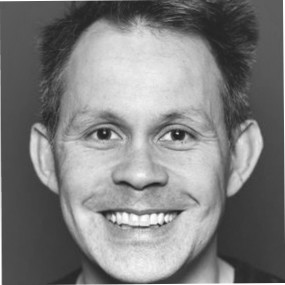
Frank is an experienced projectmanager with a focus on getting things done. His work varies from roads and infrastructure to innovative pilots like the Park + Switch hub for service logistics. He has been working for the city of Amsterdam for 15 years.