
Where do robotaxis go when they’re empty? Part 2
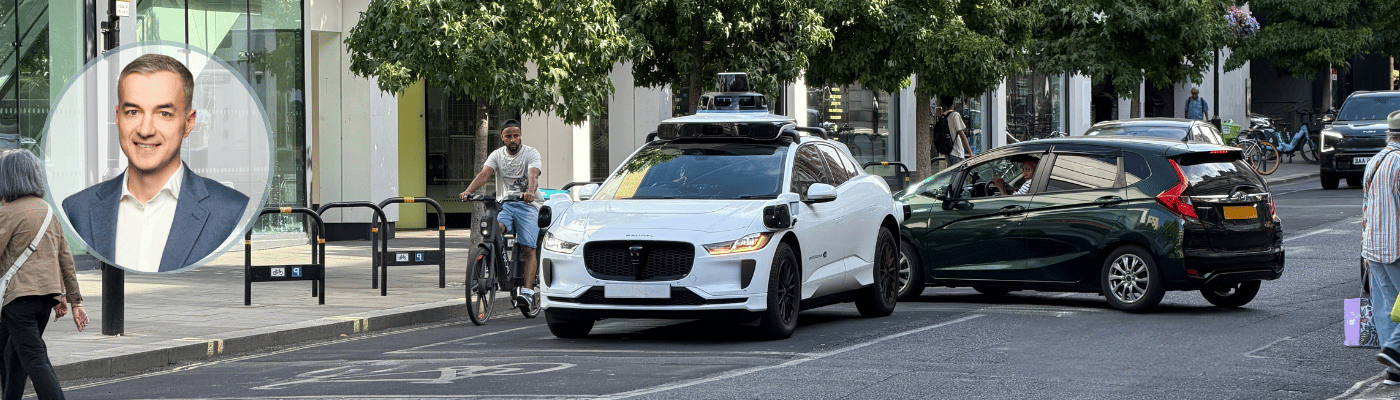
Is parking the right word when we're talking about autonomous vehicles? Will we eventually see depots rather than car parks? Or will infrastructure have to be recreated for autonomous vehicles to ‘stage’ while they're not being used? Eugene Tsyrklevich, Chief AI Officer of parking conglomerate Arrive, offers the parking sector’s perspective on the great autonomous vehicle debate.
In part one of this feature, we looked at the issue of hyperlocation from the perspective of two autonomous vehicles experts, Dr Nick Reed and Bern Grush. They offered a fascinating insight into the inner workings of ‘staging’ - effectively where robotaxis go, and what they do, while they wait for passengers to pick up.
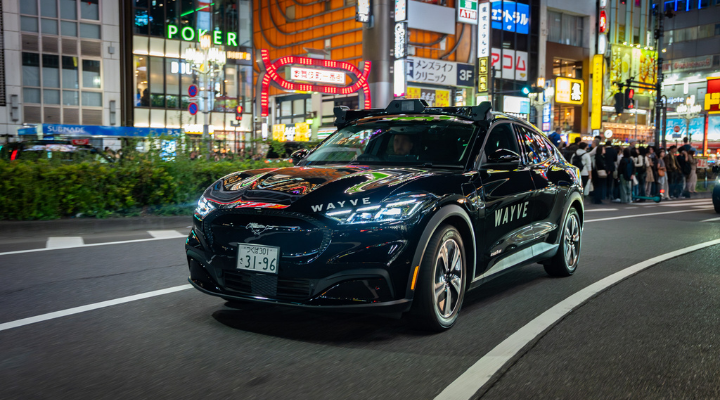
In part two we look at what staging means for the parking sector. Will there be floors of multi-storey parking structures across Europe that are solely for driverless Waymos and Wayves and Ubers to wait until they’re summoned? What does that mean for the parking operator who could very easily see that as 100 spaces that aren’t being paid for by customers… unless the AV operators pay for the use of that space and will they be wanting to do that? And will the car park operators want their valuable real estate to become, more or less, a robotaxi depot?
“A depot and a car park are fundamentally almost the same thing,” poses Tsyrklevich, throwing the question straight back.
“In that a depot is a place where first and foremost you park. Of course, then you'll be charged, assuming it's an electric vehicle as well, potentially cleaned and so on. I think at the same time, if you have a provider that has a single depot in the city and assuming that depot is outside the city, if you have a 10-minute gap between a pickup and a drop off, they aren’t going to be driving to the depot only then to come back to the city.”
Parking’s here to stay
From the technical perspective the autonomous vehicle can keep driving around the streets waiting for its next job, he says, but the reality is that the amount of traffic and congestion this will cause will make the system unworkable and therefore it will regulated out of existence by the city.
“From the technical perspective the autonomous vehicle can keep driving around the streets waiting for its next job, but no city will allow that to happen”
“No city will allow that to happen! It’ll be cost-prohibitive because driving around is not something you can do for free. There's a cost per mile, whether it's in energy, whether it's tyre cost, and so on, not even accounting for externalities which you don't pay for as a fleet operator. You still have the same problems that parking solves today, namely the ability for you to leave the vehicle for a certain duration. It might look different, but parking isn’t going away.”
So how does Tsyrklevich envision the car park of the future? A mix of human- and computer-piloted vehicles using the facility to store and charge themselves… but isn’t that what we have now?
“I think those functions will have to carry on being carried out, and I think this is where Arrive comes in, as both parking and charging are the fundamental cores our business. We facilitate payments for both parking and charging in 1000s of cities around the world. And not only do we facilitate those payments, we also know a lot about those cities. So we know where those parking spaces are, we know what those charges are today, we know what the operating hours are of those locations, and we know their availability and the likelihood of you to be able to find an available parking space or an available charger.”
“We know where those parking spaces are, we know what those charges are today, we know what the operating hours are of those locations, and we know their availability and the likelihood of you to be able to find an available parking space or an available charger”
A foot in both camps
The aim of the operators is, clearly, to run a good and ultimately profitable service, and the cities want to decrease congestion. Those two elements can work together, and that's where Arrive see themselves: having the data, and the relationships either side to create the scenarios where the operator is incentivised to stop the vehicle and reduce the congestion and then pick up the customer when it's available.
“The cities need the data. They need the insight that we have,” says Tsykrlevich, who was one of the original founders of Parkopedia. “I spent a lot of time collating and understanding parking availability, opening hours, all that kind of stuff. So that really is right at the heart of the robotaxi question.
“The way we see the future is with us working with both the fleet operators and the cities to essentially continue providing a similar service, but one that perhaps in some of the use cases is now consumed by the feed operators rather than by the humans,” he suggests.
“Because assuming 100% of our cases are used by humans today, although it’s clearly not 100%, then in the future a percentage of that will be used by robots. And the reason why I said it's actually not 100% even today is because our services already are used by some fleets, not autonomous fleets, but by certain fleets. For example, in certain cities where they are services like Zipcar or Drive Now, and those services have to pay for parking and in certain cities we provide that service where the vehicle automatically pays for parking using Arrive services. “The fundamental problem,” he concludes, “is the same.”
Exit… stage left
The staging debate - or where should robotaxis go when they are empty - essentially boils down to a trade-off between creating, or allocating, more parking spaces for autonomous vehicles, and having to contend with empty, driverless cars patrolling the streets awaiting ‘the call’, not that it is an actual call, of course. Tsyrklevich concurs.
“I think it depends on who you ask. For fleet operators, the trade-off, of course, is to be able to serve customers as quickly as possible, because if there's multiple fleets operating in the city, which is where this is going, then the faster you can get to the pickup, the more likely you are to get that job.
“For fleet operators, the trade-off is to be able to serve customers as quickly as possible, because if there's multiple fleets operating in the city then the faster you can get to the pickup, the more likely you are to get that job”
“So, from the operator perspective, the trade-off is having sufficient density of vehicles in the city to be able to fulfil any job that comes about, and that might require them to have more vehicles than perhaps that they would like, purely to enable fast pickups anywhere in the city,” he explains.
“From the city perspective, the trade-off might look very different, right? Having the streets jammed full of robotaxis just so they can serve customers quickly is unworkable. So I don't see the cities allowing cruising for business - there will be some kind of limits. The trade-offs are different.”
Share your story
Do you have an innovation, research results or an other interesting topic you would like to share with the professionals in the infrastructure, traffic management, safety, smart mobility and parking industry? The Intertraffic website and social media channels are a great platform to showcase your stories!
Please contact our Sr Brand Marketing Manager Carola Jansen-Young.
Are you an Intertraffic exhibitor?
Make sure you add your latest press releases to your Company Profile in the Exhibitor Portal for free exposure.
Get up to speed on the mobility industry - our newsletter straight to your inbox!