
.png?h=400&iar=0&w=1400)
Seeing is believing: How Project MARTHA is revolutionizing the airport bus experience
Ground-breaking Project MARTHA is a pioneering initiative in the Netherlands focused on deploying full-size, SAE Level-4 autonomous electric buses Rotterdam The Hague Airport. Visitors to Intertraffic Amsterdam 2026 can sample the experience for themselves as the consortium partners will be a running a demonstration of the vehicles’ capabilities, as Ahmed Hashish, Dutch Automated Mobility's director explains.
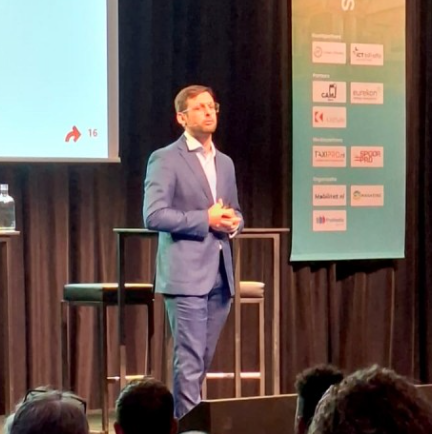 Ahmed Hashish Director CAM Shuttles
Intertraffic: In simple terms, Ahmed, how do these autonomous buses work and what problem are they solving?
Ahmed Hashish (AH): Firstly, Project MARTHA is a Dutch acronym that stands for Metro Aansluiting Rotterdam The Hague Airport, which translates to Metro Connection Rotterdam The Hague Airport. This is a bus service with autonomous vehicles, which I believe is the first in Western Europe, certainly first in the Netherlands in general, with autonomous vehicles. It's the first one where we are actually using it as a service with full-size buses, which makes us very proud. It's a connection between the airport and the closest metro station, which is called Meijersplein. It's a route of about two and a half kilometres each way in mixed traffic on public roads. We have two buses on a fixed schedule every working day between 10am and 4pm at the moment, and one of the goals of the project is to take the safety driver out of the vehicle.
''We have two buses on a fixed schedule every working day between 10am and 4pm at the moment, and one of the goals of the project is to take the safety driver out of the vehicle''
Intertraffic: How did the project come about?
AH: Remco Derksen, founding father of this project, started 10 years ago as an advisor to see how we can make a better connection with the airport in terms of public transport. There were a couple of options, and this seems the most viable and cheapest option I would say in a sense and also scalable. Since then, we have been working on getting this off the ground, meaning getting the right partners involved. As well as us, Dutch Automated Mobility (DAM), we have Rotterdam The Hague Airport, the location based owner, Metropolitan Region Rotterdam, HTM, RET, the municipality of Rotterdam and EIT Urban Mobility. We have been working on what do we actually need to do to get this up and running. What we have noticed with self-driving pods is that, yes, they have potential, but it's not going to be a scalable product that helps us in the challenge that we see today in public transport, which is an increasing shortage of qualified drivers. I believe there are about 100,000 driver vacancies in Europe, according to the IRU.
''What we have noticed with self-driving pods is that, yes, they have potential, but it's not going to be a scalable product that helps us in the challenge that we see today in public transport''
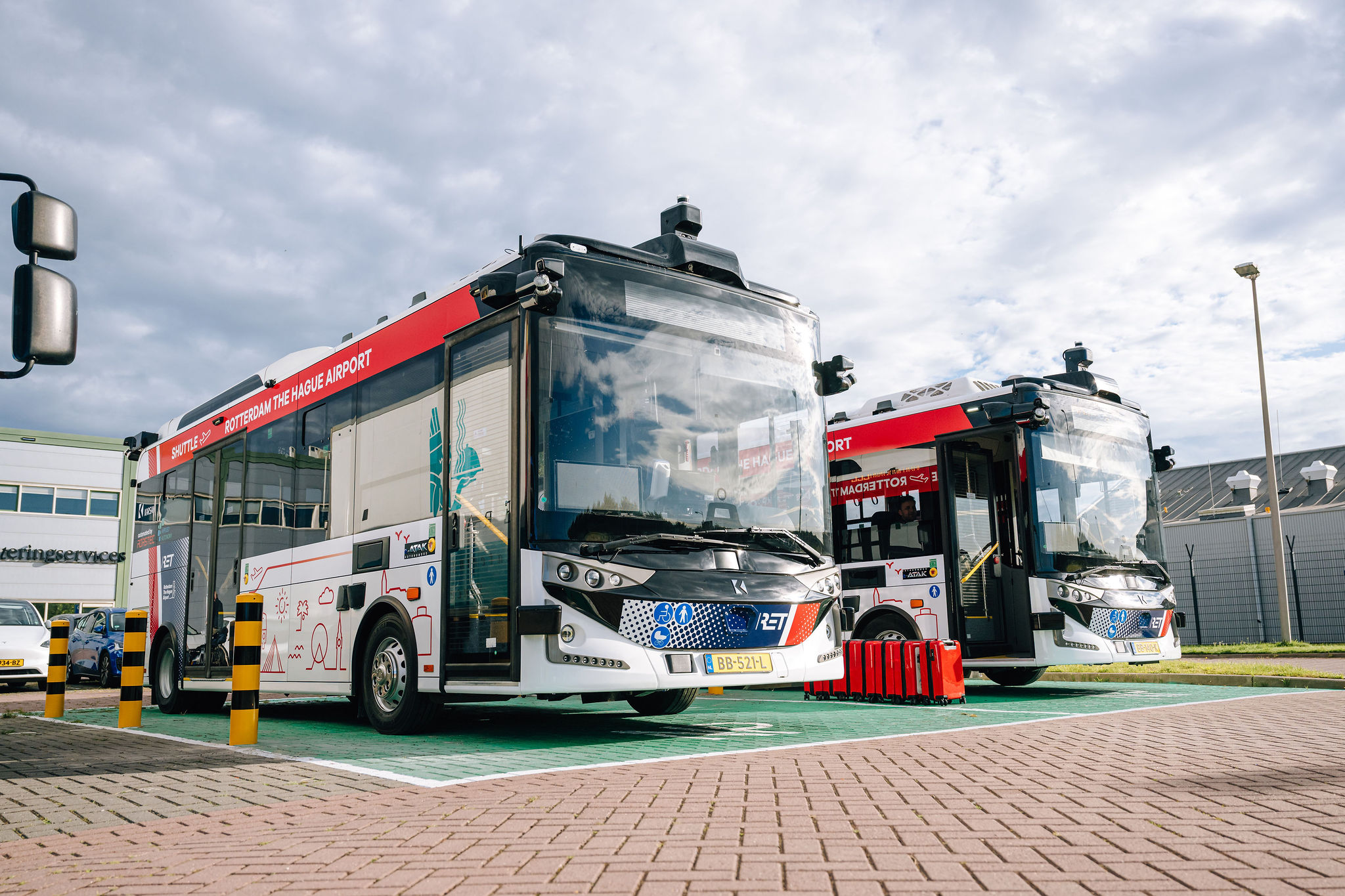
David Stegenga
Intertraffic: So, the shoratge of qualified drivers is the problem it’s solving!
AH: Absolutely. We must find solutions and we see that AVs could be a potential solution to that problem. We're not saying it's going to replace the entire, existing public transport fleet, but we see it as a complementary add-on. Driving in locations where drivers are not necessarily needed because the technology can handle it. And it makes sense also where there is a large volume or demand responsive transport.
Intertraffic: Project MARTHA began life in 2020 – can you take us through the timeline up until now when Intertraffic Amsterdam visitors can take a trip around the grounds of the RAI in an automated bus?
AH: We put all the requirements that we had learned from our operational experience with the pods together with the fact that we wanted something that complies with automotive-grade quality levels, which was not the case for the pods. So all that resulted in the 80-page tender. We managed to find a consortium of suppliers that were ready, willing and able to fulfil all the requirements that we set.
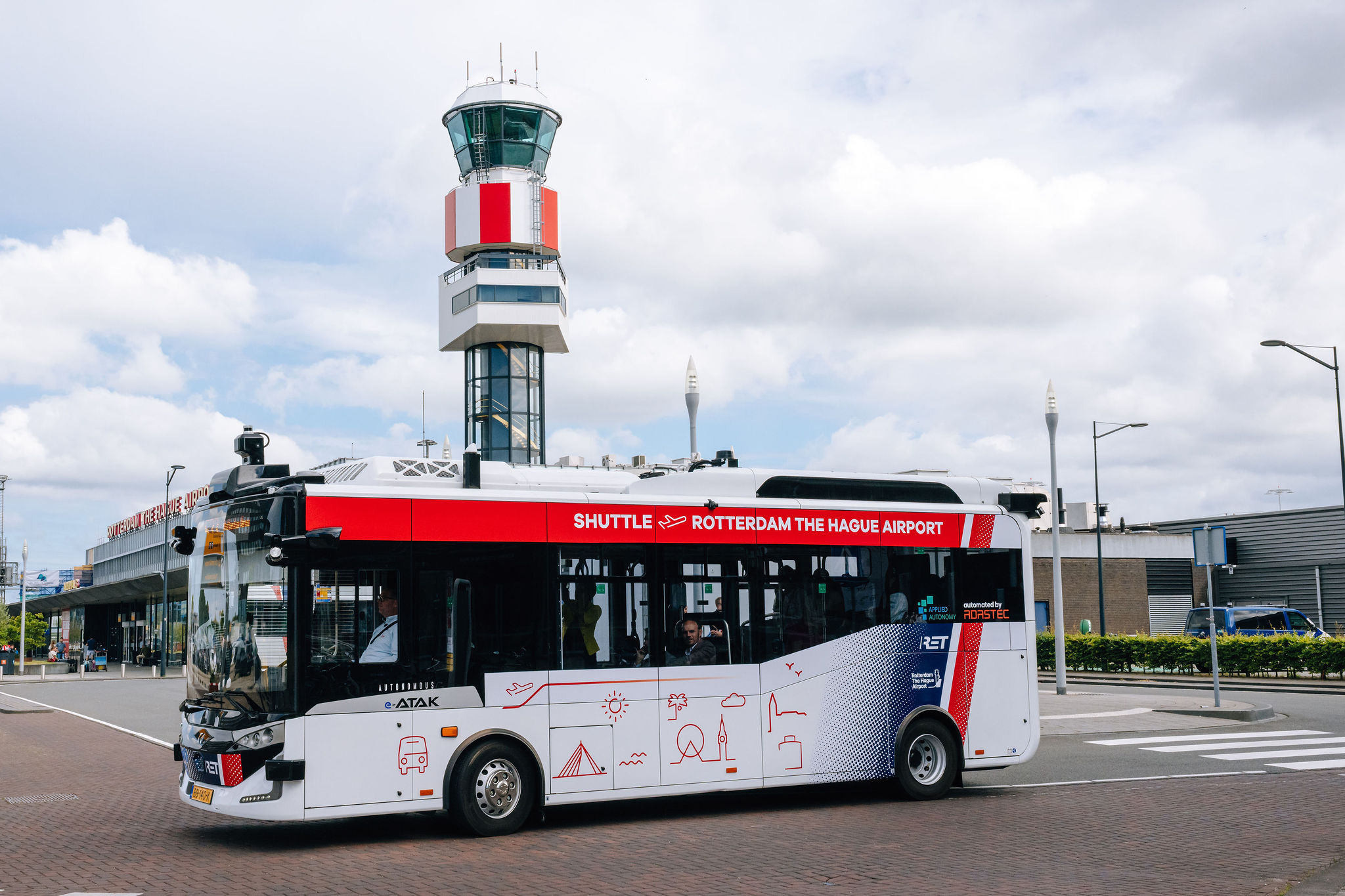
David Stegenga
The consortium consists of Karssan, the bus OEM and ADASTEC, the supplier of the autonomous driving system and Applies Automomy, the fleet management system provider. Katsan and ADASTEC have a very close collaboration that makes it possible for them to factory-fit the autonomous driving systems on the production line, which is completely different to previous manufacturers, where generally what happens is they buy a regular vehicle and then they retrofit their own system sensor stack and their own hardware and software to it. Well, this is not the case here. This is all manufactured and it comes off the production line as an self-driving bus. These three partners together give us the potential to work on our development process, within this project, one of them being not needing a driver behind the weel anymore. That's by far the most important one. The second one is being able to handle mixed traffic situations and drive at a maximum speed of 50 km/h. We are currently driving 40 km/h. Then there’s the question of how can we integrate these autonomous buses in existing public transport systems, such as payment systems, ticketing systems, planning and dispatching systems, but also behind the scenes, how can public transport operators actually monitor the fleet and how can they control or intervene if that is actually needed?
''There’s the question of how can we integrate these autonomous buses in existing public transport systems, such as payment systems, ticketing systems, planning and dispatching systems?''
Intertraffic: It’s clear, then, that the technology works. What’s the next step?
AH: We are working towards a viable business case and a value case that is accepted by passengers for the daily commute and that results in cost savings for public transport operators. That is our goal - not necessarily to make public transport cheaper or save costs, but to provide better public transport for our passengers. When we started the project, we thought we would be happy if we were able to drive on public roads at 25 km/h. Now we are achieving 40 km/h with a very high level of autonomy – yes, there's a driver on board, but they only have to intervene maybe once or twice every week or so. The system handles all the different mixed traffic situations, regardless of the weather conditions or conditions.
Intertraffic: What has been the public reception to the autonomous airport buses in Rotterdam?
AH: I have to say it’s been a really big and pleasant surprise. We expected them to be nervous, but most people don't even notice that it's an autonomous bus. They enter the bus, they check in with a card, they sit down, they have their phone in their hand, headphones on, and they just sit there as they would on a human-driven bus. Nothing special, nothing particular. And then they get off. They don't notice that they just had a ride in a self driving bus Until we tell them. That's when they finally start noticing all the different things. Because it's not that visible from the outside, and definitely not that visible from the inside. But it needs a clear eye to understand that there is a difference between, let's say, our bus and a regular bus. And I think that that really stands out. So that is what we would like to promote, that most of the passengers experience it as a typically mundane ride. We believe in the phrase ‘seeing is believing’. That's our philosophy.
''They enter the bus, they check in with a card, they sit down, they have their phone in their hand, headphones on, and they just sit there as they would on a human-driven bus''
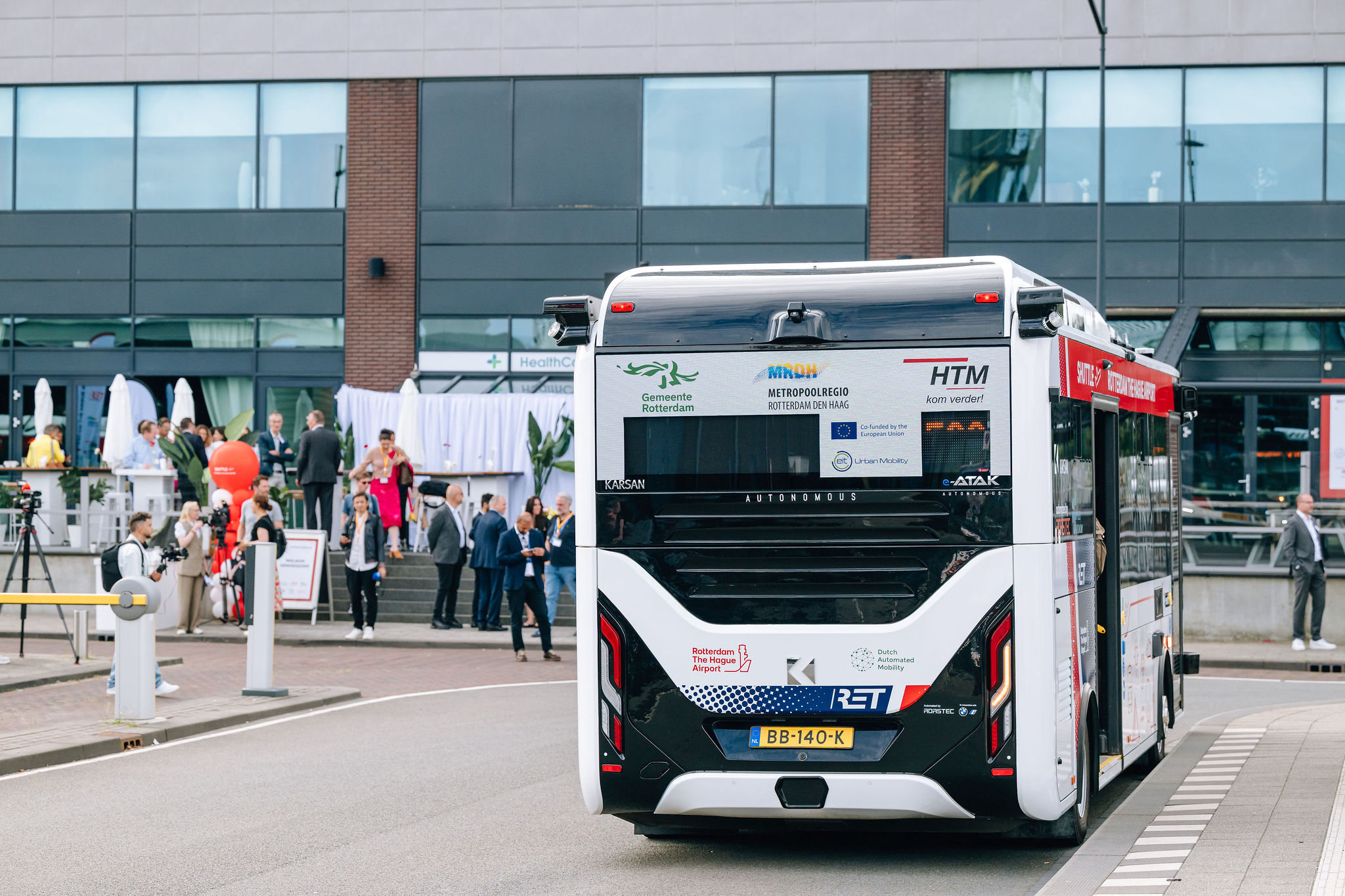
As I mentioned this has been a 10-year journey and I think I am right in saying that the project has been on the verge of shutting down maybe six or seven times for different reasons. But we managed to pull through and get it where it is today, and we firmly believe that it can even go beyond where we are today. But that's really because we had a group of believing partners that said we're going to do this no matter what.
Share your story
Do you have an innovation, research results or an other interesting topic you would like to share with the professionals in the infrastructure, traffic management, safety, smart mobility and parking industry? The Intertraffic website and social media channels are a great platform to showcase your stories!
Please contact our Sr Brand Marketing Manager Carola Jansen-Young.
Are you an Intertraffic exhibitor?
Make sure you add your latest press releases to your Company Profile in the Exhibitor Portal for free exposure.
.png?h=628&iar=0&w=1200)
Get up to speed on the mobility industry - our newsletter straight to your inbox!