
.png?h=400&iar=0&w=1400)
Are driverless vehicles the answer to driver shortages?
The transport and logistics sector is facing growing driver shortages, putting pressure on efficiency, costs, and reliability. At the same time, Connected and Automated Vehicles (CAVs) are emerging as a potential solution to help bridge the widening gap. In what promises to be a must-attend session, Einride’s Zeljko Jeftic and Nourie Boraie, together with US-based experts Richard Bishop and Randy Iwasaki, will explore how driverless trucks can realistically address workforce challenges. Drawing on practical experience, policy insights, and ongoing deployments, the discussion will focus on the opportunities, limitations, and conditions needed for CAVs to become a viable part of the transport system.
“In Europe, particularly the Netherlands, and in the US, we see a strong interest from transport buyers in going beyond what they've done up to now,” says Zeljko Jeftic, Director of Autonomous Electric Transports at Swedish electric autonomous freight innovator Einride, Europe’s only AV freight unicorn.
“Because many of our customers already have highly automated warehouses, they have cutting-edge IT systems, their logistics efficiency is already at quite a high level – with the exception of the transport part. There's a really big drive from a reliability point of view to see how they can automate the transport leg of it as well. Because, as we all know, there's a lack of professional truck drivers on the market.”
This is a deficiency that is forecast to get much bigger in the future – it is estimated that by 2028 (only two years away) there will be a shortage of over 750,000 European truck drivers.
''Many of our customers already have highly automated warehouses and cutting-edge IT systems and their logistics efficiency is already at quite a high level – with the exception of the transport part''
“All the customers that we are in discussion with right now are keen to know how they can start with autonomous transport. The transport needs vary from customer to customer,” Jeftic explains, “but they're all asking us about private ground transport, public roads within industrial areas with a mix of transport with other vehicles, other types of roads, motorway transport and so on. We are having dialogues about all of these scenarios. Not everything is going to come at once, but gradually we are preparing for these deployments in conversation with major shippers, ports and public bodies. Therefore, I would say this is really coming from the customer’s interest, because they would like to see more efficiency in their transport operations.”
ELECTRIFYING THE SUPPLY CHAIN
Ahead of the Intertraffic Summit session in which Jeftic and his fellow speakers will address the topic of whether autonomous vehicles can help to answer the driver shortage conundrum, there’s a sizeable, elephant-shaped presence in the room. Why Einride?
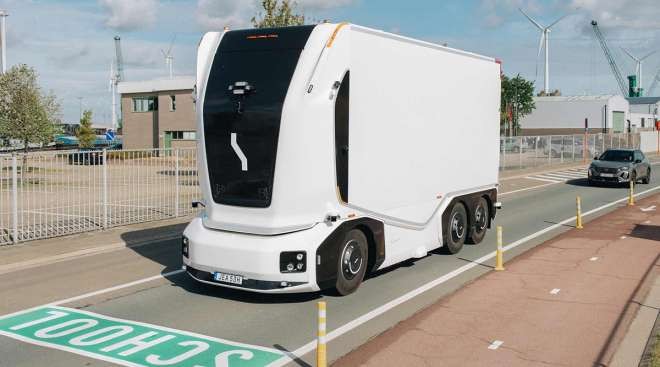
“Why are we so different compared to other companies that are doing this? Well, the fact is that we have one of the larger fleets in both Europe and in the US, when it comes to electric heavy-duty trucks. We are already helping companies like Heineken, Mars and many others to electrify and decarbonize their transport flows,” he responds.
''We're already helping companies like Heineken, Mars and many others to electrify and decarbonize their transport flows''
“And through these operations, we're also learning a lot about what it takes to automate such transport flows as well. We see automation as a gradual path of increasing efficiency, which very often starts with electrification. And it works. We were the first to deploy a level 4 autonomous truck in Belgium with the Port of Antwerp, and now we’re planning new ways to move towards more deployments with our whole ecosystem.”
We see so much buzz around passenger autonomy, around robotaxis. Obviously, anything more consumer-focused tends to dominate the headlines. But when we're looking at things from the policy perspective, freight autonomy is so value-aligned with the goals and visions of the European Commission and regulatory bodies across member states, particularly right now when the focus for Europe is on competitiveness and economic resilience.”
TAKING STOCK
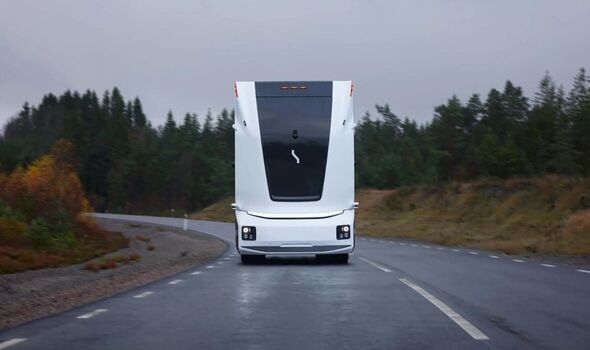
Freight autonomy is, after all, about keeping shelves stocked and absorbing any sort of disruptions or disturbances to the supply chain. Automating the way in which goods get from their point of entry to a warehouse and onwards to their commercial destination certainly makes a lot of sense if the technology is ready, which it clearly is.
“We all remember the empty shelves during COVID. With drivers retiring and young people choosing other paths, we're expecting the commercial driver shortage to increase exponentially in the coming years and with geopolitical shifts I think everybody's holding their collective breath for what may come,” he warns.
“We see an incredible importance around freight autonomy, filling in a space and helping to fortify the supply chains in Europe. And I think that particularly in the Netherlands and in the Benelux region as a major freight corridor for Europe as a whole, there's nowhere else where doing this is more important. Right now, governments are acutely focused on balancing regulation with innovation, and particularly in this case when it comes to securing supply chains and making sure goods keep moving, it’s vital.”
''Right now, governments are acutely focused on balancing regulation with innovation, particularly in this case. Securing supply chains and making sure goods keep moving is vital''
THE LOGISTICS OF LOGISTICS
Nourie Boraie, Einride’s Senior Vice President for Global Affairs and Safety, adds that the company’s real-world experience of AV operations has given them an advantage when it comes to assessing what’s possible and what’s… not impossible, but less of a priority.
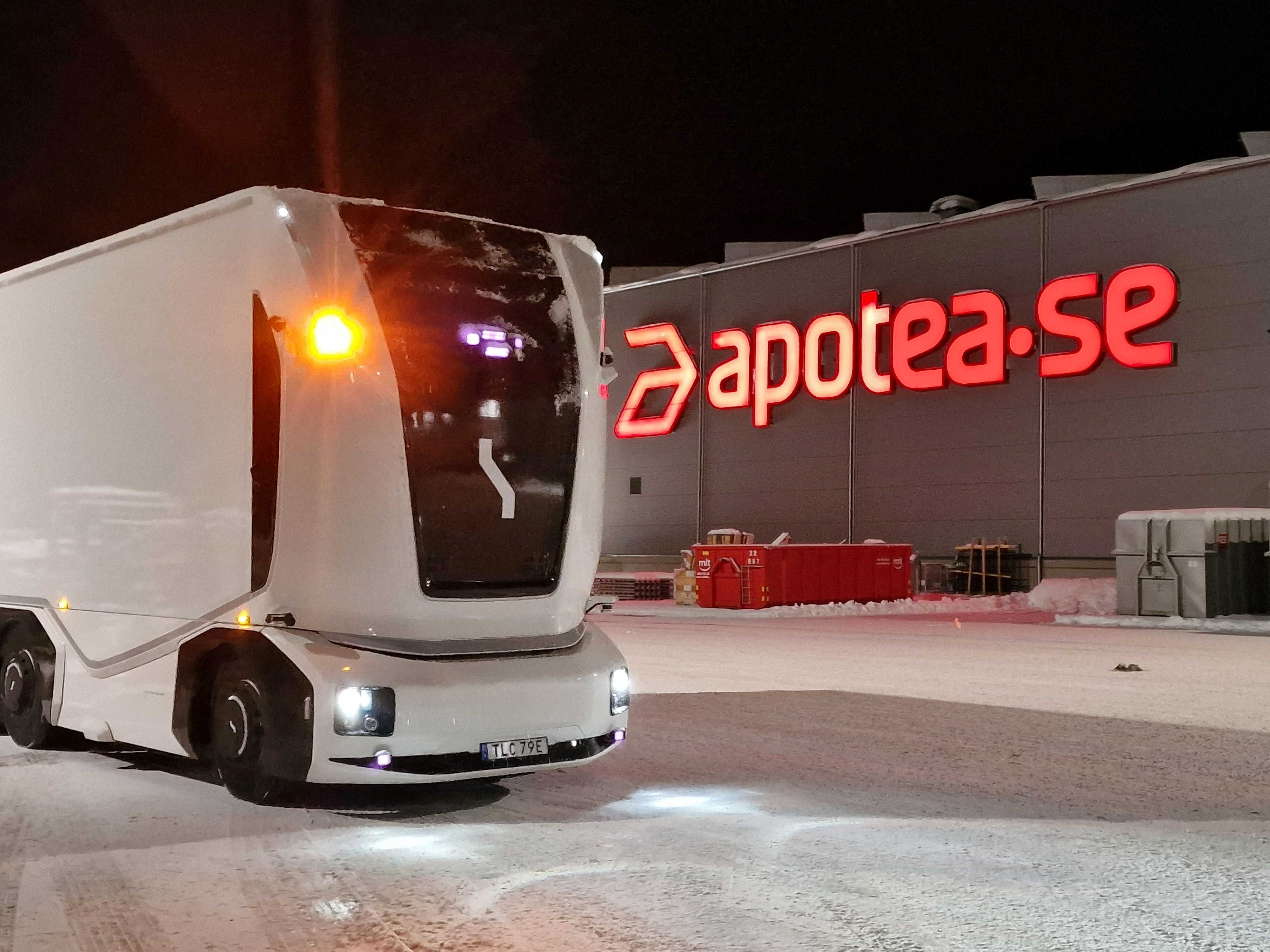
“We are one of the very few companies that have experienced what it takes to operate autonomous vehicles in regular logistics corridors for two or three years now, both in the US and in Europe. In that time, we have learned a lot of what works and what doesn't work, and we are willing to share some of those experiences with the audience,” she explains.
''Everything around you has been moved by truck. Everything you're looking at, everything you touch, everything you interact with has been on a truck at some point''
“No one thinks that trucks are particularly sexy. Robotaxis tend to steal focus, but the conversation on freight is so much more practical because literally everything around you has been moved by truck. Everything you're looking at, everything we touch, everything we interact with has been on a truck at some point. And not only that, but critical infrastructure as well. Everything comes down to freight. And when it works, no one notices, but when supply chains stop, communities freeze.”
Zeljko Jeftic concludes with a thoughtful message.
“What I would want anyone to take away from the session is to think about how freight autonomy can actually fortify our economy, our supply chains, and make a much more resilient Europe at a time when everyone is focused on how to compete.”
DRIVER SHORTAGES VS. DRIVERLESS SOLUTIONS: CAN CONNECTED AUTOMATED VEHICLES CLOSE THE GAP?
With Zeljko Jeftic (Einride), Nourie Boraie (Einride), Richard Bishop (Next Generation Mobility) and Randall Iwasaki (Iwasaki Consulting Services)
Wednesday 11 March 2026, 10:00 - 10:30
Summit Theatre 3
Share your story
Do you have an innovation, research results or an other interesting topic you would like to share with the professionals in the infrastructure, traffic management, safety, smart mobility and parking industry? The Intertraffic website and social media channels are a great platform to showcase your stories!
Please contact our Sr Brand Marketing Manager Carola Jansen-Young.
Are you an Intertraffic exhibitor?
Make sure you add your latest press releases to your Company Profile in the Exhibitor Portal for free exposure.
Get up to speed on the mobility industry - our newsletter straight to your inbox!