
Nowhere to hide
Why it’s important to stay visible if you’re waiting for a robotaxi… and other myths.
Autonomous vehicle safety expert Prof Siddartha Khastgir’s address to the London Assembly in June featured something a revelation. If you are wearing dark clothing on an unlit street at night, don’t necessarily expect the robotaxi you’ve ordered to spot you. This, however, is not quite the case… and that isn’t exactly what he said.
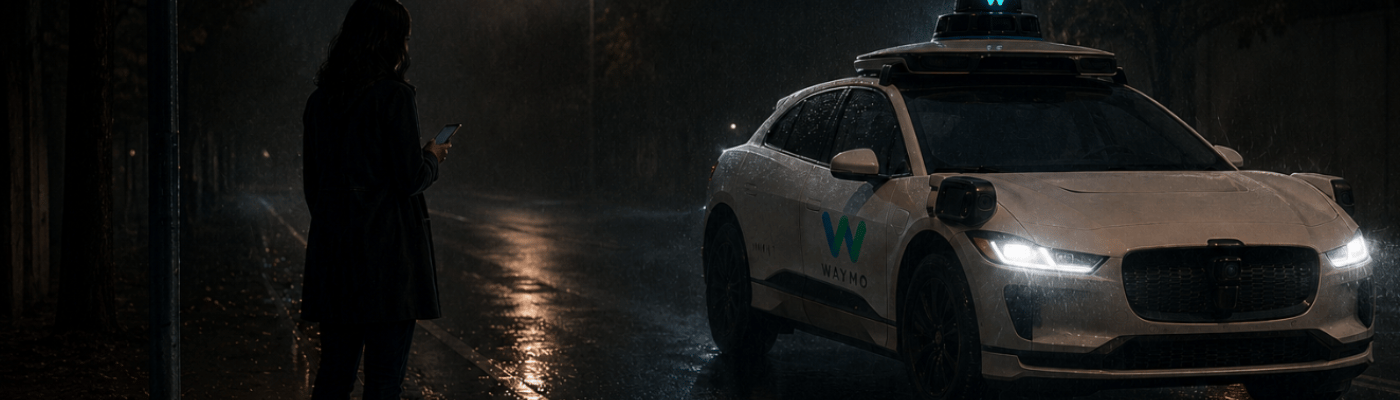
Imagine this scenario. It’s 10pm. You have ordered a driverless vehicle to take you from the venue of your evening meeting to the train station. It’s dark (it’s not in Scandinavia in the summer, so it’s dark at 10pm), it’s raining, the street is particularly well lit, it was a serious meeting so you are wearing a dark suit with a dark shirt and dark shoes and you are carrying a dark rucksack. Your phone tells you that your “robotaxi” will shortly be arriving to take you to your destination. Through the rain you spot a car coming down the street with its headlights on and you can clearly make out the extemporaneous equipment on its wings and roof that marks it out as the robotaxi you ordered. It approaches where you are standing… slows down but doesn’t stop… and drives away.
For all the cutting-edge automotive, radar and lidar technology on-board the autonomous vehicle in question, you hadn’t considered something glaringly obvious. You were, to all intents and purposes, invisible to the car. It simply couldn’t see you. The solution is simple, right? Wear an orange jacket. Or luminous yellow shoes. Simple, maybe… but hardly practical, particularly if you hadn’t planned on taking a taxi of any kind, let alone a driverless one, so therefore hadn’t given any thought to bringing or wearing something brightly coloured.
In the dark?
So why might a robotaxi struggle to detect a pedestrian? The answer (or one of them) is quite a stark realisation. AVs are approximately 20% more likely to detect adults than they are to detect children, according to research from King’s College London and, just as crucially, they are around 8% more likely to detect people with white or lighter skin than they are people with darker skin tones. But the truth is - that doesn’t mean that you’ll be left on the street, cursing your sartorial choices.
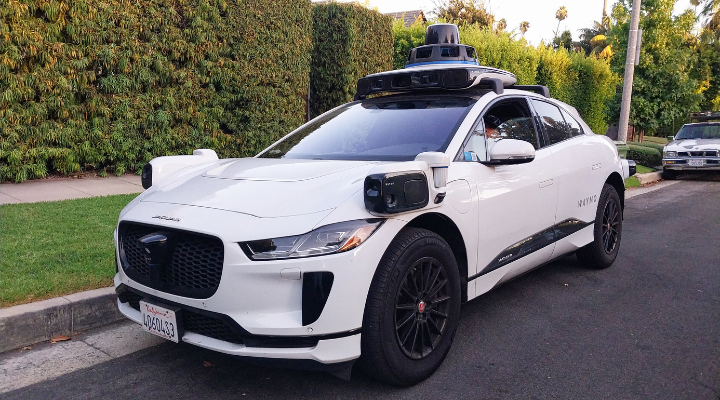
“We have experimental evidence from our collaborators in Canada who have shown to us that, depending on the clothing of the pedestrian, the sensors may or may not detect them - winter clothing could be part of this,” says Professor Siddartha Khastgir, Head of Safe Autonomy at Warwick Manufacturers Group (WMG), University of Warwick.
“What I said to the London Assembly was that this is an issue people might think exists, and in the rudimentary systems of mid-2000s it might have been an issue, but the regulators and the industry as a whole is absolutely on top of it now,” he says with confidence.
“What I said to the London Assembly was that this is an issue people might think exists, and in the rudimentary systems of mid-2000s it might have been true, but the industry is absolutely on top of it now”
“The regulators have ensured that it is not the case in the systems that do get deployed in a commercial product, and there are various mechanisms of doing that right now. So one of the things that is fundamental to these systems is they are driven by artificial intelligence. The performance outcome of these systems would be a function of the training and the testing data sets that are being used for their development. What we need to ensure as an ecosystem, and also that this is required by regulation now, which was adopted last month at the United Nations, that the developer has to show the evidence that the training data sets that have been used for these models are representative of the deployment area they're going to operate in. We can’t just say ‘we have people with dark complexion’, but actually provide a formal proof or a formal engineering evidence base as to how they are making a claim in terms of the different types of clothing, complexion, hairstyle, and so on.”
“We can’t just say ‘there are people with dark complexion’ - we have to actually provide a formal engineering evidence base as to how they are making a claim in terms of the different types of clothing, complexion, hairstyle and so on”
Location engaged
AV engineers have put thousands of hours of work into ensuring our opening worst-case scenario resembles anything approaching reality, as Prof Khastgir is at pains to explain that the vehicles’ have undergone what amounts to an intensive training program.
“When you are waiting for a robotaxi, your location is already shared, and it is your duty as a passenger or the person who's called the robotaxi to be in the position where the robotaxi is supposed to be. It's very much like how Uber works. You put a pin where you want the car to come to, and the car will go there.
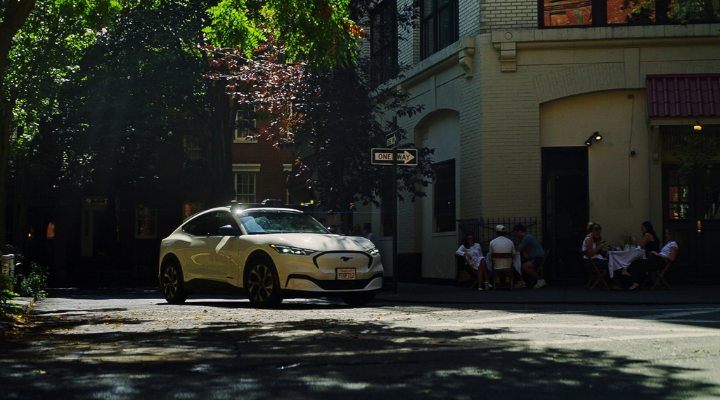
“The other part of the question is that how do you train them to detect pedestrians in shadows or in dark clothing? But that essentially is part of the evidence base. We've done a UK Government national funded project, together with a leading AV developer called Wayve, and we developed a methodology called OASISS, which stands for Operational Design Domain Based AI Safety in Autonomous Systems. This provides you with a mechanism to show that from an engineering evidence perspective, that your training data set and your testing data set is representative and complete about where you're going to operate your systems, and that is precisely the reason why somebody who has been operating in Phoenix, for example, cannot tomorrow rock up in London as the two cities need different data sets.”
Machine training, machine learning
Moving slightly away from the “perceived bias” of autonomous vehicles not recognising dark colours (of clothing or indeed skin), leads neatly into another question about training. The mainstream press, which seems to be sceptical as to the benefits of driverless technology, never misses an opportunity to run a negative story on driverless cars - be they getting lost or trapped in a cul-de-sac (not that that was a problem with the self-driving technology, as was not widely reported), or accidentally encroaching in to a live crime scene. Is the training that’s required to avoid these incidents becoming ever-more newsworthy in any way similar to the training they need on order to spot a black person in a black tracksuit on a dark street in San Francisco or Antwerp?
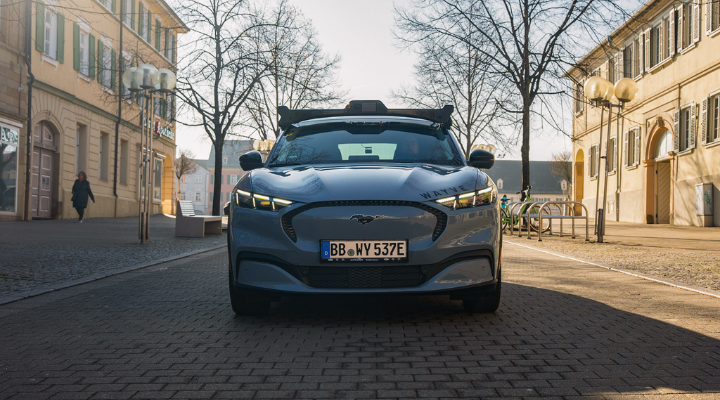
“I would say the underlying machine learning or the artificial intelligence model remains, but the type of training you would give and the development process would be slightly different,” explains the Professor, who is widely hailed as one of the world's leading experts on autonomy.
“So, for example, which streets you can go down and which streets you cannot go down is something different. It's part of the underlying routing programs that these vehicles will have. Some organisations use underlying maps, so it will be part of those maps. Some organisations don't use maps and they have another mechanism of routing their vehicles, but essentially it's part of the development process itself in terms of training.”
“In terms of training, some organisations use underlying maps, but others don't use maps and they have another mechanism for routing their vehicles, but essentially it's part of the development process itself in terms of training”
Hit or myth
So that clears that up. Siddartha Khastgir seems to have a second career on the go. Not only is he a Professor at WMG (Warwick Manufacturing Group) University of Warwick and an award-winning automotive engineer, he is also a very accomplished mythbuster.
What’s next for him?
“We've got loads of exciting projects in my role. I lead the research on safe autonomy, so that is autonomous driving, robotaxis, driverless cars, aviation drones, as well as autonomous shipping. We work across all three transport modes. What gets me up and running every morning is the fact that there is still work to be done in order to prove that these systems are safe, and given the fact that these systems are going to be appearing on the UK’s roads and Europe’s roads soon - we need to be able to evidence that they're safe.”
“What gets me up every morning is the fact that there is still work to be done in order to prove that these systems are safe, and we need to be able to evidence that they're safe”
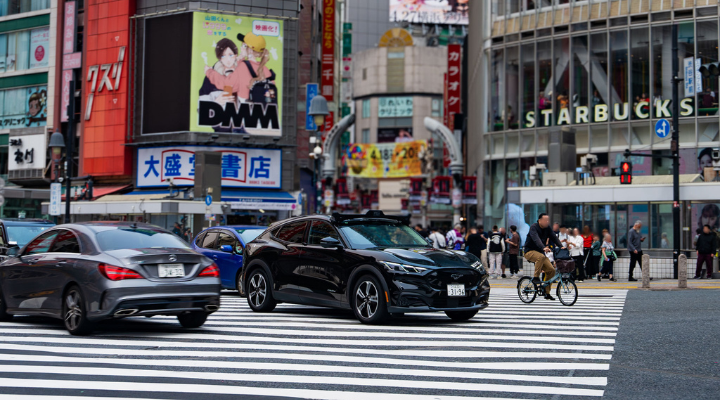
And once Prof Khastgir and his colleagues have achieved that, the next challenge is to communicate that message to the people that need to hear it.
“Absolutely. When it comes to safety, we feel it has two different components. One is engineering safety, which is whar all the engineers and the regulators focus on, and the other one, which is less focused on but I think is more important, is communicating safety. So how do I communicate to you as a musician or an archaeologist that a robotaxi that you will get into in November in London is safe?”
Share your story
Do you have an innovation, research results or an other interesting topic you would like to share with the professionals in the infrastructure, traffic management, safety, smart mobility and parking industry? The Intertraffic website and social media channels are a great platform to showcase your stories!
Please contact our Sr Brand Marketing Manager Carola Jansen-Young.
Are you an Intertraffic exhibitor?
Make sure you add your latest press releases to your Company Profile in the Exhibitor Portal for free exposure.
Get up to speed on the mobility industry - our newsletter straight to your inbox!