
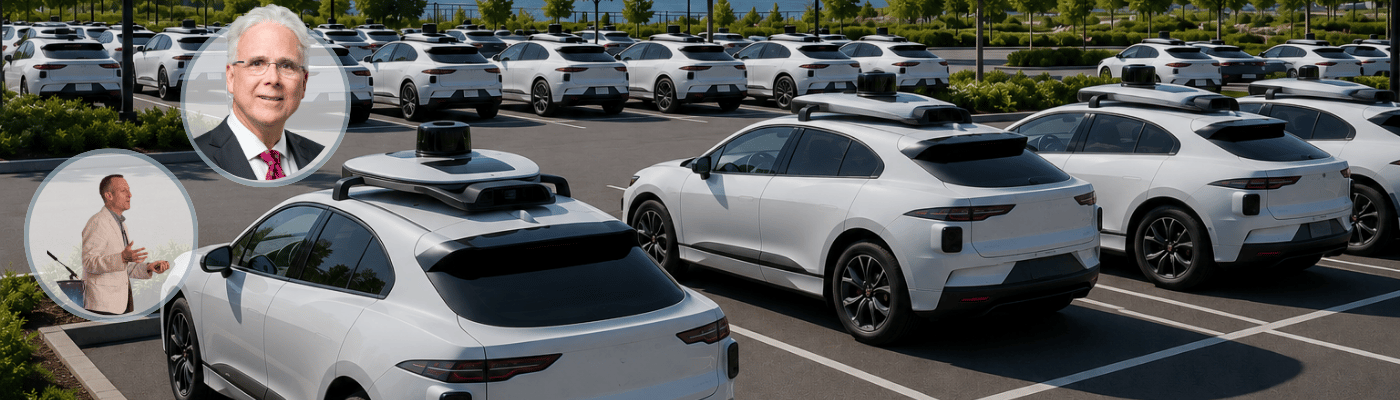
Where do robotaxis go when they’re empty?
Hyperlocalisation and other burning issues
There are so many questions surrounding autonomous vehicles and, in particular at the moment, around the thorny issue of robotaxis. Each question is fully deserving of its own article, but in this one Intertraffic posed a seemingly simple question to two AV experts. Where do robotaxis go when they’re empty? Bern Grush of autonomous pick-up and drop off experts PUDOcity and Dr Nick Reed, founder of Reed Mobility, nod sagely and provide some fascinating answers.
The defining question of autonomous mobility may not be how robotaxis drive when they're awake, but how intelligently they behave when nobody needs them. Their resting place could reshape everything from city planning and electricity networks to insurance, land values, and the economics of urban transport. So where do they go? And what do they do while they’re there?
Intertraffic: The media seems to be split between thinking that empty robotaxis circle around a city awaiting their next pick-up and assuming that they sit idly by the side of the road until instructed to take somebody somewhere. Which, if either, is nearer the truth?
Bern Grush: It is true that some people assume AVs constantly circle. The truth is - they don’t. If a robotaxi has been assigned a new fare, then it will drive empty to that pickup, which looks like circling but it’s not. Every taxi has to 'deadhead' to get to wherever its next fare is. Even a bus when it leaves its depot in the morning goes empty to its first stop. If a robotaxi has not been assigned a new fare, it might move to a location for which it is more likely to be near the next fare. Still, these vehicles need a place to stand and wait. We call that staging.
“Every taxi has to 'deadhead' to get to wherever its next fare is. Even a bus when it leaves its depot in the morning goes empty to its first stop”
Other people, as you say, assume AVs just idle at the kerb between trips. That does happen and if they are not paying for parking, then that is denying the city revenue by blocking other vehicles that wish to park. The kerb will increasingly be needed for pickup and drop-off (PUDO) only, measured in one or five minutes, respectively. Staging and waiting are a different problem from PUDO, and cities that conflate the two will run out of kerb space fast. All of this needs to be managed and monetised, as you cannot scale large fleets by simply allowing large numbers of vehicles to wait wherever without managing those places and times.
Dr Nick Reed: It is not in anyone's interest for automated vehicles to spend long periods driving around empty. An AV operating company wants its vehicles to be carrying paying riders while the city and other road users don't want avoidable congestion added to their streets. As a result, significant efforts are made to optimise the positioning of AVs to match expected demand and some empty running is unavoidable. This optimisation is similar to that carried out by human drivers for existing ridehailing services and becomes more complex as a service scales to more vehicles and a wider operating area.
Where AV services differ is that a human driver may be more willing to take advantage of informal opportunities to stop and wait for short periods whereas an AV is likely to be programmed to behave more conservatively and comply more strictly with parking and waiting restrictions. Furthermore, current UK legislation requires a local authority to give consent for the operation of AV services. If empty vehicles were perceived to be creating unnecessary congestion or other adverse impacts, that could jeopardise continued support for the service. Operators and local authorities therefore have a shared interest in agreeing where vehicles should wait and how they should be managed.
“If empty vehicles were perceived to be creating unnecessary congestion or other adverse impacts, that could jeopardise continued support for the service”
Intertraffic: If the question isn’t ‘where do empty AVs park?’ - then is it ‘where do they stage and wait when demand is low?’
BG: It is, and the answer to that is currently the public kerb, but that’s not sustainable. In dense downtowns, a lot of this needs to be off-street - retail lots, parking structures, private commercial spaces, etc. Every city I talk to, from Phoenix to Dubai to Toronto, has the same imbalance: they think about regulating the vehicle but not the kerb. NHTSA, the National Highways Traffic Safety Administration in the US, can rewrite Federal Motor Vehicle Safety Standards all day long - there’s no equivalent standard yet for how a fleet interacts with a city’s kerb and staging inventory. Even the draft ISO 25614 is only the messaging system to orchestrate stopping at the kerb; it does not provide any advice regarding where and how to position, size, schedule, sign, monetize, enforce, or scale this process. To me, this is an enormous oversight.
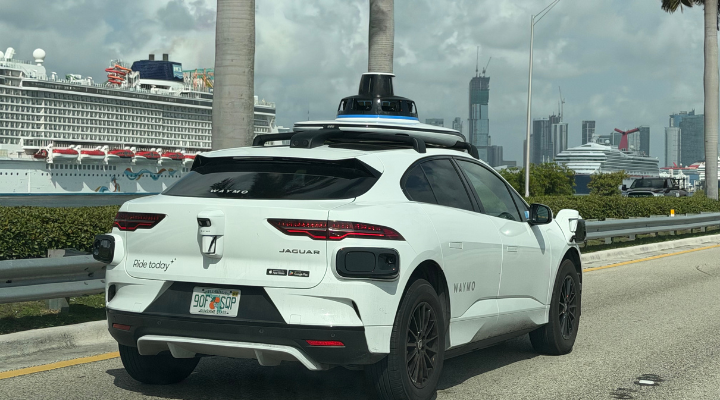
NR: The answer to this question depends very much on the city, operator, traffic conditions and time of day. Fleet optimisation means that periods of lower demand can be when vehicles are cleaned, charged and serviced. If AV services deliver benefits for residents, visitors and businesses, a city may designate specific waiting areas for AVs, much like taxi ranks or coach bays. Tackling this process collaboratively with local authorities will help to avoid some of the problems that arose in some cities when shared rental bikes were introduced without sufficient consideration of where they should be stored.
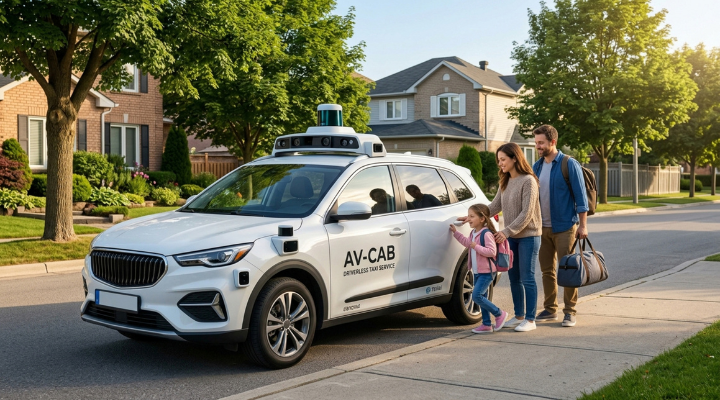
Intertraffic: There’s clearly no easy, catch-all answer to this - but what is happening at the moment?
BG: Overflow staging on private property isn’t optional, it’s structural. Fleets will always have more vehicles than the downtown public kerb can absorb during off-peak hours, so cities need commercial partnerships with parking operators and retail landlords built into the plan before scale gets out of hand, which happens quickly. You see the problems reported in Atlanta, Georgia, when they still had only a few dozen robotaxis.
Deadheading is the hidden cost nobody prices correctly. Empty vehicles repositioning between staging and demand zones add congestion without adding a single passenger trip. Where you locate staging determines how much deadheading you create. This is why you want to be able to stage a lot of vehicles on private property near downtown areas so that vehicles that need to stage need only drive a very short distance to get off the road.
“Empty vehicles repositioning between staging and demand zones add congestion without adding a single passenger trip. Where you locate staging determines how much deadheading you create”
NR: The answer is likely to be a combination of commercial competition and public coordination. Operators will naturally compete on price, service quality and customer experience, but it is in everyone's interest for them to work with local authorities on issues such as where vehicles can wait, how kerb space is managed and how unnecessary empty running is minimised. Local authorities already manage competing users of road space through measures such as taxi ranks, bus stops, loading bays and parking controls. AV services are likely to become another user of that limited kerb space. The challenge will be to create a framework that allows operators to compete effectively while ensuring that the overall system works in the interests of the city and its residents.
“AV services are likely to become another user of that limited kerb space. The challenge will be to create a framework that allows operators to compete effectively while ensuring that the overall system works in the interests of the city and its residents”
Intertraffic: Does this mean that, for example, London, Dubai and Toronto need to concoct their own, localised systems to deal with this issue?
BG: This isn’t a US problem, or a European one. This is a problem in any city that has a dense downtown and lots of vehicles. A solution needs to work everywhere, not just in the jurisdictions that are currently getting all the headlines. Cities need to stop thinking of kerb management as signage and paint. At scale, AV fleets need real-time digital reservation and orchestration, the same way we manage airport gates or in-building loading docks. Vehicles don’t just need to park. They need to charge, clean, maintain, stage, wait, as well handle pickup/drop-off - all distinct functions competing for the same limited real estate. Any city policy that only addresses one of those risks failing on the others.
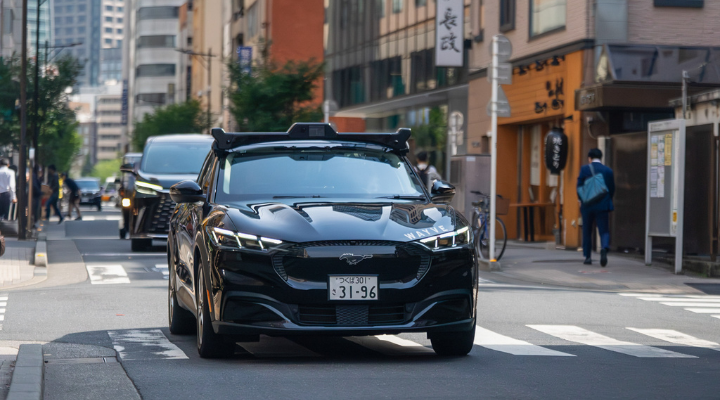
NR: There will not be a one-size-fits-all solution. While underlying principles of efficient fleet management may be similar, the practical arrangements will need to be hyperlocalised. The city centre, suburbia, an airport and a hospital all have different travel patterns, kerb space constraints and competing demands on the road network. Successful AV services are therefore likely to be tailored to the specific needs of the areas they serve, potentially down to individual districts or even particular streets.
Operators that work closely with local authorities and communities to understand those local requirements are likely to be better placed to gain public acceptance and secure long-term support than those seeking to impose a standardised operating model everywhere.
In part two of this in-depth dive into AV parking, Arrive’s Chief AI Officer Eugene Tsyrklevich tells Intertraffic how the parking sector is approaching the burgeoning robotaxi and AV sector - coming in August.
Share your story
Do you have an innovation, research results or an other interesting topic you would like to share with the professionals in the infrastructure, traffic management, safety, smart mobility and parking industry? The Intertraffic website and social media channels are a great platform to showcase your stories!
Please contact our Sr Brand Marketing Manager Carola Jansen-Young.
Are you an Intertraffic exhibitor?
Make sure you add your latest press releases to your Company Profile in the Exhibitor Portal for free exposure.

Get up to speed on the mobility industry - our newsletter straight to your inbox!