
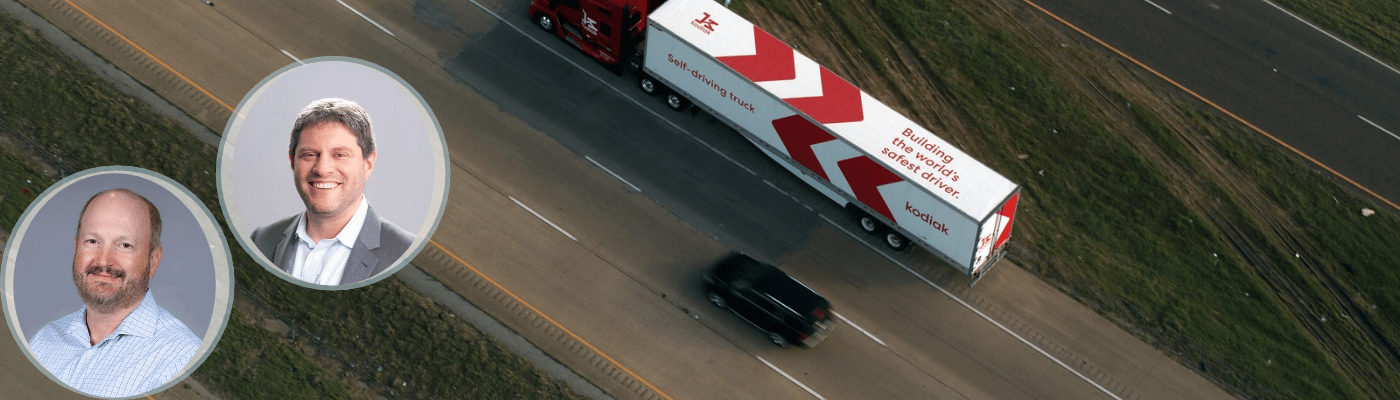
Driverless trucks: Building the roadside infrastructure for autonomy
A collaboration between Kodiak AI and PrePass in the US is addressing one of autonomous trucking’s most complicated challenges: how to integrate driverless commercial vehicles into existing roadside inspection and enforcement systems without compromising safety or disrupting traffic.
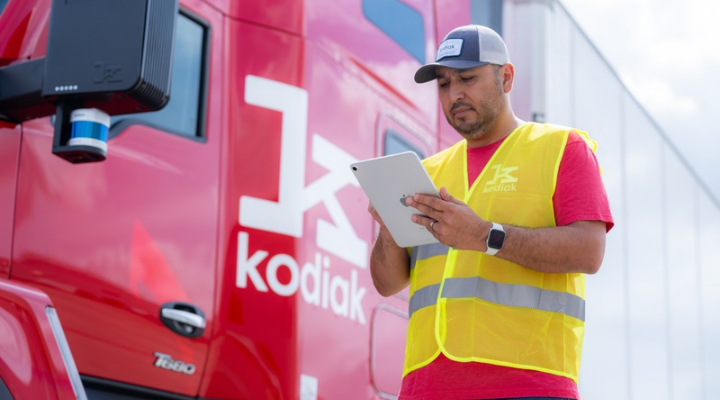
Autonomous trucks may be designed to navigate highways without human intervention, but they still have to comply with the rules governing commercial vehicles. When they approach a weigh station, the conventional procedures for inspection and enforcement become considerably more complicated if there is no driver to interact with officers.
That is the challenge being addressed by Kodiak AI, a pioneer in autonomous trucking, and PrePass, a provider of weigh-station bypass, toll payment, safety and compliance solutions. Their new collaboration integrates Enhanced Inspections of Kodiak’s autonomous trucks, conducted by Commercial Vehicle Safety Alliance (CVSA)-trained inspectors, into established state roadside screening and enforcement systems.
Using the PrePass platform, inspection information is transmitted directly to enforcement personnel, who can verify the information, authorise a bypass or provide additional instructions. PrePass and Kodiak are now putting this approach into practice in Texas and Louisiana, with plans to expand nationwide.”
For Daniel Goff, Kodiak AI’s vice-president of external affairs, the partnership addresses one of the industry’s most persistent regulatory obstacles.
Probably the most complicated issue we’ve encountered is this question of how to handle inspections and how to handle weigh stations. The traditional weigh-station approach and inspection is really a bad fit for autonomous vehicles. Officers don’t want us in weigh stations. We don’t want to be in weigh stations.
The traditional weigh-station approach and inspection is really a bad fit for autonomous vehicles. Officers don’t want us in weigh stations. We don’t want to be in weigh stations
SAFE AND SOUND
The problem is not that autonomous trucks should escape scrutiny. Quite the opposite: the challenge is to ensure that they meet rigorous safety requirements while giving enforcement officers the information and procedures they need to do their jobs effectively.
Under the US system, federal regulations establish safety requirements for commercial vehicles, while state highway patrols enforce them. The CVSA, an association representing commercial vehicle enforcement authorities, develops standards governing how those regulations are applied.
Kodiak has worked with the CVSA and other stakeholders to develop an alternative compliance methodology for autonomous trucks. PrePass provides the technological link between that process and the authorities responsible for roadside enforcement.
Goff believes the distinction between establishing a policy and making it work operationally is crucial. “You need an agreement on process and policy, but you also need an agreement on technology to actually drive the ideas we’ve developed,” he insists. “And that’s what this is.”
The Enhanced Inspection process is central to the arrangement. Rather than relying solely on the conventional roadside interaction, trained personnel conduct a more comprehensive inspection in advance, checking the tractor and trailer for potential safety issues, including tyre tire and brake condition. The inspection information is then made available to enforcement officers through PrePass.
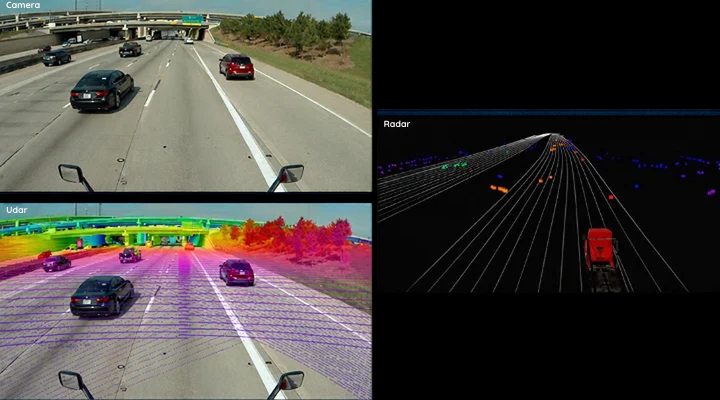
THE PRINCIPLE OF MOMENTS
Chas Wurster, PrePass’s chief technology officer, explains that the system builds on the principles already used to screen conventional commercial vehicles. Trucking companies provide information that helps authorities determine which vehicles can bypass a weigh station and which should be pulled in for inspection, either because of risk indicators or random selection.
The autonomous truck adds a new dimension to that process. Without a driver, an officer cannot simply request documents or ask questions at the roadside. Nor is it necessarily desirable to funnel every autonomous vehicle into a congested weigh station simply because the usual procedure does not accommodate it.
Wurster’s view is that advance inspection and information-sharing can help authorities concentrate their resources where they are most needed, without creating an additional burden on the wider inspection system.
In Wurster’s opinion, the next barrier to overcome in order to scale driverless trucking isn't anything inside the truck - it's the infrastructure around it.
In Wurster’s opinion, the next barrier to overcome in order to scale driverless trucking isn't anything inside the truck - it's the infrastructure around it.
“What I mean by that is, what sort of things change in the duty cycles for the vehicles, and how do you get them maintained, repaired and scheduled? As you look at that infrastructure, the same is also true on the enforcement side. What do I do in the event of different emergencies? How do I vehicle pulled over to the side of the road when I need to? How do I make sure I can inspect them? The rules in place that make sense for a vehicle driven by a human are not necessarily as applicable to an autonomous one.
These vehicles have already been more heavily scrutinised than most of the vehicles on the road. I’m going to let those ones go, and I’m going to pull in these other vehicles because they are the ones less likely to have been thoroughly inspected recently.”
This is not intended to eliminate enforcement checks. Instead, the pilot approach allows authorities to validate the new inspection process separately, checking that it works as intended without slowing the established workflow for other trucks.

Source: Alphaspirit
A QUESTION OF GEOGRAPHY
There is also an important geographical dimension. The United States has a national framework for commercial vehicle safety, but individual states operate their own enforcement programmes and can have different procedures for deciding which vehicles to inspect. Texas and Louisiana are the initial participants, while the companies aim to expand the system as additional states come on board.
This is not intended to eliminate enforcement checks. Instead, the pilot approach allows authorities to validate the new inspection process separately.
PrePass acts as an intermediary, helping autonomous vehicle operators communicate relevant information to the authorities in each participating state. That can include confirmation of a valid Enhanced Inspection, whether a safety driver is present and, if a vehicle breaks down, its location.
For Goff, this illustrates why the collaboration matters beyond the immediate pilot.
The concepts that we’ve developed are pretty universal. At the highest level, we are making a very strong commitment that every one of our trucks that’s on the road has been inspected to a very high level, that law enforcement can be confident in that inspection, and that with PrePass we’re able to communicate the outcome of those inspections to law enforcement.
The implications extend well beyond the US. Autonomous trucking deployment is at a more advanced stage there than in Europe, Goff argues, but the underlying questions are relevant wherever driverless commercial vehicles must operate across multiple jurisdictions.
Europe’s different national regulatory systems present their own complexities. Nevertheless, the US experience offers an opportunity for transport authorities to examine a practical model for reconciling autonomous operations with established safety oversight. The objective should not simply be to reproduce existing procedures, but to determine how safety can be maintained or improved as technology changes.Wurster sees roadside enforcement as just one part of a much broader infrastructure challenge. Autonomous trucks must also be able to refuel, undergo maintenance and repairs, deal with breakdowns and respond safely to emergencies. Routes need to connect jurisdictions where the necessary arrangements are in place, rather than leaving operators unable to complete a journey because a neighbouring state has not adopted the same approach.
BEING FOR THE BENEFIT OF EVERYONE
These issues become more pressing as vehicles potentially operate for longer periods and accumulate more mileage than conventional trucks. Maintenance schedules, workshop capacity and recovery procedures may all need to adapt. Even familiar requirements, such as expecting a driver to leave a disabled vehicle and place warning triangles on the road, are deserving of reconsideration when that action could expose someone to traffic. In fact, the warning triangle conundrum was resolved earlier this month with the proposed introduction of flashing warning beacons.
Some of these changes could benefit conventional trucking, too. Rethinking how disabled vehicles are marked, for example, could improve safety for human drivers as well as autonomous systems.
The central lesson is that autonomous driving technology cannot scale in isolation. It depends on the surrounding transport ecosystem adapting alongside it: enforcement systems, communications, roadside facilities, maintenance operations and the regulations that connect them.
The goal is safety, not to replicate what we've always done. We must increase safety, and I feel very good about how the solution that we've developed has the opportunity to do exactly that
The Kodiak-PrePass collaboration offers an early example of that adaptation in practice. By combining enhanced physical inspections with an established digital channel to enforcement authorities, it seeks to make driverless trucks compatible with the safety systems already governing the roads.
The goal is safety,” concludes Goff, “not to replicate what we've always done. We must increase safety, and I feel very good about how the solution that we've developed has the opportunity to do exactly that.
For countries considering their own autonomous freight strategies, the question is therefore not only whether a truck can drive itself. It is whether the infrastructure and regulatory framework around it can support that journey safely, efficiently and across borders.
Share your story
Do you have an innovation, research results or an other interesting topic you would like to share with the professionals in the infrastructure, traffic management, safety, smart mobility and parking industry? The Intertraffic website and social media channels are a great platform to showcase your stories!
Please contact our Sr Brand Marketing Manager Carola Jansen-Young.
Are you an Intertraffic exhibitor?
Make sure you add your latest press releases to your Company Profile in the Exhibitor Portal for free exposure.


Get up to speed on the mobility industry - our newsletter straight to your inbox!