
Rethinking Urban Space & Urban Mobility Solutions: the need for a holistic mobility approach
Cities face increasing pressure to make urban spaces safer, more accessible, and more sustainable, while meeting the growing mobility needs of their citizens. In this session, we explore how a holistic approach can transform urban mobility.
A holistic mobility approach means designing and implementing behavioral strategies, infrastructure, and mobility services as a single, integrated system. Using insights from change management and behavior science, cities can make clear choices, create one coherent story, and implement interventions that truly encourage people to travel differently than by private car. The strength of this approach lies in collaborative execution: measures are not just piloted individually but developed and applied together so they reinforce each other - from nudges and social norms to attractive alternatives and visible implementation. Interventions start where the potential impact is highest: urgent enough to act, promising enough to succeed, and with committed partners ready to deliver quickly.
Panelists from European cities and ITS companies will share their experiences and insights, exploring how cities can rethink street design, promote multimodal transport, leverage digital solutions, and create integrated mobility strategies that balance safety, efficiency, and livability.
Speakers

Itır Coşkun is an Innovation Manager at SWARCO, driving innovation projects and thought leadership in smart mobility, traffic management, and connected and automated transport systems. With a strong background in Intelligent Transport Systems (ITS) and innovation strategy, she ensures SWARCO’s technological developments are aligned with global trends and policy priorities, especially in CCAM, sustainable and inclusive mobility, and digital infrastructure. Itır holds a Master of Science degree in Transportation Systems, specializing in Intelligent Transportation Systems (ITS), from the Technical University of Munich. Fluent in three languages, she views intercultural and interdisciplinary collaboration as a foundation for impactful progress and navigates diverse global environments in her daily work.

In 2025, I made the switch from consultant to the municipality of Eindhoven. I now work for the city where I have lived for 25 years. The city is in transition. Due to economic growth, there is a great shortage of work locations and housing. The city is urbanizing at a rapid pace. There is great pressure on space, but also on social cohesion, prosperity, and health. I work in an integrated strategic team, where I am responsible for the strategic choices in the area of mobility and space. I am especially involved in complex processes where we need to deviate from regular policy. Previously, I worked as a managing consultant at BMC and as a project manager at engineering and consultancy firm Movares.

Lennart Salemink is director of the National Data Warehouse for Traffic Information (NDW) and the National Access Point for Mobility Data (NTM) in the Netherlands. In his role, Lennart is in the lead for development and governance of mobility data as the critical backbone for traffic management, policymaking, and innovation. NDW-NTM operate at the intersection of public authorities, road operators, and market parties. Through NDW and NTM, Lennart plays a key role in advancing digital platforms, data analytics, and the successful upscaling of mobility pilots into operational solutions. His work ensures that high quality mobility data is accessible and usable for professionals across the mobility network, from daily traffic operations to long-term strategic planning. Lennart regularly shares the Dutch approach to data governance and public/private cooperation, contributing to smarter, safer, and more sustainable mobility systems in the Netherlands and beyond.


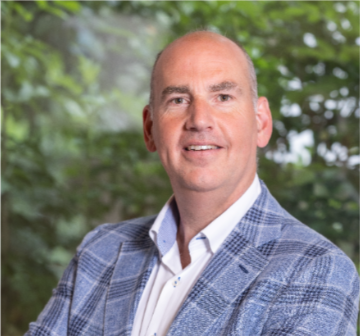
Willem van Heijningen is a strategist in the field of public space and mobility. He has a comprehensive view of the domain and explores the challenges related to public space. He has a strong drive for sustainability, inclusivity and quality of life, and is involved for instance with drones, the subsurface, greening public spaces, micromobility and data/digitization.
To find various substantive and organizational approaches and solutions to the challenges, he connects content, people, and stakeholders. Willem regularly proposes innovative strategies and solutions. He addresses, sets the agenda, and mobilizes attention for the challenges and possible approaches. He develops or maps out the route by which such an approach can actually be realized.
He utilizes the knowledge and experience he gained through his studies in public administration, political activities, work in logistics, and at the Dutch Railways (NS) on stations and the City of Amsterdam in the field of spatial projects, mobility and public space. Willem has special expertise in:
- railway stations and mobility hubs
- urban logistics
- cycling and micromobility (shared mobility)
Willem is a member of the Expert Group on Urban Mobility for the EU