Grand Opening Intertraffic, Smart, Safe and Sustainable Mobility for all
The impact of AI & Robotics on Mobility
Welcome by Master of Ceremonies Mr. Carlo van de Weijer, CEO AI Institute Technical University Eindhoven
Michiel van Ratingen - Secretary General at Euro NCAP
Intelligence Behind the Wheel - Vehicle Safety Innovations and Emerging Challenges
Euro NCAP is Europe’s leading car safety programme, known for independent testing since 1996. Today, its mission goes beyond crash tests, driving innovation in AI-powered mobility and robotics, from automated emergency braking to advanced driver assistance and autonomous driving systems. Michiel van Ratingen has guided Euro NCAP into this new era, where safety means integrating intelligent technologies and robotics to make mobility smarter and safer for everyone.
Daniel Quirke Senior Public Policy Manager at Wayve
Embodied AI: Breakthroughs for automated driving
Wayve is the leading developer of Embodied AI technology for assisted and automated driving. Its advanced AI software and foundation models for autonomy enable vehicles to perceive, understand, and navigate any environment, enhancing the usability and safety of automated driving systems at scale. Wayve develops mapless and hardware-agnostic Embodied AI products for automakers and fleet owners, accelerating the path from assisted to automated driving. Daniel Quirke works on global policy frameworks that support the responsible deployment of learning based driving assistance and automation technology. He works globally to ensure clear alignment between Wayve's technology and the emerging regulatory landscape for the next generation of AI-powered driving intelligence.
Isabel Capp Head of Regulatory Policy at CCAV (UK Department for Transport)
The regulatory approach to commercial pilots under the automated vehicles act 2024
CCAV is the UK government body shaping the regulatory framework for autonomous vehicles, guiding the implementation of the Automated Vehicles Act and setting the safety expectations for real world deployment. Isabel Capp oversees policy development of the UK's regulatory framework, plays a central role in ensuring automated vehicles meet the safety benchmarks needed for commercial rollout across the UK. Her work supports the safe, secure deployment of AVs as the UK seeks to secure benefits to road safety, mobility and economic growth.
Intertraffic Awards 2026 ceremony
Announcement of the winners in the different categories, by Pieter Litjens, CEO CROW and Chairman of the Jury.
Wrap-up
Wrap-up and official kick-off of Intertraffic Amsterdam by Master of Ceremonies Carlo van de Weijer.
Speakers

Dr. Michiel van Ratingen (born 1966) is a leading figure in international vehicle safety assessment. He studied at the Eindhoven University of Technology in the Netherlands, earning MSc and PDEng degrees, and completed his PhD through Eindhoven University of Technology and the Medical University of Maastricht.
He began his career in 1995 at TNO Automotive, joining the Crash Safety Research and Development unit, where he contributed to advancements in vehicle crash performance and occupant protection. In 2005, he became Technical Director at First Technology Safety Systems (FTSS) in the U.S., overseeing global engineering activities. His responsibilities included the design and validation of crash test dummies, sensor technologies, and computational models used worldwide in automotive safety testing.
Since 2007, Dr. van Ratingen has served as Secretary General of the European New Car Assessment Programme (Euro NCAP) in Belgium. In this role, he has led significant updates to vehicle safety rating protocols, notably introducing and expanding crash avoidance technology testing, helping shift industry focus toward active safety and driver assistance systems.
He is a trustee of Global NCAP in the UK and technical consultant to Latin NCAP. His honours include the TNO Crash Safety Award, the Bertil Aldman Award, the U.S. Government Special Award of Appreciation and the Automotive Safety Council Pathfinder Award.

Isabel is the Head of Regulatory Policy at the UK’s Centre for Connected and Autonomous Vehicles. She leads a team focused on developing the Great Britain's (GB) regulatory framework, ensuring automated vehicles operate safely and securely on GB roads. She has wide-ranging experience leading development of government policy, including within the Department of Energy Security and Net Zero, the Department for Business, Energy and Industrial Strategy, and the Cabinet Office.

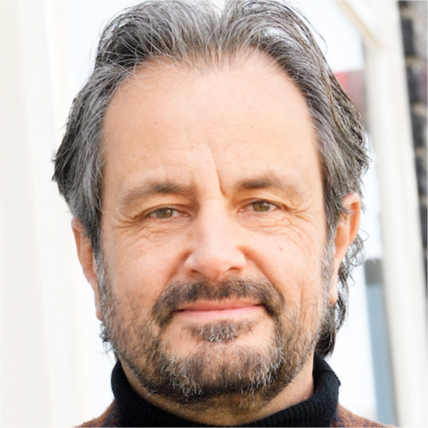
Carlo van de Weijer has a master’s degree in mechanical engineering from the TU Eindhoven and a PhD degree with honors from TU in Graz. He carries a broad experience in the automotive industry with a.o. executive positions at Siemens and TomTom. Currently he is managing director of the newly founded Eindhoven AI System Institute EAISI at Eindhoven University of Technology, Fellow for future of mobility and transport within the Deloitte Center for the Edge and Fellow for AI at Silicon Valley’s Singularity University. He advises ministries and industries around the world on the future of mobility and is member of the supervisory board of several high-tech companies, investments firms and start-ups. Furthermore, he is a regular columnist in a leading Dutch national newspaper.