
AI in Connected and Automated Mobility: a Curse or a Blessing?
Artificial Intelligence is becoming a driving force behind connected and automated mobility — but does it truly make transport safer, smarter and more reliable, or does it introduce new risks and uncertainties?
In this session, Carlo van de Weijer (TU/e), Oihana Otaegui (Vicomtech), Timo Woopen (Institute of Automotive Engineering – RWTH Aachen University) and Liam Pedersen (Nissan North America) will explore how AI is shaping vehicle automation, from perception and decision-making to system safety and trust. Moderated by Billy Riggs, the panel will debate the opportunities and challenges of AI in real-world deployment and discuss what is needed to ensure that AI becomes an enabler — not a barrier — to the future of automated mobility.
Speakers

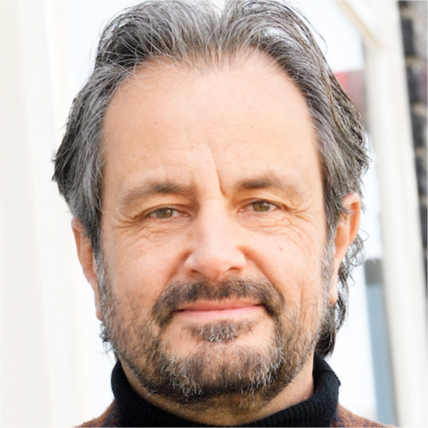
Carlo van de Weijer has a master’s degree in mechanical engineering from the TU Eindhoven and a PhD degree with honors from TU in Graz. He carries a broad experience in the automotive industry with a.o. executive positions at Siemens and TomTom. Currently he is managing director of the newly founded Eindhoven AI System Institute EAISI at Eindhoven University of Technology, Fellow for future of mobility and transport within the Deloitte Center for the Edge and Fellow for AI at Silicon Valley’s Singularity University. He advises ministries and industries around the world on the future of mobility and is member of the supervisory board of several high-tech companies, investments firms and start-ups. Furthermore, he is a regular columnist in a leading Dutch national newspaper.
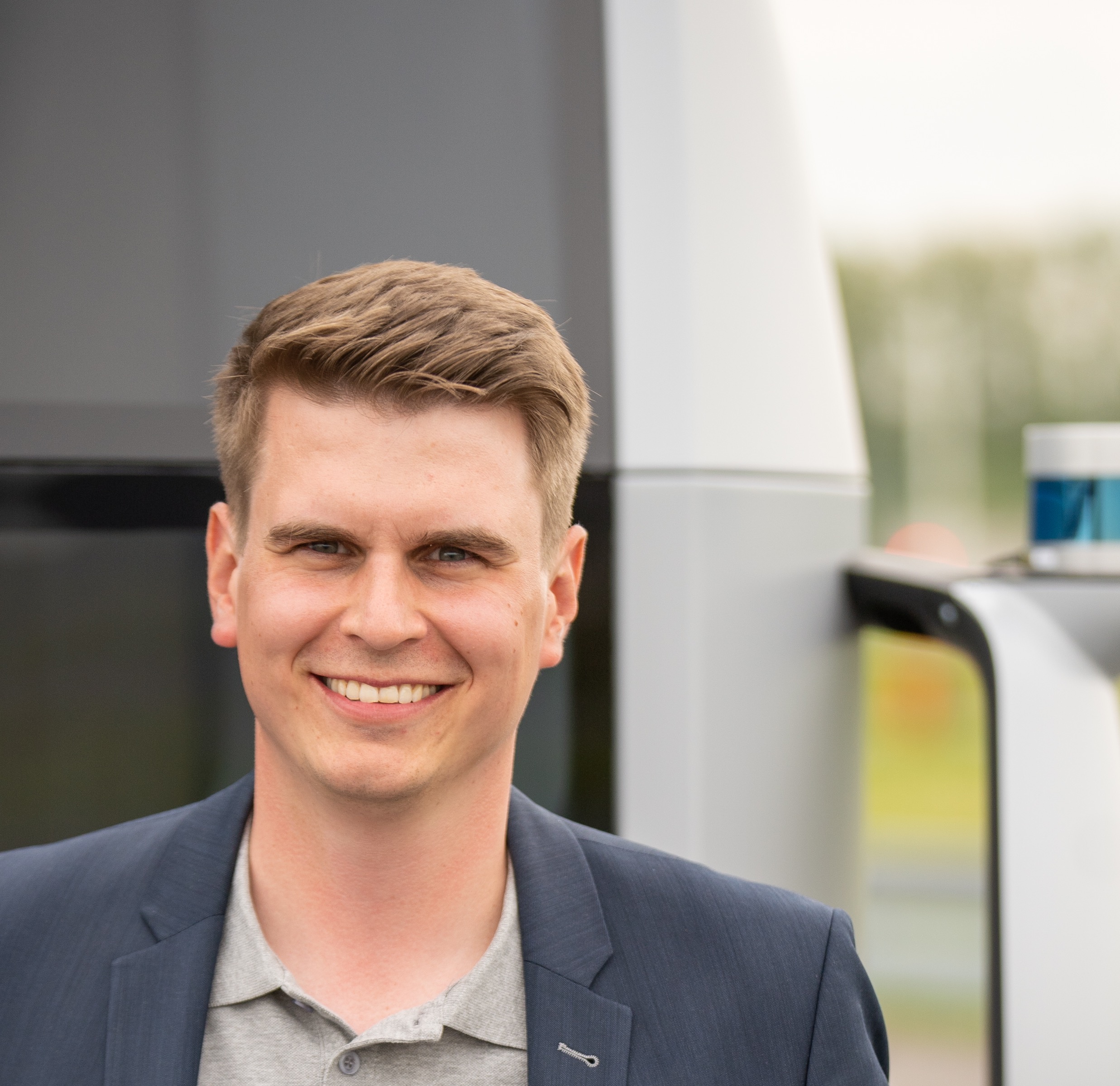
After graduating from RWTH Aachen University in 2016 with an M.Sc. degree in Automotive Engineering, Timo Woopen joined the Automated Driving Department at the Institute for Automotive Engineering (ika) of RWTH Aachen University. His primary research interests include automated and connected vehicles, alongside infrastructural support. From 2018 to 2023, Timo Woopen served as the overall project manager for the UNICARagil project, pioneering modular architectures for agile and automated vehicle concepts. Since 2019, is head of the Vehicle Intelligence & Automated Driving division at ika. In 2021, he additionally assumed the role of CEO at Thinking Cars GmbH, a startup spawned from the UNICARagil project focusing on Open-Source-Software for functional components and middleware of autonomous vehicles. In 2025, he completed his doctoral degree with honors.

Dr. Pedersen has over 20 years of experience in robotic vehicles, self driving cars, system integration, artificial intelligence, human-machine interaction. He holds 20+ patents, and 50+ publications at international conferences and journals, and is a recipient of NASA’s Public Service Medal and the US Antarctic Service Medal.
Dr. Pedersen’s is Chief Scientist at the Nissan Advanced Technology Center – Silicon Valley (NATCSV), where he is responsible for starting new research in autonomous driving, smart city services, vehicle electrification and AI enabled robotics. Prior to Nissan, Dr Pedersen worked at NASA’s Ames Research Center on space rovers for Lunar, Martian and other applications for scientific exploration and emergency response.
Dr Pedersen led Nissan’s participation in CCTA’s Innovate 680 project, under which he worked closely with thought leaders at UC Berkeley, Vanderbilt University as well as the Dutch transportation authorities around Amsterdam.

William (Billy) Riggs, Ph.D., AICP, LEED AP, is a professor at the University of San Francisco and Director of the Autonomous Vehicles & the City Initiative. A global expert on urban technology, future mobility, and sustainable design, he is driven by a vision to shape the built environment for good. His work bridges academia, government, and industry, spanning autonomous vehicle research with Waymo and Cruise, sustainable community planning with at the Coast Guard, UC Berkeley and ARUP, and large-scale mobility projects across Europe.
Riggs has authored more than 100 publications and three books, including End of the Road: Reimagining the Street as the Heart of the City. His research and commentary have been featured in The Economist, Wall Street Journal, The New York Times, PBS, and others. Alongside his academic role, he advises startups, funds, and design ventures focused on ESG and sustainable infrastructure, and he is the founder of the blockchain community development non-profit SFLuv and sits on the Transportation Research Board Committee on Roadside Landscape and Environmental Design, Operations and Maintenance.