
Best Foot Forward?
London’s Oxford Street joins a growing European movement to reclaim urban space from traffic
Europe’s cities are discovering that taking road space away from motorised (and indeed all human-propelled) vehicles can deliver environmental and economic benefits. But the experience of the past half-dozen, post-COVID-19 years also suggests that successful pedestrianisation requires more than simply putting up barriers.
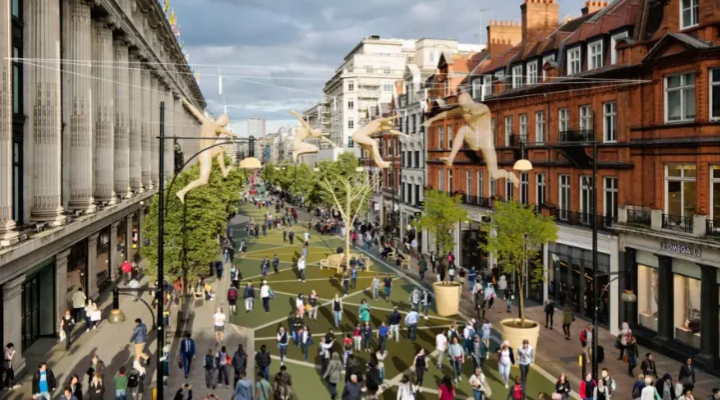
The pedestrianisation of London's Oxford Street went live on 26 October to much fanfare and no small amount of controversy and it marks an important moment in the history of one of Britain's most recognisable shopping destinations. Almost one kilometre of the street, between Orchard Street and Great Portland Street, has been closed to general traffic, including buses, taxis, private hire vehicles, bicycles and e-scooters.
The move, which has been discussed for decades, is intended to help revitalise the West End, improve the environment and create a more attractive destination for shoppers and visitors.
Mayor of London, Lord Khan, said: “I'm hugely excited to see my bold vision for Oxford Street coming to life from today. It is a truly momentous occasion for the capital. I encourage everyone to explore and enjoy the newly traffic-free street, as we create a new vibrant destination that welcomes Londoners and visitors from around the world.
“For centuries, Oxford Street has reinvented itself, adapting to changing times and helping shape British culture along the way. There has been talk of pedestrianising Oxford Street for decades. After so many false dawns, and now working with a Government who share the scale of my ambition, I'm proud that we're finally unlocking a new era for the street.
“The transformation will turn the nation's high street into a world-class pedestrian space, where flagship retailers will sit alongside new shops and workplaces – and we'll bring exciting new experiences to the street, from sport to fashion and cultural events. Revitalising Oxford Street will boost jobs and economic growth in the capital, unlock the full potential of this key part of the West End, and help build a better, greener and more prosperous London for everyone.”
However, the initial reaction has demonstrated that removing traffic from a busy urban thoroughfare is not necessarily straightforward. Cyclists have continued to enter the restricted area despite the prohibition, with Transport for London initially concentrating on education rather than enforcement. The potential penalty is £160 (€190), while the availability and quality of alternative cycling routes have also become subjects of some debate. There are also concerns about the impact (environmental, economic and capacity-wise) that the diversion of buses and other traffic will have on the surrounding streets.
London is certainly not alone in attempting to redistribute urban road space. Indeed, the experience of other European cities since 2020 provides some valuable lessons, particularly as many introduced temporary measures during the COVID-19 pandemic that subsequently became permanent.
The interesting question isn't whether Oxford Street should accommodate bicycles or pedestrians, however. It's whether London can create a street that works properly for both, while achieving the environmental and economic ambitions behind the scheme. So how have other major European cities approached the issue?
The experience of other European cities since 2020 provides some valuable lessons, particularly as many introduced temporary measures during the COVID-19 pandemic which subsequently became permanent.
Paris: from emergency cycle lanes to a new traffic regime
Paris has arguably been one of Europe's most ambitious cities in its approach to reducing the dominance of motor vehicles.
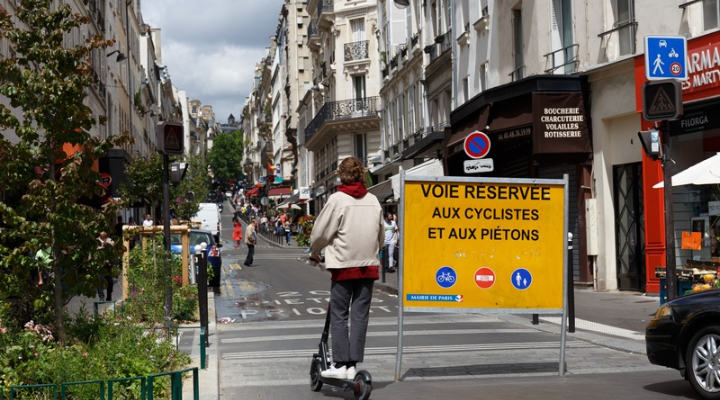
During the pandemic, the French capital introduced temporary cycle infrastructure and expanded pedestrian-friendly spaces. One of the most significant changes involved Rue de Rivoli, a major central thoroughfare which was redesigned in May 2020 to prioritise cycling and other sustainable forms of transport.
The results have been significant. According to the City of Paris, average daily motor vehicle traffic on the street fell from almost 10,000 vehicles in 2019 to approximately 6,000 from 2021 onwards. Meanwhile, the number of cyclists and users of personal mobility devices increased by around 30% between the first half of 2021 and the first half of 2023.
Paris has subsequently gone further. Since November 2024, a Limited Traffic Zone has operated across the city's central four arrondissements, covering approximately 5.5 square kilometres. Through-traffic is prohibited, although vehicles travelling to destinations within the zone can still enter.
An assessment published by Airparif in September 2026 found that road traffic within the zone had fallen by 18% between 2023 and 2025. Nitrogen dioxide concentrations have also declined.
The Paris experience illustrates an important distinction: a city does not necessarily need to pedestrianise every street to achieve meaningful reductions in traffic and pollution.
In March 2020, the German capital began introducing temporary, or 'pop-up', cycle lanes. These were created by reallocating existing road space, using relatively inexpensive materials such as paint and movable bollards.
Berlin: making temporary measures permanent
Berlin provides perhaps the clearest example of how the pandemic accelerated changes that might otherwise have taken years to implement.
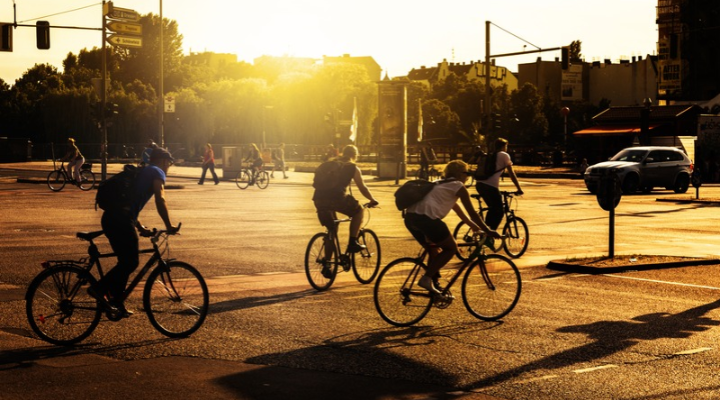
In March 2020, the German capital began introducing temporary, or 'pop-up', cycle lanes. These were created by reallocating existing road space, using relatively inexpensive materials such as paint and movable bollards.
The approach allowed local authorities to implement changes in days rather than the years traditionally associated with major infrastructure projects.
In the Friedrichshain-Kreuzberg district, 13 streets were affected by the initial programme, with most of the temporary lanes subsequently made permanent by mid-2021.
The experiment was not without consequences for motorists. Research by the University of Potsdam found that the new infrastructure reduced average vehicle speeds on affected roads by between 8% and 12%, with a greater effect during peak periods. However, the research found only modest changes in traffic volumes, suggesting that reallocating road space does not automatically eliminate journeys by car.
Nevertheless, Berlin demonstrated the value of tactical urbanism: introduce a relatively inexpensive temporary arrangement, monitor its performance, and make it permanent where the evidence supports doing so.
Barcelona: reclaiming neighbourhood streets
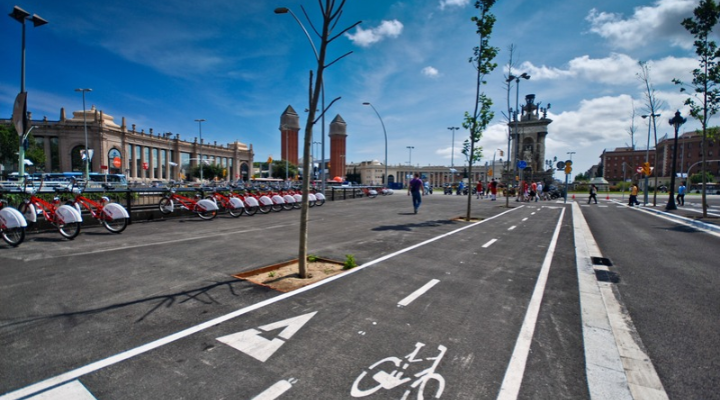
Barcelona's Superblocks, or Superilles, represent a rather different approach.
Rather than concentrating on individual streets, the concept reorganises entire neighbourhoods into areas where through-traffic is restricted and pedestrians, cyclists and public spaces are given priority. The approach predates the pandemic, but COVID-19 provided additional momentum for its development and expansion.
The intention is to reduce the amount of space devoted to motor vehicles, lower traffic speeds and create more opportunities for walking, cycling, recreation and social interaction.
A 2025 evaluation of three Barcelona Superblocks found that residents and workers reported improvements in wellbeing, tranquillity and sleep quality, alongside reductions in perceived noise and pollution and increased social interaction.
The intention is to reduce the amount of space devoted to motor vehicles, lower traffic speeds and create more opportunities for walking, cycling, recreation and social interaction.
Measurements also indicated improvements in air quality where traffic volumes had been reduced.
However, the results were not uniform. The study found that the benefits depended on the extent to which traffic was actually removed or reduced. In some locations, traffic calming was effective in one part of a neighbourhood, but less so elsewhere.
This highlights one of the central challenges facing cities adopting such schemes: restricting traffic in one location can simply transfer the problem to another unless the wider road network is considered.
Milan: turning public space into a neighbourhood asset
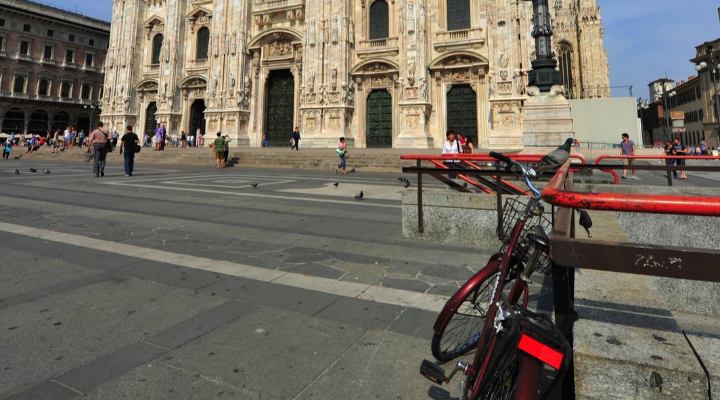
Milan's Piazze Aperte, or Open Squares, programme offers another interesting model. Launched in 2018 and expanded during the pandemic, the initiative uses relatively low-cost interventions to transform traffic-dominated junctions, parking areas and underused streets into public spaces.
Rather than focusing exclusively on pedestrianising major shopping streets, Milan has concentrated on neighbourhoods, involving residents, businesses, schools and community organisations in deciding where improvements should be made.
The scale of the programme is impressive. By 2025, approximately 60 tactical urbanism interventions had created around 56,000 square metres of additional pedestrian space.
The improvements have included benches, planting, bicycle parking, picnic tables and redesigned intersections.
Monitoring at Piazza Angilberto II, for example, recorded a 47% increase in cycling and a 30% increase in pedestrian activity following its transformation.
Importantly, Milan is now converting a number of its temporary layouts into permanent urban designs. Its experience suggests that smaller-scale interventions, developed with local communities, can deliver substantial improvements without requiring the wholesale pedestrianisation of major roads.
Glasgow: a longer-term transformation
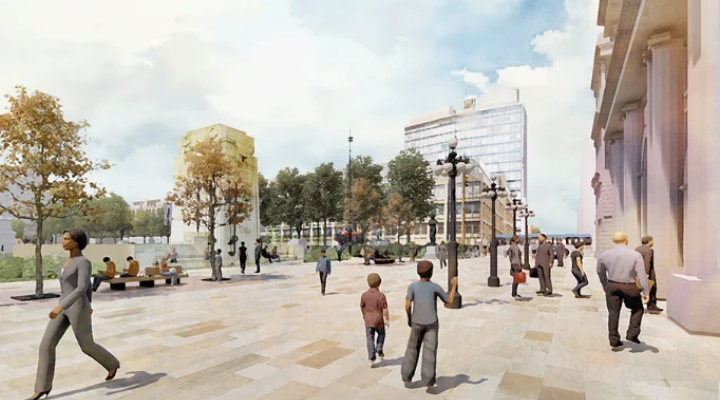
Glasgow provides a particularly relevant UK comparison, although its experience is somewhat different from the other examples.
During the pandemic, the city introduced a series of temporary measures under its Spaces for People programme, using funding from Sustrans (now the Walk Wheel Cycle Trust) to provide additional space for walking and cycling.
Milan is now converting a number of its temporary layouts into permanent urban designs. Its experience suggests that smaller-scale interventions, developed with local communities, can deliver substantial improvements without requiring the wholesale pedestrianisation of major roads.
Glasgow City Council subsequently reviewed these measures and considered which could be retained permanently.
The city has also been progressing its much larger Avenues programme, which aims to transform 16 city-centre streets and spaces through wider pavements, improved cycling infrastructure, reduced traffic lanes, additional trees and rain gardens.
The programme is not simply about closing streets to traffic. Instead, it seeks to create a connected network in which walking, cycling and public transport are prioritised, while improving the appearance and environmental quality of the city centre.
Glasgow's experience demonstrates that temporary pandemic measures can become part of a much wider and more ambitious urban regeneration strategy.
What can London learn?
There are, of course, other examples across Europe. Belgium's green streets projects and the expansion of school streets in the UK and elsewhere demonstrate how road space can be reassigned for environmental, social and public-health purposes.
However, the five cities above illustrate that there is no single formula for success.
Paris has demonstrated the myriad benefits of restricting through-traffic; Berlin has shown how temporary infrastructure can become permanent; Barcelona has experimented with neighbourhood-wide traffic management; Milan has placed community participation at the forefront of public-space improvements; and Glasgow is actively pursuing a connected programme of urban regeneration.
The common theme is that these initiatives are not simply about preventing vehicles from using particular roads. They are about changing the very function of urban streets.
The common theme is that these initiatives are not simply about preventing vehicles from using particular roads. They are about changing the function of urban streets.
As far as London is concerned, the immediate challenge will be to demonstrate that Oxford Street can become more than just a traffic-free shopping corridor. The promised trees, seating, welcoming squares and improved public realm will be important, as will the ability to maintain access for disabled people, deliveries, public transport users and those who previously cycled along the street.
The impact on neighbouring roads and businesses will also need to be monitored carefully.
The experiences of other cities suggest that pedestrianisation and traffic calming can bring substantial benefits, but that those benefits are most likely to endure when schemes are supported by careful planning, public engagement, alternative transport provision and a willingness to adapt.
Oxford Street may have finally taken its long-awaited first step towards becoming a pedestrian destination, but the real test, as other European cities have discovered, will be what happens next.
Share your story
Do you have an innovation, research results or an other interesting topic you would like to share with the professionals in the infrastructure, traffic management, safety, smart mobility and parking industry? The Intertraffic website and social media channels are a great platform to showcase your stories!
Please contact our Sr Brand Marketing Manager Carola Jansen-Young.
Are you an Intertraffic exhibitor?
Make sure you add your latest press releases to your Company Profile in the Exhibitor Portal for free exposure.


Get up to speed on the mobility industry - our newsletter straight to your inbox!