

How to implement a low-emission zone
Low and zero-emission zones are becoming increasingly important as urban centres all around Europe battle to clean up their air. Intertraffic World looks at the lessons that can be learned from the experiences of cities that have implemented them.
When it comes to emissions, zero is a big number. In late 2025, the Intergovernmental Panel on Climate Change (IPCC) reprised its alarm on rising sea levels to a world falling short of its 1.5C emissions-reduction target. While 107 governments worldwide aim for net-zero CO2, urban Zero Emission Zones have more ambitious targets for particulate matter (PM), CO2 and NOx, aiming for true zero: no cars, lorries or vans except those meeting the standard.
Consequently, a quiet miracle is underway, rendering historically smog-shrouded city-centres newly peaceful and pristine. “Paris has radically changed,” says Jens Müller, deputy director at the Pan-European Clean Cities Campaign. “Nobody thought it was possible – they thought that congestion was simply the Parisian way of life.”
The Clean Cities Campaign, billed as ‘Europe’s largest network of organisations on a mission to build public support for cities to shift from polluting vehicles to active, shared and electric mobility’, is part of the Clean Mobility Collective, which aims to implement zero-emissions freight across the USA, Asia and Europe. The campaign’s network advises policymakers on clean air measures, public mobilization and practical methods of transition to sustainable, electrified transport. Fostering popular acceptance throughout municipalities is a key element and Clean Cities directors can offer a wealth of communication expertise.
“A key principle is to avoid creating polarization between car users and pedestrians, cyclists or public transport users,” says Nina Bak, head of the Clean Cities Campaign for Poland. “We emphasize that nobody is defined by one mode of transport.”
Freight not hate
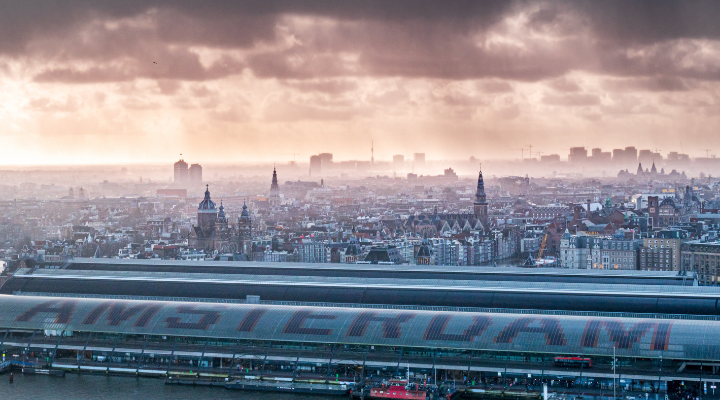
At the start of 2025 Amsterdam’s zero-emission zone came into force, targeting freight, logistics and commercial vehicles – rather than private cars already covered by the city’s LEZ. Similar measures across 20 Dutch cities represent an ambitious phased plan towards full decarbonisation. Amsterdam’s Clean Air Action Plan aspires to liberate the city from any emitting vehicles by 2030.
In 2027 Amsterdam’s LEZ will expand, with tighter restrictions on diesel cars driving further emissions reductions. Acceleration is timely, since the European Climate Foundation declared last year that while the world has started moving in the right direction on CO2, current progress is too slow to avert a global temperature increase exceeding 1.5°C.
“There’s an urgency in these measures,” says Müller. “Considering the climate crisis and the need for net zero, there should be that sense of urgency.”
“There’s an urgency in these measures. Considering the climate crisis and the need for net zero, there should be that sense of urgency”
It is one thing to acknowledge the necessity of change, but quite another to strategically implement it in a manner which the public will fully embrace. Doing so requires both creative vision and dogged perseverance. “Our strategy combines data-driven advocacy, coalition-building, and strong public communication,” says Bak. “We want to show that cleaner transport isn’t just an environmental necessity – it’s about fairness, health and quality of life.”
“Our strategy combines data-driven advocacy, coalition-building, and strong public communication. We want to show that cleaner transport isn’t just an environmental necessity – it’s about fairness, health and quality of life”
Rollout like Rotterdam
“Every city has its own starting point, and Rotterdam was one of the pioneers,” says Müller. “A decade ago, likeminded businesses came together to push in the same direction, creating a whole community of experts who exchange best practices today.” One of the keys to getting the right balance is recognition that people respond best to strategically-phased LEZ or ZEZ rollouts. Clean Cities has discovered that commercial-first or ZEZ-F measures are particularly effective when it comes to driving change.
“We have testimonies from companies like Albert Heijn and PostNL,” says Müller. “They explain their decisions and we track their investments. We see them prioritizing supply of zero-emission vehicles to operate in these zones.” Alongside changes in registration tax for petrol and diesel vehicles, generous EV purchase subsidies make going electric an extremely persuasive choice.
“It creates a business-case for EV adoption – and not only for companies based in the city itself,” says Müller. “Our data reveals a spillover effect whereby areas surrounding the ZEZ also see higher uptake.”

Thirty-five European cities aim to introduce freight zero emission zones by 2030, including 18 in the Netherlands. Globally, uptake has been slower, but administrators worldwide are waking up to the need for action on clean air and CO2 emissions. Sometimes the road can be rocky, demanding continual learning and adaptation in response to setbacks.
“Look at the debate in London,” says Müller. “We know discussion of private cars is far more emotionally-charged than for commercial vehicles. Given clear direction, companies are happy enough to make the shift, especially if incentives and public recognition are involved.”
London learnings
It would be a mistake to conclude that LEZ or ZEZ measures simply aren’t a good fit for some cities based on preconceived notions of ‘culture’. If some cities present greater challenges, it just makes effective strategy more vital.
When London’s Ultra Low Emission Zone operated only centrally, within its existing Congestion Charge area, as it has since 2019, the scheme was widely accepted. However, as the scheme expanded, firstly in 2021 to within the North and South Circular roads and then subsequently in 2023 to cover the entire city, public pushback fuelled by a hostile media grew to fever pitch.
“There’s always a cultural dimension,” says Müller. “I think London was the most extreme example, compared to the rest of Europe. We’ve seen pushback against countless transport policies including LEZs, but never as fierce as in London.”
With politically-motivated groups pouring money into fanning the social media flames, last year anti-ULEZ protests culminated in widespread sabotage of ANPR cameras – but could these edifying scenes have been averted by better strategic thinking?
“Observing what unfolded in London, we honestly believe policymakers could have done better,” says Müller. “A short lead-time of around one year for the expansion made it difficult for people to comply. The Dutch approach was more surgical and initially focused on businesses, which are easier to win over.”
Grace land
Strategic implementation requires a smooth ‘on-ramp’, with generous grace periods and well-developed communications to flag changes well ahead of time being crucial enablers of orderly transition.
“In Amsterdam, 437 warning letters were sent to companies during the January zero-emission zone grace period,” Müller recalls. “By June, the number was down to 184. Fines kicked in after six months and in July there were just 47, which is a really low number.” Thanks to effective communication, companies on a collision-course with fines were able to make timely, non-polluting upgrades.
“Because most companies pre-complied, the compliance rate in January was 95%, which has since risen to 96.7%,” Müller adds. City administrators have been liberal in granting extensions in a gentle, diplomatic approach which makes stakeholders feel listened-to. “Some groups were given an extended grace period, including market stallholders with special vehicle requirements.”
Poles apart
But all the diplomacy and incentives in the world won’t work if the ducks of technology fail to sit in a row. Systems in Amsterdam and other Dutch cities rely on ANPR, a national vehicle database and an army of checkers manually approving tickets. By contrast, in Poland, Warsaw takes a different approach.
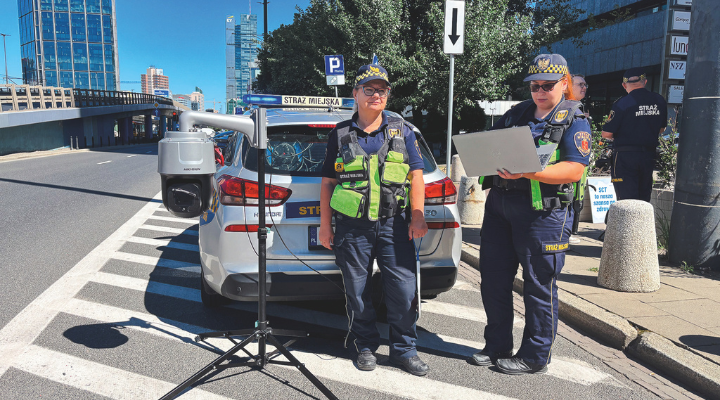
“Current regulations dictate that only the Straż Miejska, municipal police, have authority to issue fines,” says Bak. “To do so, they must physically stop a vehicle to verify compliance, making systematic enforcement difficult and resource-intensive in a city of nearly two million vehicles. Consequently, the LEZ risks remaining a paper policy, rather than a living, enforceable tool for cleaner air.”
By European standards, Warsaw is oriented towards travel by cars which are often older vehicles. The pace of change is slow, requiring considerable persistence and diplomacy. “Poland is one of the world’s most polluted regions,” says Müller. “Because people are so fed up with high levels of air pollution, we often emphasize direct, long-term benefits.”
Müller advocates meeting people where they can invest in the broadest consensus. “We find that economic, air-quality, health and quality-of-life arguments speak to people the most,” he says. “This is especially true when we speak about the ability of children to move around and play in a city.”
Target zero
For Bak and Müller, the clean environments the Clean Cities Campaign is creating in European cities represent a dream beginning to be realized. “I started out in the global justice movement almost 20 years ago, educating people about global inequalities,” says Bak. “Subsequently I gravitated towards more local actions: leading cooperatives, working in agriculture, management and community projects.”
Already, LEZs and ZEZs are improving lives, cleansing urban air and helping to drive increasing EV registrations. While progress is tangible, more remains to be done. To this end, the Dutch are here to help, not only with advice and best practices derived from successful implementations, but also with the poldermodel for harmonious political consensus and the Dutch example of strategic thinking which is diplomatic, patient but nonetheless unflinchingly persistent.
Wheel love
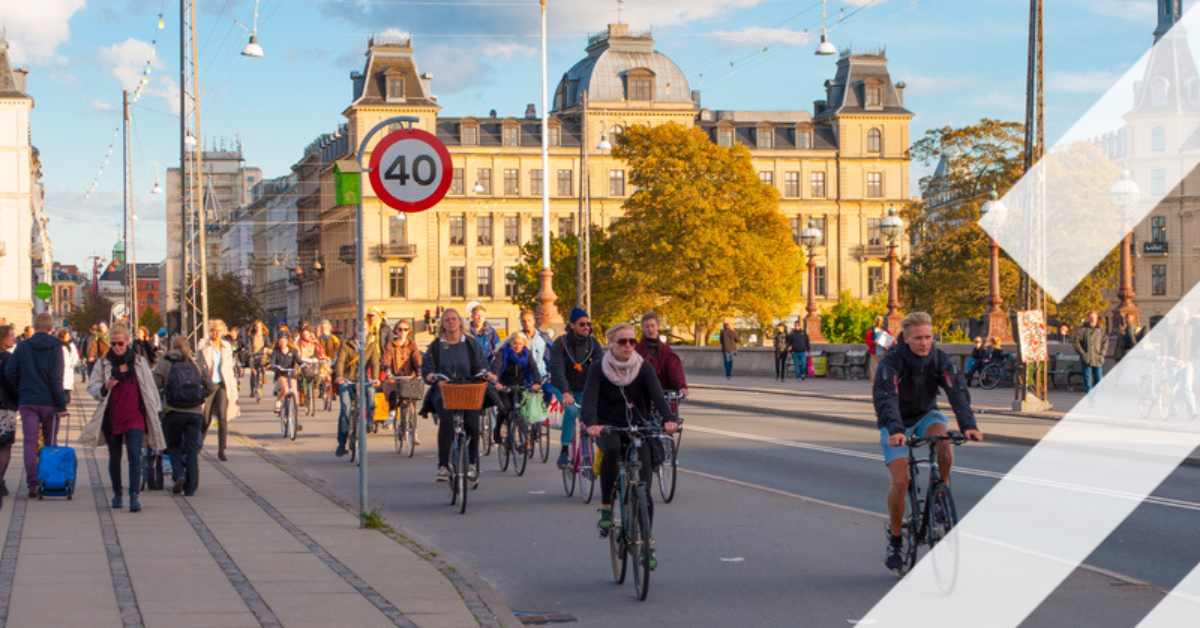
Often the Netherlands is thought of as having an advantage over other countries when it comes to reducing car use in its urban centres, due to its famous cycling culture. However, it would be wrong to assume bike-friendliness is an immutable feature of national character.
“It hasn’t always been like that,” says Jens Müller, deputy director of the Clean Cities Campaign. “In the 1970s, there were too many children being killed on our roads. There was a sense of crisis which triggered a national debate and a movement to improve road safety. That’s when the shift towards cycling culture really began.”
Progress reflected a capacity for national consensus which may appear hard to achieve in our polarised times. “We have a name for this in the Netherlands: poldermodel,” says Müller. “It’s an attitude developed through building dams to protect the country from rising seas. There’s a spirit of agreeing, then all pulling together – without continually reopening the debate!”
This article is avaliable to read in the Intertraffic World magazine 2026.
Share your story
Do you have an innovation, research results or an other interesting topic you would like to share with the professionals in the infrastructure, traffic management, safety, smart mobility and parking industry? The Intertraffic website and social media channels are a great platform to showcase your stories!
Please contact our Sr Brand Marketing Manager Carola Jansen-Young.
Are you an Intertraffic exhibitor?
Make sure you add your latest press releases to your Company Profile in the Exhibitor Portal for free exposure.


Get up to speed on the mobility industry - our newsletter straight to your inbox!