
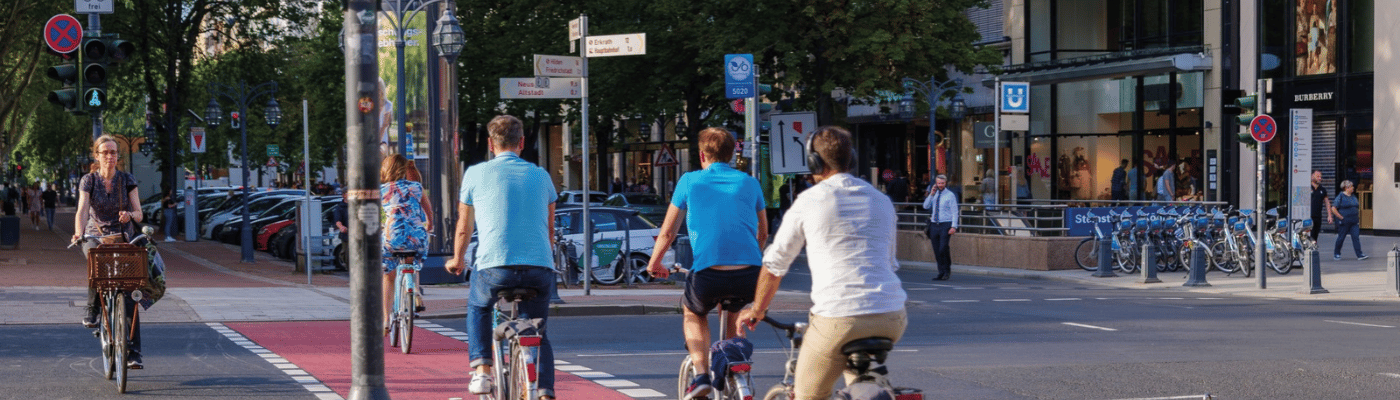
Why Dutch cities are using data, not just barriers, to filter traffic
The Netherlands is creating frameworks for the development and scaling of smart mobility systems that ensure success can be replicated quickly across the country for the benefit of all its urban populations. It is creating a model that could be replicated across Europe and around the world, with de-prioritisation of car use a key tenet.
Public space is under unprecedented pressure – and from pressure, diamonds are formed. Growing populations, rising cycling volumes, stricter emission rules, climate targets and the challenge of maintaining accessible mobility are converging on Dutch cities. Traditional systems are no longer enough.
Amsterdam and its partner cities are responding, not with isolated pilots, but with a coordinated national approach: digital orchestration through shared platforms, open data and interoperable tools that allow municipalities to steer mobility, manage congestion and allocate scarce space dynamically.
This is not just about deploying sensors or apps. It is about building a common infrastructure for innovation itself – one that ensures solutions developed in one city can be reused in another, and that individual tools can be combined into something greater than the sum of their parts.
A national innovation ecosystem
Digital Orchestration of Public Space (DRO) is a national innovation consortium within the Dutch Metropolitan Innovations (DMI) ecosystem. With a budget of more than €23 million, it develops and tests digital, data-based tools to help Dutch cities manage scarce public space while keeping mobility systems accessible, safe and livable.
DRO brings together municipalities (including Amsterdam, Almere and Groningen), technology companies such as Technolution, consultancies, and research bodies including AMS Institute.
The consortium focuses on replacing traditional, car-oriented instruments – infrastructure changes, induction-loop traffic lights – with integrated digital solutions, using real-time data to steer public space.
“You have to have the data in place to understand what is happening in a public space, not only traffic, but also people who are just walking, sporting, children playing,” says Paul van Koningsbruggen, director of mobility at Technolution.
“Together with other companies and municipalities, you have to accept that your solution is only one piece of a wider puzzle – bits and pieces of functionality together become a bigger whole.”

From pilots to platforms
The Amsterdam InChange platform (formerly Amsterdam Smartcity) is where this philosophy becomes operational. It functions as a commons where municipal departments, technology providers and knowledge institutions are able to exchange datasets, test new tools and align standards.
Instead of separate pilots running in isolation, InChange provides a structured way for Amsterdam to evaluate digital solutions and integrate them into broader city operations. By hosting shared catalogues, reference designs and documented pilots, InChange helps Amsterdam and its partners reuse proven solutions rather than redeveloping them city by city.
“We want to bring much more data to the table – not data for its own sake, but data because it gives insights we can explain to each other,” says van Koningsbruggen. “Traffic, energy, water, welfare: every domain should show its challenge expressed in data.”
This collaborative model shifts the city from ad-hoc experimentation to coordinated implementation. “Bits and pieces of functionality only become a real solution when you bring them together across organisations – horizontal collaboration is essential,” says van Koningsbruggen.
And crucially, what works in Amsterdam can be scaled nationally. The Products and Data Exchange (PDX) is the distribution layer that sits above city platforms like InChange. PDX maintains shared catalogues of interoperable products – traffic-management modules, sensing systems, digital twins, data standards – and provides guidance for how these components can be integrated across Dutch cities with minimal redevelopment.
“When you have a solution that works in Amsterdam, you can put it in a product and service catalogue so other cities can find it,” says van Koningsbruggen. “They should know where to request it, test it or buy it and know it is evidence-based.”
Because public-space and mobility challenges tend to be similar across the country, PDX focuses on making solutions ‘plug-and-play’ through open APIs, documented interfaces and agreed technical conventions. This reduces procurement time, prevents duplication and enables smaller municipalities to benefit from innovations piloted in larger cities.
For such a fertile approach, the obvious question is: why not make such an exchange Europe-wide? The answer is harmonisation. Different countries have different laws and appetites for sensor-based enforcement, and different interpretations of GDPR. However, the EU is looking ahead with initiatives like the EU Mobility Data Space (MDS) and ITS Directive 2.0 (2023) to the day when this will be possible.
Traffic filtering: putting the system to work
This infrastructure for innovation is not theoretical. It is enabling real interventions in how Dutch cities manage their streets – particularly through traffic filtering, an increasingly important mobility strategy closely tied to the DRO programme.
The principle is straightforward: limit unnecessary car access in busy or historic areas, while ensuring space and priority for walking, cycling and public transport.
While physical filters, or ‘knips’ which narrow the area to allow only pedestrians or cyclists through, are in use, increasingly filtering uses the digital tools developed through DRO – access rules, sensor networks and targeted restrictions to manage who enters, when, and under what conditions.
“You can say: do you really need to be with your car in Amsterdam? Or can you leave it at the park-and-ride? And if you go, does your vehicle fit the area? Its emission class? Its weight?” says van Koningsbruggen.
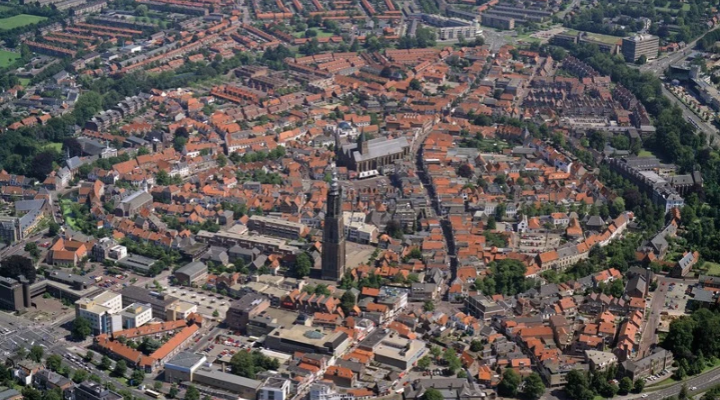
This is driven by pressure on Amsterdam’s historic, narrow street network, rising cycling volumes and the need to reduce emissions in line with national climate goals. Within DRO, filtering is being tested as part of broader, data-led management that integrates traffic signals, multimodal sensors and traveller information systems.
The data comes from sources such as AI-based sensors (for example, FlowCube) that can classify pedestrians, cyclists and vehicles while processing image data on-device to comply with privacy rules.
Use cases include regulating access based on vehicle type or emission class, reallocating underused parking, and spreading congestion by better informing travellers before and during their journey.
“If you would like people to walk and cycle more, you have to create space for them,” says van Koningsbruggen. “The only way to do that is to push back on cars.”
A new model for cities
The Netherlands is proving that smarter, more liveable cities do not require endless new infrastructure – they require shared data, interoperable tools and coordinated digital governance.
Through DRO, InChange and PDX, Dutch municipalities are building a unified approach to managing mobility and public space. Each component solves only part of the challenge, but together they form a coherent, scalable model for climate-resilient, people-centred urban development.
What emerges is not a collection of pilots, but a national ecosystem capable of turning insight into action – setting a benchmark for digital urban management across Europe.
The DRO toolkit
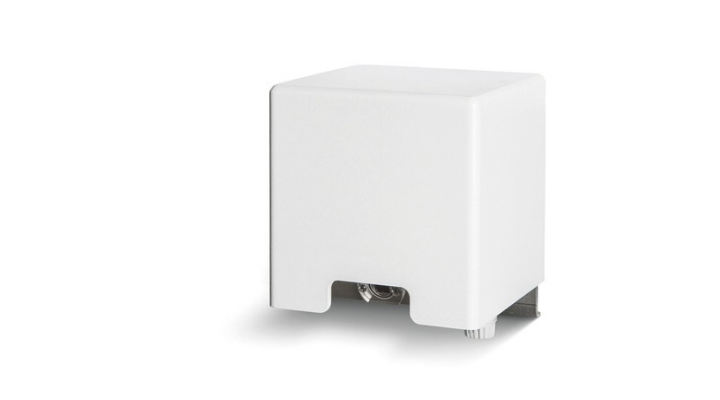
Digital Orchestration of Public Space (DRO) develops tools for real-time public space management that work together as an integrated system. AI-based sensors, such as FlowCube [right], can classify pedestrians, cyclists and vehicles while processing image data on-device to comply with privacy rules. Access control systems regulate entry based on vehicle type, emission class or weight, while dynamic allocation systems can reallocate underused parking spaces. Traveller information systems help spread congestion by informing people before and during their journeys. Integration layers connect traffic signals, multimodal sensors and control strategies, allowing these separate components to function as a coordinated whole rather than isolated tools.
Where InChange meets PDX
Amsterdam InChange is the local, open, integration platform where the city tests and coordinates innovations. The Products and Data Exchange (PDX) is the national distribution mechanism that allows proven solutions to be shared between cities. InChange makes innovations work inside one city; PDX moves them between cities. Together they form a two-tier system: local experimentation backed by national scaling.
Where past meets future
Half an hour by train from Amsterdam, the historic town of Amersfoort has become a fulcrum of smart-city innovation. In 2024, the DMI Centre opened its doors as the physical home of Dutch Metropolitan Innovations (DMI) Ecosystem, which is driving digital, sustainable and climate-resilient urban development.
Amersfoort acts as a neutral meeting ground where municipalities, national ministries, technology companies, research institutes and universities come together to design and test next-generation solutions for mobility, public space and housing.
Far from a passive conference venue, the DMI Centre hosts a constant flow of workshops, governance sessions, technical labs, roundtables and pilot demonstrations. City officials use it to coordinate regional strategies; engineers and data scientists refine digital tools; researchers exchange knowledge on urban systems; and industry partners trial interoperable technologies intended for reuse in cities across the country.
By providing a shared base where ideas, data and practical experience circulate freely, the DMI Centre has rapidly become the collaborative engine room of the Netherlands’ smartcity transition – a place where old-world streets meet the future of metropolitan innovation.
This article was first published in the 2026 edition of Intertraffic World Magazine.
Advertising & editorial opportunities
Want to be featured in the forthcoming 2027 edition? Explore advertising and editorial opportunities to put your organisation, expertise or solutions in front of the industry.
For more information, please contact Karen German.
Tel: +44 (0)1322 626961
Mobile: +44 (0)7939 286517


Get up to speed on the mobility industry - our newsletter straight to your inbox!