

Moving traffic enforcement: When the road becomes the camera
Traffic enforcement has traditionally been a largely human-driven business: the traffic warden with a notebook, the police officer at the roadside, the parking attendant patrolling the kerb. Now the kerb is becoming intelligent – and, increasingly, the road itself is watching.
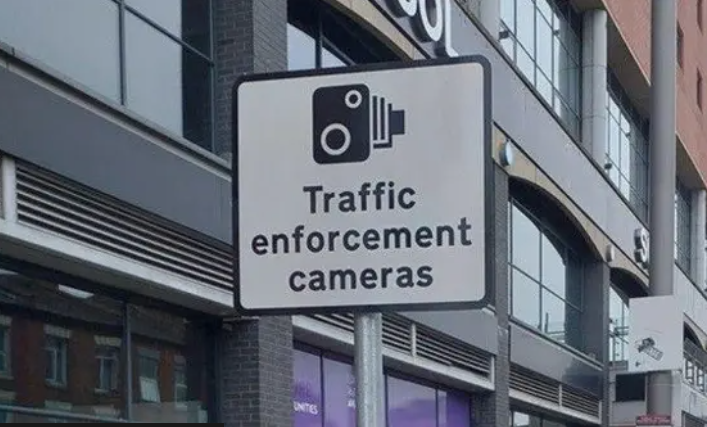
Automatic Number Plate Recognition (ANPR) has already transformed parking, tolling, congestion charging and low-emission schemes. The next step is more sophisticated moving traffic enforcement: cameras and software capable of identifying vehicles entering restricted streets, ignoring bus lanes, turning where they should not, blocking yellow boxes or passing through other prohibited movements. The technology can capture the registration, establish what the vehicle has done and, increasingly, provide the evidential chain needed to support enforcement.
CONTEXT PROVIDER
The clever bit is not simply reading a number plate, though. Modern systems are becoming an exercise in context. A camera can understand the movement of a vehicle through a junction, cross-reference the registration with relevant databases and distinguish a genuine contravention from an innocent manoeuvre. AI promises to make that process faster and more accurate still.
“A camera can understand the movement of a vehicle through a junction, cross-reference the registration with relevant databases and distinguish a genuine contravention from an innocent manoeuvre”
Take London-based parking technology platform Hozah as an example. The company has built its parking proposition around an ecosystem of ANPR, automation, payments and compliance rather than treating the camera as an isolated piece of hardware. But here is the catch: technology can move considerably faster than legislation.
Hozah is pitching its Ecosystem - a single platform for permits, payments and enforcement - to local authorities, challenging a market where traditionally at least, hardware, software and services are procured separately, leaving authorities to stitch together tools that were never designed to work as one.
The product marks Hozah's move from private parking, where it has operated for more than a decade, into public-sector enforcement. Its central argument is that the local council market is fragmented: authorities typically choose a camera and are then tied to whatever software comes bundled with it, or must procure separate systems for monitoring and for issuing PCNs. Hozah’s Ecosystem is offered instead as one platform under one contract, running on any VCA-approved camera with single sign-on across the system.
"Everything in one system has been one of the biggest benefits our clients talk about," says David Fowle, Hozah’s co-founder and CEO. "One platform and one contract means authorities operate more efficiently, which saves cost and increases revenue."
RESTRICTION OF RESTRICTIONS
In England councils wanting to enforce moving traffic contraventions, in recent times Devon County Council and Bradford City Council have announced their intention to implement moving traffic enforcement (MTE) schemes, have to operate within the framework of the Traffic Management Act 2004.
They need designation as an enforcement authority, and the area covered must sit within, or coincide with, an existing civil parking enforcement area. The Department for Transport's statutory guidance also makes clear that councils should not simply install cameras and start issuing penalty notices: restrictions must be properly signed, enforcement locations should be justified, and authorities are expected to consider whether reasonable highway or signage improvements could prevent the contravention in the first place.
That matters because moving traffic enforcement sits on an uncomfortable line between traffic management and public perception. A council may argue that enforcement keeps buses moving, protects junctions and improves road safety. A motorist may see nothing more than another camera and another fine.
The legislation reflects that tension. Government guidance stresses that the purpose of civil enforcement should be compliance rather than revenue generation, and that enforcement policies should be transparent and publicly accessible.
“Government guidance stresses that the purpose of civil enforcement should be compliance rather than revenue generation, and that enforcement policies should be transparent and publicly accessible”

AUTOMATIC FOR THE PEOPLE
Hozah's route into council work runs through Autopay, the decade-old product it was first to introduce in the UK and which depends on ANPR read rates approaching 100% - the company is paid only when an Autopay driver's plate is read correctly. That commercial pressure, it says, forced years of investment in accuracy. Around 8 million ANPR reads are now processed every month, each checked by AI.
Hozah frames that accuracy as the foundation of credible enforcement: more precise reads produce more precise Penalty Charge Notices, fewer cancellations on appeal, and higher payment rates. Its proprietary AI runs on top of existing VCA cameras, which the company says lifts the performance of a council's current estate without new capital spend or a rip-and-replace of hardware. The same platform is CCTV-integration ready for bus lanes, School Streets and emerging MTE sites.
Then there is the data. An ANPR system does not merely see a car. It potentially creates a record of a vehicle registration, image, time and location. The UK’s Information Commissioner's Office regards a vehicle registration mark as personal data in most enforcement contexts and expects operators to establish necessity and proportionality, conduct a Data Protection Impact Assessment, minimise camera deployment and have clear retention and disposal policies.
A LOT TO CONSIDER
Mainland Europe adds another layer of complexity. There is no single European playbook for municipal moving traffic enforcement: national road-traffic law, local authority powers and enforcement procedures vary between jurisdictions. But the underlying challenge is familiar. Intelligent Transport Systems (ITS) are being developed, encouraged and implemented across Europe, while privacy, data security and liability remain fundamental considerations. The EU's updated ITS framework explicitly brings data protection and liability into the deployment equation.
“Mainland Europe adds another layer of complexity. There is no single European playbook for municipal moving traffic enforcement: national road-traffic law, local authority powers and enforcement procedures vary between jurisdictions”
So the future of moving traffic enforcement is unlikely to be decided by whether a camera can read a number plate at 40mph, because it can.
Hozah's closing argument is a commercial one.
“On-time payment,” says Chief of Staff Ninh Hao, “is where most of a scheme's income is realised. It is the biggest revenue lever an operator can actually influence, and digital-first councils win it through user experience. A clean, low-friction payment journey removes the delays that push drivers into the appeal or debt recovery track, so more PCNs are settled early without chasing.
“Accurate ANPR reads ensure clearer evidence of the offence which blunts challenges before they start, cutting appeal volumes, while self-service appeal and permit portals divert routine queries from council customer-service teams. Better UX, Hozah argues, is not a nicety but the mechanism that lifts revenue.”
FASTER THAN THE SPEED OF LEGISLATION
The bigger question, however, is whether governments, councils and technology companies can build systems that motorists regard as accurate, proportionate and fair – and legislation that is sufficiently flexible to accommodate technology which may be evolving faster than the rulebook.
That is where the real innovation might lie: not simply making the camera more intelligent… but making the entire enforcement ecosystem smarter.
Share your story
Do you have an innovation, research results or an other interesting topic you would like to share with the professionals in the infrastructure, traffic management, safety, smart mobility and parking industry? The Intertraffic website and social media channels are a great platform to showcase your stories!
Please contact our Sr Brand Marketing Manager Carola Jansen-Young.
Are you an Intertraffic exhibitor?
Make sure you add your latest press releases to your Company Profile in the Exhibitor Portal for free exposure.

.png?h=183&iar=0&w=290)
.png?h=183&iar=0&w=290)
Get up to speed on the mobility industry - our newsletter straight to your inbox!