
Changing behaviour, saving lives
Emerging technologies and market trends on traffic enforcement and road safety
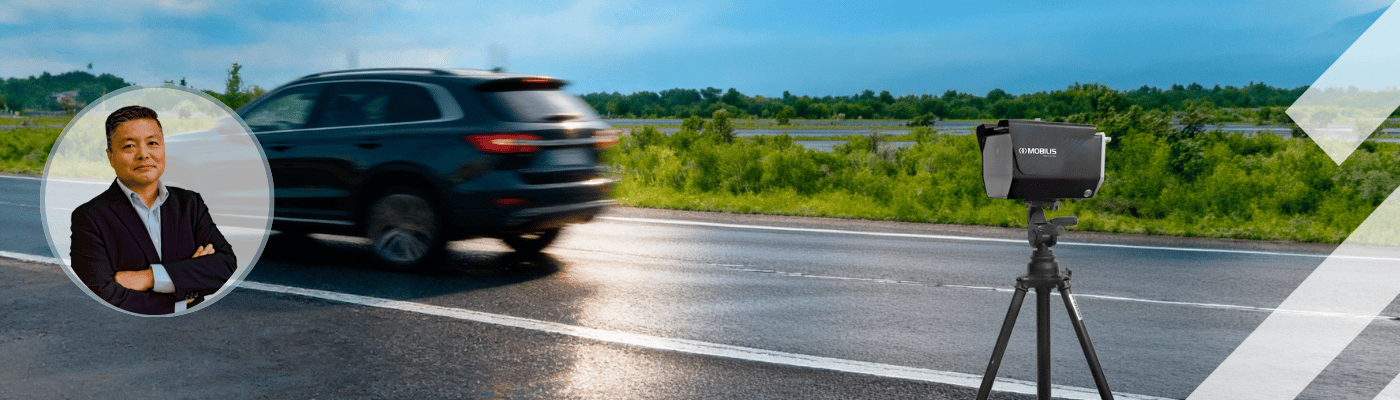
At 3.15pm on Tuesday 10 March, the opening day of Intertraffic Amsterdam 2026, the focus will turn to the inextricably linked and pressing issues of traffic enforcement and road safety. A panel of experts will take to the Road Safety Stage of the Intertraffic Summit with the goal of addressing what is becoming an increasingly prescient topic. Among the presenters is Mobilis Traffic managing director Régis Nishimoto, who explains how the Brazilian solution providers are looking to, literally, change the dynamic.
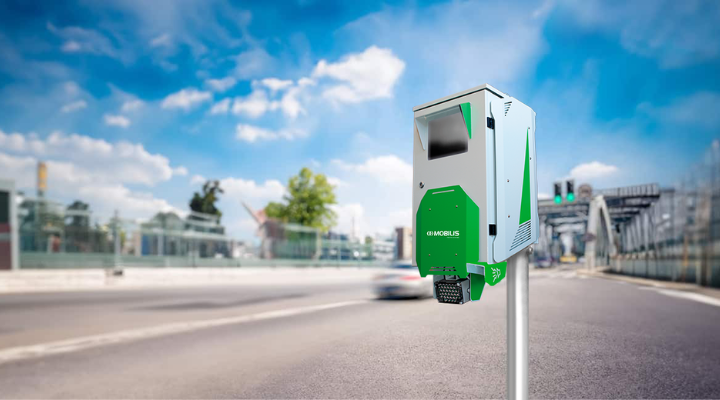
“We have been in the enforcement market a long time,” he says, somewhat wistfully. “34 years, to be precise, and recently we have seen some changes in the use of traffic enforcement systems besides its original goal, which is to red light and speed enforcement. During the past few years, we’ve seen that there's more need to deliver more information based on the data we collect via this equipment. For example, every year, we take 7 billion speed measurements and recently, as we have added a tracking radar into the equipment, we know for 200 metres the behaviour of the driver when coming into the equipment’s range or indeed leaving it. It depends on the installation. Based on that, we can, for example, calculate acceleration and also braking rates.”
"Every year we take 7 billion speed measurements and recently we have added a tracking radar into the equipment, so we know the drivers’ behaviour for 200m before and after it passes the system"
In addition to Nishimoto and his colleague Icaro Pierre Schmitz Freddo, and Adriel Bilharva da Silva is Mohammed Shams Magd, a PhD candidate from Western University in Ontario, Canada, who will bring some academic gravitas to the proceedings.
Says Nishimoto: “We're doing some studies on harsh braking. And understanding the behaviour of the driver when it comes to an enforced area, especially in which situation they are harsh braking at the point that it may cause an accident or the loss of control of the vehicle. I think this is going to be a very interesting approach. And we're not only talking about enforcing fines, but also generating relevant information for the traffic authorities to plan and to check if the equipment is installed in the right place and which other measures the authority can take in order to increase traffic safety.
"We're not only talking about enforcing fines, but also generating relevant information for the traffic authorities to plan and to check if the equipment is installed in the right place"
ENFORCING THE ISSUE
“Another point that we're going to discuss is the installation costs in developed economies,” he notes. “And we see serious restrictions and a big cost of installing that technology. It's different from Brazil, where the labour costs are lower. We're going to show this trend in the session, and solutions to make installation costs affordable to implement traffic enforcement in developed economies.”
Think of traffic enforcement and traffic safety and what comes to mind is traditional measures – as Nishimoto foreshadowed with his mention of speed and red-light measures and countermeasures. However, another string to the Mobilis bow is its work in noise enforcement.
“Motorcycle noise is a huge problem, especially in city centres, and it’s a really important issue,” he insists. “We have developed a noise enforcement system and we have implemented it in three cities here in Brazil. It's something of a new trend here. The thing is that this kind of system is very popular because when we start with traffic enforcement, we see that part of the population is against it, but with noise enforcement it’s completely different. The approval ratings are very high.
“We're going to include our noise enforcement measures in the session - these are the main messages that we want to present.”
"We have developed a noise enforcement system and we have implemented it in three cities in Brazil. It's something of a new trend here"
INCENTIVISATION
It’s clear from Nishimoto’s enthusiasm that the concept of changing behaviour is a key tenet of how his company approaches the topic. In Brazil is it, Intertraffic wonders, similar to the situation in Europe, where in order for drivers to change their behaviour, even if it’s for their own benefit, they need to be offered a tangible incentive?
“Sticking with noise, I think the incentive is to have a calmer situation in the city. If you look at electric scooters, for example, a good incentive would be to make zero noise,” he says.
“But looking at regular traffic enforcement, especially speed enforcement, I think that the main incentive is to show the speeder that he can actually kill someone by doing this. I think the biggest incentives are quite simply to not kill anyone and to not get killed while you're trying to get from A to B. In Nordic countries they came up with the idea of a lottery. When you stick to the speed limit, they take a picture of you and then you can participate in a national lottery, but I'm not sure that would be a good solution. For example, here in Brazil, there are incentives for people to pay the fine with a discount, but this is not an incentive to change behaviour, just to pay the fine. Because when you lower the prices of the fines, what happens is that people are going to speed more because it’s cheap to pay!
"I think the biggest incentives are quite simply to not kill anyone and to not get killed while you're trying to get from A to B"
During the last decade of action for road safety, Brazil was able to reduce traffic deaths by 30%.
Says Nishimoto: “We did not reach the goal of the United Nations, but I think it was a good result. In this specific decade, we were facing problems, especially after the pandemic, because people changed their behaviour, They were locked in their homes for the best part of two years and when they came back to the roads the crash rates in Brazil increased, To be fair I don’t believe those statistics are unique to Brazil, though.”
Source: Regis
An academic study conducted in Brazil revealed that every speed camera installed on a Brazilian road had prevented 34 accidents and three deaths per year, meaning that during Mobilis’s 34-year existence, using this data, the company claims to have saved over 106,000 lives.
“It’s a big achievement,” says Nishimoto, “and something that we are very proud of.”
OFFICIAL CAPACITY
In addition to managing Mobilis Traffic’s affairs, Nishimoto uses his 23 years in traffic enforcement for the public good as he also has a role with the Brazilian government.
“I'm part of the National Traffic Office here in Brazil – we are responsible for traffic legislation and when we talk to customers, they really see that we're not just a tech company, but one that is really engaged on changing traffic and the fact that we're part of the National Traffic Office helps us a lot on engaging with municipalities and traffic authorities. Now in the United States, we are trying to start a relationship with some local communities, through the universities.
“And through the universities,” he concludes “we present our technology, but we also want to discuss the issue of traffic and find a solution that can change behaviour and save lives.”
Emerging technologies and market trends on traffic enforcement and road safety, Tuesday 10 March at 1515, Road Safety Stage
Share your story
Do you have an innovation, research results or an other interesting topic you would like to share with the professionals in the infrastructure, traffic management, safety, smart mobility and parking industry? The Intertraffic website and social media channels are a great platform to showcase your stories!
Please contact our Sr Brand Marketing Manager Carola Jansen-Young.
Are you an Intertraffic exhibitor?
Make sure you add your latest press releases to your Company Profile in the Exhibitor Portal for free exposure.


Get up to speed on the mobility industry - our newsletter straight to your inbox!