Rethinking Construction and Sustainability in EU Transport Systems
Key Findings from an Expert Perspective
The European transport infrastructure sector has been undergoing a profound transformation towards a smarter and greener future. However, the challenge is no longer simply about building next-gen infrastructures or adopting novel technologies. It is also about i) maintaining and renewing the existing infrastructure, ii) defining how sustainability priorities should be balanced, iii) integrating impactful technologies gradually, iv) understanding what can influence people to “go greener” and v) learning to what extend AI tools can assist with this process.
The 3/2026 STA Expert Perception Tracker provides a snapshot of how transport professionals view these challenges, with a particular focus on construction and sustainability in EU transport systems.
The STA Expert Perception Tracker is a recurrent, short-format survey designed to capture expert sentiment and qualitative insights on key transport topics. The 3/2026 survey was held from 15 to 31 July 2026, gathering over 101 responses from transport professionals across 21 countries.
KEY FINDINGS
Sustainability is not a choice between green/clean, economic or social priorities - experts want all three.
The vast majority (74.3%) of respondents believe that environmental, economic and social sustainability should be given equal importance in transport infrastructure construction and management. Only 15.8% believe economic sustainability should take priority, while 6.9% prioritise environmental sustainability and 3.0% social sustainability. The message is clear: the transition towards more sustainable transport infrastructure cannot be reduced to a single objective. Environmental performance, economic viability and social value need to move forward together.
The vast majority (74.3%) of respondents believe that environmental, economic and social sustainability should be given equal importance in transport infrastructure construction and management
The most sustainable infrastructure may be the infrastructure we already have.
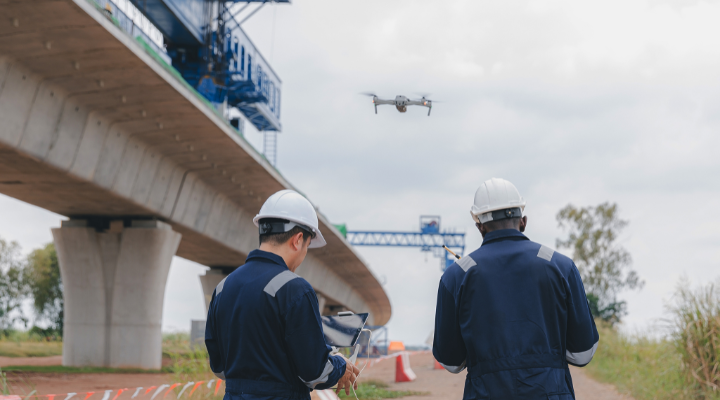
Over 94% of respondents consider infrastructure maintenance either highly relevant or relevant to reducing the environmental impact of transport systems, with 62.4% describing it as highly relevant. Only 6.0% consider maintenance slightly relevant or not relevant. The results put the spotlight on a sometimes- overlooked part of the sustainability equation: keeping existing infrastructure in good condition and incorporating resilience into the design phase to guarantee the sustainability of the project. Mr César Bartolomé, Technical Director and Innovation Manager of the Spanish Institute of Cement and its Applications (IECA) and Chair of STA Technical Committee on Construction and Sustainability, highlights that durability is central to sustainable infrastructure: designing for long service life, resilience and efficient maintenance is one of the most effective ways to reduce impacts over its life cycle.
Convenience beats cost and environmental concerns when it comes to changing travel behaviour.
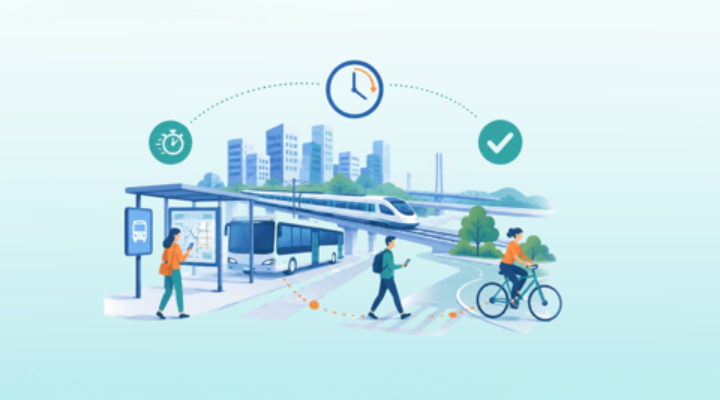
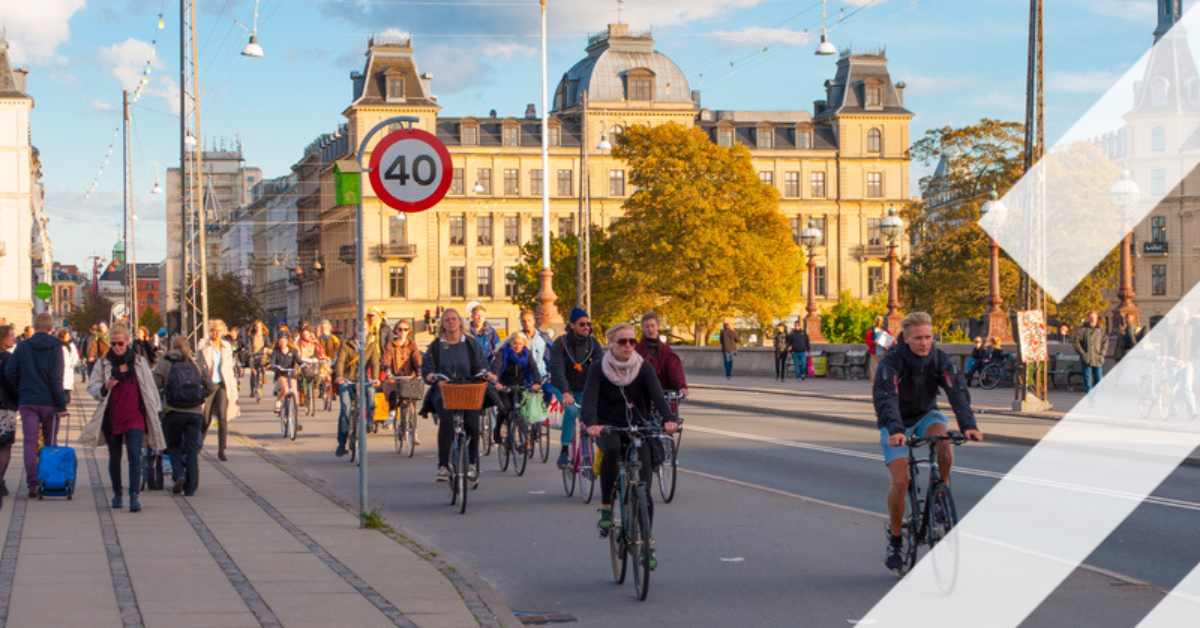
More than half of experts (56.4%) believe that a combination of factors would be the main driver of changes in travel behaviour. When looking at individual factors, however, convenience and shorter travel times clearly stand out, as 30.7% of respondents stated. Interestingly, making transport more sustainable may not simply be a question of convincing people to make greener choices, as according to the findings, only 7.9% of the respondents consider lower personal costs as a key contributing factor, while just 5.0% identify reducing environmental impact as the main driver of changes in travel behaviour.
More than half of experts (56.4%) believe that a combination of factors would be the main driver of changes in travel behaviour.
AI has potential - but experts are not ready to take its benefits for granted.
More than three-quarters of respondents (77.2%) believe that AI-supported modelling tools can deliver measurable sustainability benefits, either clearly (27.7%) or at least in specific cases (49.5%). However, almost half of respondents see measurable benefits only in specific cases, highlighting once more, that trust in AI, still requires evidence. A further 12.9% believe that the impact has not yet been demonstrated, while 9.9% consider the benefits remain marginal.
CONCLUSION & RECOMMENDATIONS
From roads to rail to buildings and bridges, experts across Europe are voicing the importance of better maintenance of existing assets in the grand scheme of sustainability. To secure a sustainable future, it is important to balance environmental, economic and social priorities, and take into consideration users' needs.
From roads to rail to buildings and bridges, experts across Europe are voicing the importance of better maintenance of existing assets in the grand scheme of sustainability
With regard to emerging technologies, as the findings reveal, AI-supported modelling tools have shown promising results so far, but their sustainability benefits still need to be further demonstrated in real-world applications.
The 4/2026 version of the STA Expert Perception Tracker will be launched in November 2026 and will focus on operations and connectivity in transport infrastructures.
For more information visit http://www.smart-transportation.org.
Share your story
Do you have an innovation, research results or an other interesting topic you would like to share with the professionals in the infrastructure, traffic management, safety, smart mobility and parking industry? The Intertraffic website and social media channels are a great platform to showcase your stories!
Please contact our Sr Brand Marketing Manager Carola Jansen-Young.
Are you an Intertraffic exhibitor?
Make sure you add your latest press releases to your Company Profile in the Exhibitor Portal for free exposure.

Get up to speed on the mobility industry - our newsletter straight to your inbox!

.png?h=400&iar=0&w=1400)