
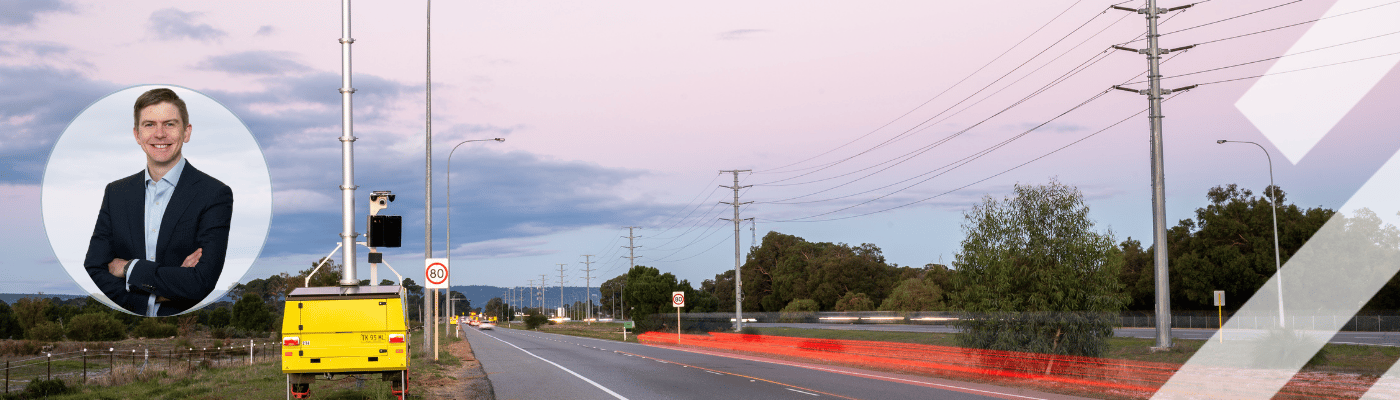
The Vision Zero Imperative
Alexander Jannink, managing director of Australian-based advanced traffic enforcement solutions specialists Acusensus, tells Intertraffic about the inspiration behind the Summit presentation that looks at global programs driving sustainable behaviour change.
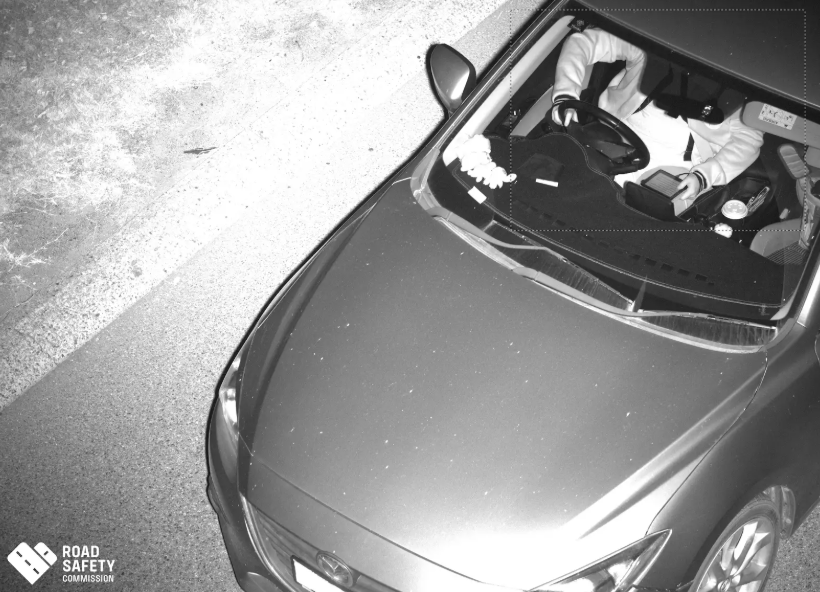
The world’s first seat-belt non-compliance and illegal phone use enforcement camera program, deployed in Queensland, Australia. The world’s first introduction of a multi-functional enforcement tool to simultaneously enforce illegal mobile phone use, speeding, and unregistered vehicles, first demonstrated with Tasmania Police and now operational with Western Australia Police. The implantation of Western Australia’s Smart Freeway Pilot Program. Deployment of Level Crossing Monitoring for the Australian Rail Track Corporation. Partnering with multiple entities in the UK for van-based pilots for mobile phone and seatbelt detection.
"Our claim to fame is in being the first company that supplied a live enforcement program to try to deter drivers from using their mobile phones while behind the wheel."
These are just a small selection of examples of how Acusensus are saving lives by playing a leading role in driving changes in sustainable behaviour with their AI-powered innovative, intelligent road safety solutions. Attendees of the Intertraffic Amsterdam Summit’s Roadmap to Zero: Aligning Safety Goals with Asset Management Excellence session can hear for themselves why this hugely important topic means so much to the company and its founders.
FOCUS ON THE FATAL FIVE
“We're focused on the fatal five driver behaviours that cause the majority of road casualties, deaths and injuries,” says managing director Alex Jannink. “That’s speeding, impairment, distraction, fatigue and the use of seat belts. We’ve had speed enforcement cameras for quite a long time now, and while there have been innovations in speed enforcement, there's not been a lot of technological developments. I'd say our claim to fame is in being the first company that supplied a live enforcement program to try to deter drivers from using their mobile phones while behind the wheel.”
The program in question commenced at the end of 2019 in New South Wales, Australia and was a huge success in terms of changing driver behaviour.
Says Alex: “When we started, there was roughly one in 100 drivers identified using a mobile phone as they pass the camera at any given time, at any point on the road network. Now, six years later, that's one in 1000 drivers. There's been an order of magnitude reduction in the detected behaviour of people using their phones, and that also coincides with very strong road fatality reductions in the first couple of years after that program was implemented, and at a time where the rest of the Australian states, which should be comparable, went up in in road fatalities.”
"When we started, there was roughly one in 100 drivers identified using a mobile phone as they pass the camera at any given time, at any point on the road network. Now, six years later, that's one in 1000 drivers."
(source: Acusensus)
This was no one-off anomaly.
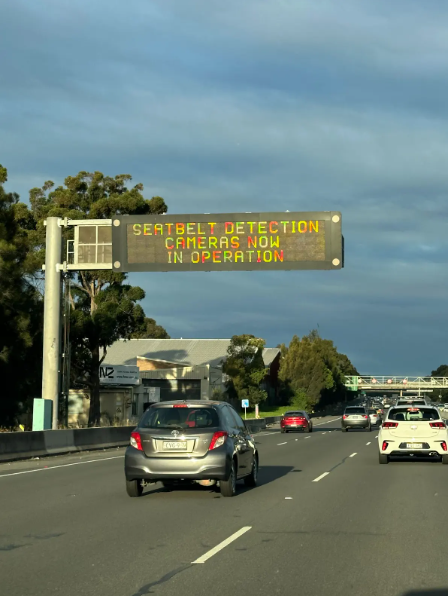
“Thankfully, that happened again in each of our next major programs,” he says, understandably proudly. “Queensland also saw significant behaviour change and road fatality reduction. South Australia saw significant behaviour change and road fatality reduction. We started with that distraction element, the second of the fatal five after speeding. And then we looked at seat belts, the third of the fatal five, and we supplied the world's first automated enforcement camera program for seatbelt usage in Queensland, starting in 2021. There's now been a very strong reduction in road fatalities associated with people not wearing seatbelts, as of the last quarter of 2024.”
MULTI-FUNCTION ENFORCEMENT
As for the future, Jannink and his team have their sights set on the next element of the fatal five: impairment.
“We're trying to make those technologies more accessible for governments, making them cheaper to implement,” he explains. “The West Australian case is a really good example of that, where from a single camera, we're simultaneously looking at speeding behaviour, average speed behaviour, seat belt usage and mobile phone usage. There's also heavy vehicle analysis in there as well. When you're looking at that multi-function enforcement, the government's paying for the deployment of only one asset and yet targeting three of the five fatal road user behaviours. But the other thing it's doing is letting the government see who is committing more than one offence at the same time. Somebody who is simultaneously speeding at, say, more than 11 kilometers an hour over the limit, is not wearing a seat belt and is using their mobile phone, has about a 180 times increased risk of dying over a sober, attentive driver.”
(source: Acusensus)
THE IMPORTANCE OF THE MESSAGE
Armed with that information it’s possible to hone in on a certain set, or subset, of the driving population that is more likely to have some kind of crash. But how you get the message across that this dangerous, anti-social behaviour is another crucial element – welcome to the notion (and practice) of acceptance through targeted messaging.
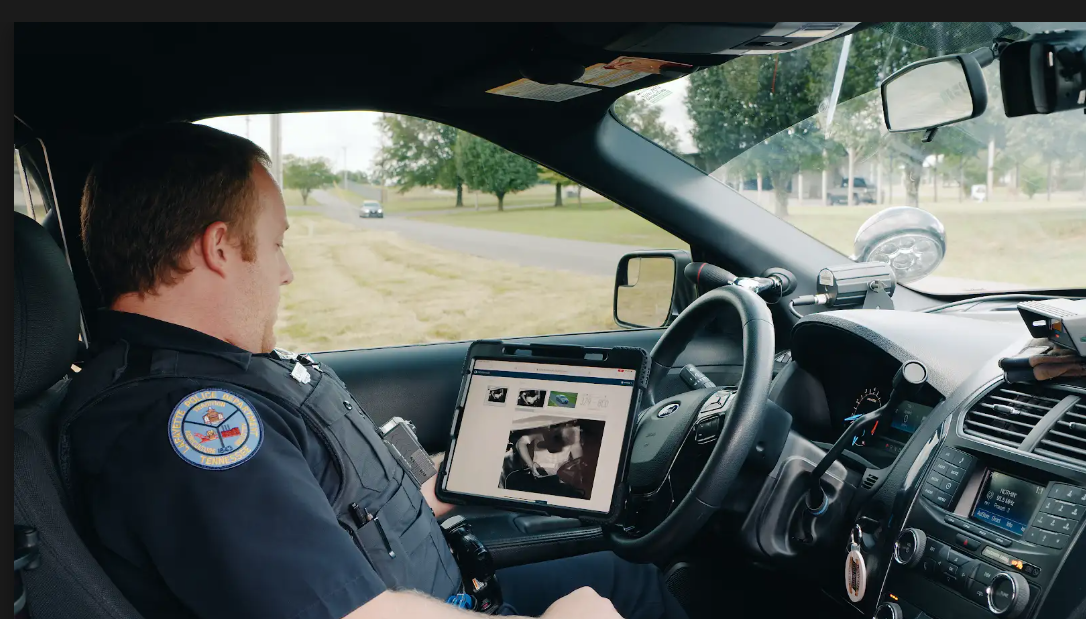
“Automated enforcement in Australia is quite widely accepted. Something like 80 to 90% of people surveyed say they want mobile phone use enforcement. In foraying into the Unites States market we developed a product that we call Heads-Up Real-Time, a more culturally accepted version of our automated enforcement camera that is typically deployed on a trailer platform. The ‘Real-Time’ is because it's being done in conjunction with the police.
(source: Acusensus)
"Somebody who is speeding at more than 11 kilometers an hour over the limit, is not wearing a seat belt and is using their mobile phone, has about a 180 times greater risk of dying over a sober, attentive driver."
“And so police officers will wait 500 meters or a kilometer down the road, and they'll get imagery sent to them automatically when a driver is detected going past the trailer unit, speeding, using a phone or not wearing a seat belt, and then the officer can pull that driver over and actually affect a traffic stop right there and then. That has quite a high degree of support. This kind of technology is a total game changer for highway patrol, because they can then change the behaviour there and then. So those solutions are now in place where we're live in eight US states at the moment. We're doing enforcement that otherwise would never have been done.”
SUCCESS METRICS
The number of lives saved is clearly the statistic that matters most, but according to Alex Jannink, the ultimate metric of success is how many governments are willing to adopt a new technological solution.
“There’s a few steps to this, and some of them are just pure education in terms of ‘do people know that you can very effectively solve this problem, and do people realize just how effective a technology intervention actually is?’ he asks, rhetorically.
“I think what’s absolutely key is getting more people aware that you can reduce road fatalities with a single program, a single initiative, with one stroke of a pen, and that it will actually have really meaningful road fatality reductions in the areas of mobile phones and seat belts. New South Wales shows you; Queensland shows you; Western Australia shows you; some of the US data shows you; Devon and Cornwall in the UK shows you. Every single time you deploy even just a handful of cameras and put 10 trailers on a road network you can see with automated enforcement and decent penalties just how fast the behaviour changes.”
"Every time you deploy even just a handful of cameras and put 10 trailers on a road network you can see with automated enforcement and decent penalties just how fast driver behaviour changes"
WHY DON’T WE HAVE THAT?
Alex Jannink and Acusensus’s passion is quite evident. So, as an audience member, sitting enthralled in the Intertraffic Amsterdam 2026 Summit programme, what am I going to be able to do with the knowledge and information that I have just lapped up?
“I think the first step is sharing it,” says Jannink, who founded the company as recently as 2018. “So, share what you've learned with other people and professionals in your network. Ask ‘could we do that here?’
‘Who needs to know this, and who could actually make a difference with it?’
“Because almost inevitably you will know somebody who knows somebody who has very significant influence, particularly in that kind of conference environment you're probably only two or three steps away. Ultimately, if you knew which steps to take to an ultimate decision maker who could really get something moving quickly… the jurisdictions I've seen that have implemented this quickly have always had a single key person. Often, it's a politician where a minister has been properly briefed and is across it, and they have a particular passion to do good. This is what they did in this other jurisdiction, and this is how much support there is in the electorate for it. Go and make it happen here.”
Share your story
Do you have an innovation, research results or an other interesting topic you would like to share with the professionals in the infrastructure, traffic management, safety, smart mobility and parking industry? The Intertraffic website and social media channels are a great platform to showcase your stories!
Please contact our Sr Brand Marketing Manager Carola Jansen-Young.
Are you an Intertraffic exhibitor?
Make sure you add your latest press releases to your Company Profile in the Exhibitor Portal for free exposure.



Get up to speed on the mobility industry - our newsletter straight to your inbox!