
A parking day of reckoning
The European Parking Association is addressing three of the hottest topics in parking today at the Intertraffic Amsterdam 2026 Summit
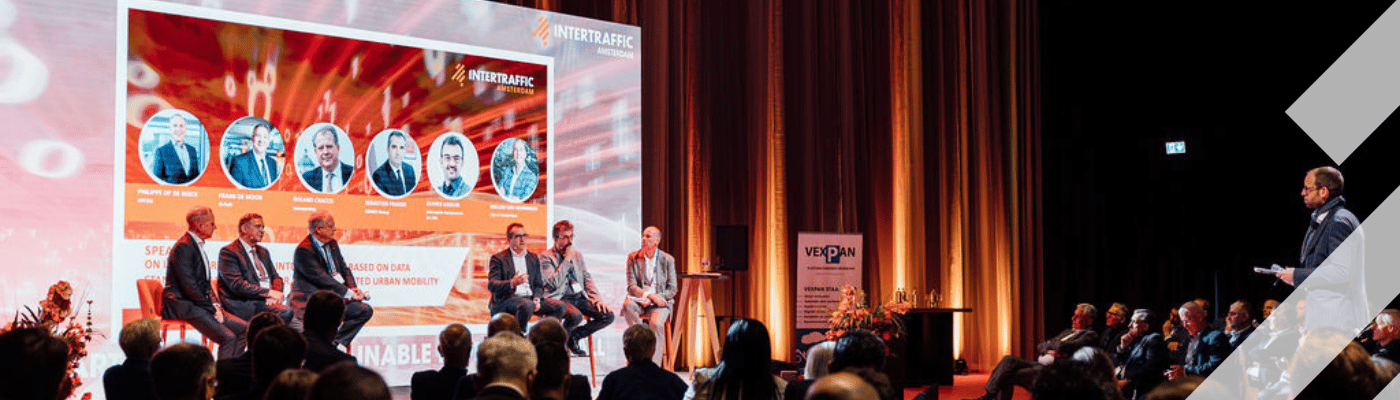
The European Parking Association (EPA) is hosting three summit sessions at next week’s hotly anticipated Intertraffic Amsterdam Summit, with a focus on kerbside management on Tuesday, followed the next day by an examination of the point where parking management meets traffic management and the use of AI in parking, as part of the organisation’s Parking Day concept. We asked EPA’s Executive Director, Tom Antonissen, to share his insights on these topics.
As cities grow and mobility patterns evolve, integrating traffic management, parking policy and urban access control is no longer optional. How do we move from siloed systems to a coherent ecosystem where vehicles, infrastructure, authorities and service providers work together? In the first of EPA’s sessions ‘Managing Urban Space for Sustainable Mobility and Logistics’, city leaders and industry experts will explore how coordinated strategies can reduce congestion, improve accessibility and rebalance public space.
The second session focuses on ‘Where traffic management meets parking management, with the starting point the idea that every vehicle on the road has got to stop somewhere at some point for a certain length of time, so how do we optimise the logistics of that conundrum – after all, it’s estimated that the average car is static for over 90% of its lifespan.
In the third session ‘AI in Mobility and Parking’ the focus shifts to how AI is transforming mobility and parking but what truly works, and what is just hype? From dynamic pricing and kerbside intelligence to in-vehicle guidance and automated parking, artificial intelligence is rapidly reshaping how cities manage space, demand and user experience. Yet alongside the opportunities come real operational, technical and governance challenges.
.png)
Intertraffic: Let’s start with the question we have asked all of our Summit Speakers - if I work for a European city and I am a member of the audience at your EPA sessions, what will I be able to do with the knowledge you impart to me? And how can I action what I learn?
Tom Antonissen (European Parking Association): That's a very interesting question, so let me come back with a layered reply. In our session on Tuesday 10 March, we will talk about the topic of kerbside management, and in particular how it relates to urban logistics and last-kilometre delivery. But the interesting part is that Intertraffic also wanted to bring more EU-funded projects into their summit because, as you may know, in Brussels a lot of work is being done through EU-funded research projects and their deliverables, and organizations such as POLIS and Eurocities are very active in this ecosystem. We are getting into this as well, and we will be looking to showcase two relevant urban mobility projects, DISCO and GOLIA, and the work that they are doing in this regard.
Intertraffic: So, where is the point where traffic management and parking management meet? Every vehicle on the road has got to stop somewhere.
TA: I’ll come to that. But the point in this first session is that we really want to show that parking management and urban logistics, so last kilometre delivery, are related. And, of course, the project funders, in this case the European Commission, are happy that we are talking about these projects to an Intertraffic audience. To answer your question, I think what we would like the audience to take away is that they can see that these kind of theoretical EU-funded projects also have a real impact on the ground. And in this case, DISCO is very much about smart kerbside management and how you can use the finite prime real estate, the on-street parking space, the kerbside, these high-value facilities that cities have and want to use, for multiple purposes. With digitalization and data sharing, you should be able to make them more flexible and dynamic than just provide an on-street parking area and let's see who uses it. So that's the first session and I warmly invite your readers to attend!
Intertraffic: That session is a preface to your EPA Parking Day on Wednesday.
TA: Yes - we have two sessions in the morning. The first session we came up with is where traffic management meets parking management. And as we now have, for example, among our members, traffic management companies like Be-Mobile and Yunex Traffic, so with their help, we want to show the link between smart parking management and traffic management, all in the interest of providing smooth access to city centres, liveable cities and so on. The wider goal is that everyone is going to Intertraffic to learn about traffic management best practices, and we want to add parking management best practices to that. This topic is one of our new President Theo Thuis’ strategic priorities, he has put a lot of effort in pulling this session together and will be moderating it.
And I believe our second session will be interesting as well. At our own European Parking Conference in Brussels last September, where our Intertraffic friends were present, we had in the region of 25 parallel sessions, we did a survey and asked the attendees which one was the most interesting. The one that came out was ‘AI in Parking and Mobility’. And so, we said, OK let's replicate this and let's do another session on AI in parking at Intertraffic, again moderated by Dr. Mark Friesen from Quinta Consulting (one of our newest EPA members I should add).
Intertraffic: AI is certainly one of the hottest topics at our 2026 summit…
TA: Indeed, I saw this on the impressive programme! We also have several members who are quite knowledgeable about AI uses, in different aspect of the parking journey. And for example, one of the members we’re particularly proud to have is Valeo, the well-known tier one supplier. They joined us because they are quite active in automated parking. And they will present, together with BMW. Our President always says that we do more than park cars, we park many different types of vehicles and provide many different types of services. An overall, we manage urban space.
We remain committed to the automotive sector as very much linked to our own sector. If you look at AI applications, we have AI-based parking solutions, and of that automated valet parking is a nice example. So, we will discuss this as well as other examples of where AI is being used for parking, whether it's the customer journey, the back office, payment, and so on. We have a lot of interesting parking-specific use cases for AI to show as well.
Managing Urban Space for Sustainable Mobility and Logistics
10 March 2026, 16:30-17:15
SUMMIT THEATRE 2
EPA Parking Day - part 1 - Where traffic management meets parking management: an integrated approach
11 March 2026 10:00 - 11:15
SUMMIT THEATRE 1
EPA Parking Day - part 2 - AI in Mobility and Parking
11 March 2026 11:30 - 12:45
SUMMIT THEATRE 1
Share your story
Do you have an innovation, research results or an other interesting topic you would like to share with the professionals in the infrastructure, traffic management, safety, smart mobility and parking industry? The Intertraffic website and social media channels are a great platform to showcase your stories!
Please contact our Sr Brand Marketing Manager Carola Jansen-Young.
Are you an Intertraffic exhibitor?
Make sure you add your latest press releases to your Company Profile in the Exhibitor Portal for free exposure.
Get up to speed on the mobility industry - our newsletter straight to your inbox!