

Temperature test
Europe's highways are increasingly under ‘heat stress’ and climate experts believe it’s going to get warmer each year - so how will the roads of the future cope?
European road engineers have historically tended to think of extreme weather in terms of snow, ice, flooding, and storms. Heat was rarely the issue that kept the highway maintenance manager awake at night.
That, however, is changing.
The summer of 2026 has provided another warning that the continent's highway networks are entering a different climatic operating environment. Britain and Switzerland both recorded their hottest June and July days on record, while France experienced an exceptional heat episode in which 49 departments were placed under red heatwave alert. Across Europe, temperatures of 40°C and above are no longer the once-in-a-generation events they appeared to be or confined to colleagues’ anecdotes of visits to the Middle East.

The problem is not simply that drivers become uncomfortable and stuck to their seats. Road surfaces can soften, bleed and rut. Older concrete pavements can suffer thermal expansion and catastrophic "blow-ups". Maintenance crews have to work in conditions that can be hazardous to them, as well as to the road itself. Traffic management becomes more complicated precisely when demand is at its highest and when it needs to be at its simplest and most effective.
“Traffic management becomes more complicated precisely when demand is at its highest and when it needs to be at its simplest and most effective”
The curious thing is that the response combines some remarkably sophisticated AI-powered maintenance technology with something rather more traditional: people turning up with shovels.
Britain: Monitor, restrict, repair
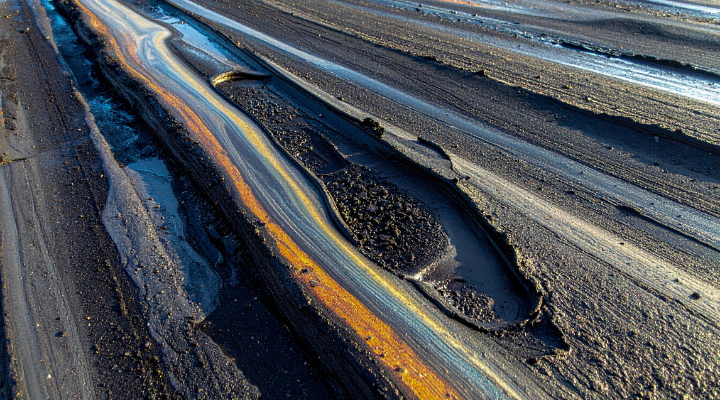
National Highways, the organisation responsible for England's strategic road network, takes a relatively pragmatic approach. Its own climate-resilience work acknowledges that asphalt can soften, rut and, in extreme circumstances, melt. Road-surface temperatures can be substantially higher than the air temperature: this summer National Highways recorded a surface temperature event of 59.4°C, while noting that road surface temperatures around 50°C can occur even when air temperatures are ‘only’ approaching 30°C.
The response is therefore principally one of surveillance and intervention rather than assuming that the entire network is at risk.
National Highways says its traffic officers and control-room teams monitor the network closely during prolonged hot weather. Where exceptionally high temperatures cause tarmac to soften, lanes can be closed, if necessary, with repairs carried out as quickly as possible.
That may sound unspectacular, but it represents an important engineering principle: don't wait for failure.
The organisation is also trying to make the pavement itself more resilient. Its research programme includes long-life binders, recycled asphalt, bio-binders, graphene additives and other materials intended to improve pavement performance. Warm-mix asphalt, produced at temperatures up to 40°C below conventional asphalt, also offers a wider and safer working window for maintenance crews.
The technology is not confined to the material. Digital asset information, traffic monitoring, control-room systems and increasingly sophisticated road-condition data allow operators to identify problems and manage traffic around them.
But when a section of carriageway finally fails, the solution remains gloriously analogue: close the lane, remove the damaged material, bring in fresh aggregate and asphalt, compact it and reopen the road.
“When a section of carriageway finally fails, the solution remains gloriously analogue: close the lane, remove the damaged material, bring in fresh aggregate and asphalt, compact it and reopen the road”
Records show that National Highways spent £4.5bn (€5.2bn) on existing strategic road network assets during the 2020-25 investment period, resurfacing around 8,500 km of road. That is an indication of the scale of the underlying maintenance challenge, although the organisation does not publish a separate "2026 heat damage" bill.
France: From information technology to white roads
France offers an even more interesting picture because responsibility is divided between national and local authorities, while major concessionaires such as VINCI Autoroutes operate extensive motorway networks, unlike the UK and Switzerland, for example, where the management of trunk roads is not undertaken by a single entity.
During the June 2026 heat emergency, virtually the whole VINCI Autoroutes network was covered by red or orange heat alerts. VINCI responded with intensified traffic information through its control centres, Radio VINCI Autoroutes, roadside information points and digital channels, while advising drivers to travel outside the hottest parts of the day and carry sufficient water.
For traffic engineers, this is an important distinction: heat management is not simply pavement management. It is network management.
The operator can alter the information environment around a hazardous event even when it cannot alter the weather. Drivers can be warned, journeys can be shifted, traffic can be monitored and interventions can be coordinated.
“The operator can alter the information environment around a hazardous event even when it cannot alter the weather”
But some of the most visually striking engineering responses came from French departmental road authorities.
In Maine-et-Loire road crews began spreading lait de chaux, or lime milk, over vulnerable road sections. The white coating reflects sunlight and reduces the temperature of the pavement. The department reported pavement temperatures exceeding 60°C, with bitumen bleeding to the surface once temperatures exceeded 50°C. The treatment reduces the risk of a slippery surface and prevents further loss of the wearing course.
The same technique was reported in the Lot department, where a tanker carrying 1,000 litres of lime milk and a separate water tank was used to treat asphalt during the heatwave.
It is a wonderfully simple example of adaptation: sophisticated traffic-management systems at one end of the operation, and a white coating on black asphalt at the other.
VINCI Autoroutes, meanwhile, was already undertaking major planned pavement-renewal programmes. On the A7 between Orange and Avignon, 45km of carriageway were scheduled for rehabilitation between January and June 2026, involving traffic switches and occasional interchange closures.
The price of such interventions is substantial. A VINCI Autoroutes A51 resurfacing programme in the Alps, for example, involved more than 30km of pavement and cost €8.5m. The project incorporated up to 50% recycled aggregate in the new layers and reused all the reclaimed asphalt from the work.
That illustrates another lesson of hotter summers: resilience, maintenance and decarbonisation increasingly must be designed together.
Switzerland: In-built resilience
Switzerland's response is perhaps the most revealing because its Federal Roads Office, FEDRO/ASTRA, has spent years addressing temperature-related pavement performance.
Swiss motorways are not simply being "saved" when a heatwave arrives. The aim is to build pavements that are less likely to fail in the first place.
“Swiss motorways are not simply being "saved" when a heatwave arrives. The aim is to build pavements that are less likely to fail in the first place”
ASTRA says modern Swiss motorway surfaces have used polymer-modified binders in the upper three centimetres for around 15 years. The modification improves resistance to both low and high temperatures. Its own engineers emphasise that modern motorway surfaces generally do not simply "melt" during hot weather.
But 2026 demonstrated that resilience has limits.
On the A13 in the Rhine Valley, an older concrete-pavement section suffered a spectacular heat-related "blow-up" in May. The pavement buckled upwards, creating a ramp-like deformation that destroyed two cars which hit it at speed. The road was closed overnight while heavy equipment repaired the damaged section, allowing normal commuter traffic to resume the following morning.
Further heat damage occurred on the same A13 in June. ASTRA said the problem was associated with older concrete slabs and indicated that additional measures were being examined.
This is where technology meets lifecycle management. ASTRA's response was not merely emergency repair. The affected section was already scheduled for a larger rehabilitation project, illustrating the value of condition monitoring and planned renewal before climate-related failure becomes routine.
Switzerland is also unusually strong on the research side. FEDRO has funded research into pavement performance under extreme temperature changes, including laboratory testing, full-scale heavy-traffic simulation and modelling intended to identify high-risk areas and support pavement-material selection.
The real lesson: resilience is a system
Across Europe, the response to extreme heat is therefore becoming a layered system.
There is materials technology: polymer-modified binders, warm mixes, recycled asphalt and longer-life surfaces.
There is condition monitoring: sensors, inspections, asset databases and increasingly sophisticated prediction.
There is traffic technology: variable messaging, control centres, journey information, lane management and digital traveller services.
And then there is the final layer: human intervention.
When the pavement has finally failed, somebody still has to close the lane, put out the cones, bring in the machinery and shovel the aggregate.
Perhaps that is the most useful lesson for Europe's traffic engineers. The future highway will undoubtedly be more intelligent, more instrumented and more climate resilient. But resilience will not mean eliminating the maintenance crew. It will mean giving that crew better information, better materials, and a better opportunity to intervene before a small defect becomes a major network disruption.
“The future highway will undoubtedly be more intelligent, more instrumented and more climate resilient. But resilience will not mean eliminating the maintenance crew”
The challenge for the next generation of European road authorities is consequently not to find a magical asphalt that can never soften. The challenge is to build networks that are intelligent enough to know when they are approaching the limit and resilient enough to keep traffic moving when they eventually reach it.
If weather scientists are to be believed, and why wouldn’t they, then the record temperatures seen all over Europe in the summer of 2026 are likely to be surpassed in 2027 - but those responsible for the maintenance of our roadways are doing everything they can to ensure our cars, vans, trucks and buses don’t get stuck to the surface.
Share your story
Do you have an innovation, research results or an other interesting topic you would like to share with the professionals in the infrastructure, traffic management, safety, smart mobility and parking industry? The Intertraffic website and social media channels are a great platform to showcase your stories!
Please contact our Sr Brand Marketing Manager Carola Jansen-Young.
Are you an Intertraffic exhibitor?
Make sure you add your latest press releases to your Company Profile in the Exhibitor Portal for free exposure.


Get up to speed on the mobility industry - our newsletter straight to your inbox!