

A new approach to old beliefs: Monotch and BMW publish hard-hitting C-ITS whitepaper
BMW and Intertraffic Award winners Monotch have come together to publish a joint whitepaper titled “Paradigm Neutrality vs Technology Neutrality - A New Approach to Old Beliefs,” that makes a heartfelt plea for a ‘fundamental rethink’ of the deployment of Cooperative Intelligent Transport Systems (C-ITS).
The strategic partnership sees the BMW Group provide the perspective of a major automotive OEM, focusing on how connected vehicles interact with their environment, while Monotch utilises its TLEX Interchange platform, a bi-directional data exchange engine that acts as the "backbone" for digital infrastructure by connecting road users, authorities, and cars in real-time. The alliance offered a fresh perspective on how to move forward and is designed to create a blueprint for the next decade of mobility by aligning vehicle technology with smart city infrastructure, with the stated objective of unifying the currently fragmented C-ITS rollouts across Europe and beyond.
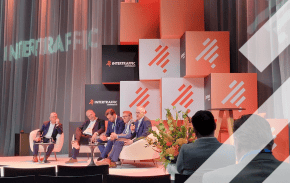
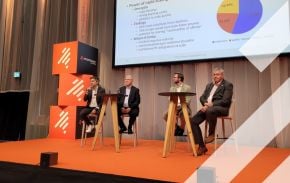
The argument that was introduced by Monotch’s Menno Malta and BMW’s Reinhurd Jurk at a dedicated Intertraffic Amsterdam 2026 Summit session in Theatre 3 was that without structural change, current models will fail to deliver the expected and much-anticipated transformative results within the next decade.
“It’s not as if C-ITS suffers from a lack of innovation,” said Malta, CEO and founder of Monotch. “It suffers from an implementation model that prioritises technological alignment over measurable impact. If we want real improvements in the next decade, we have to focus on outcomes and user value. Paradigm neutrality enables pragmatic architectural choices without locking the ecosystem into a single pathway.”
Over 20 years of well-meaning policy initiatives, standards development and significant investment in Cooperative ITS, the white paper says, has seen widespread adoption of solutions remain fragmented (and best) and system-level impact ‘limited’. As for prevalent obstacles to progress, the paper suggests that it is largely due to what it calls deployment logic, not technological maturity.
Jurk, BMW’s senior expert automotive cloud at BMW, commented:
“A paradigm-neutral framework preserves interoperability and innovation flexibility while enabling cooperative services to deliver tangible benefits today. It aligns infrastructure, vehicles and cloud intelligence around shared objectives rather than predefined technical models.”
In addition to arguing for a "paradigm neutral" approach, focusing on the strategic positioning of infrastructure and data rather than just incremental technical optimisations, Malta and Jurk also highlighted the importance of scalability, showing how both public authorities and private industry can achieve immediate, measurable impacts on safety and traffic flow.
Hence, says Malta, BMW and Monotch introduced the concept of “paradigm neutrality”, a framework that begins with clearly defined outcomes such as improved safety, traffic efficiency and user experience, before applying the most effective combination of backend-based data exchange, sensor intelligence and direct communication technologies. The approach prioritises measurable results over adherence to technical doctrine.
This alliance is designed to create a blueprint for the next decade of mobility. By aligning vehicle technology with smart city infrastructure, they seek to solve fragmentation in C-ITS rollouts across Europe and beyond.
Share your story
Do you have an innovation, research results or an other interesting topic you would like to share with the professionals in the infrastructure, traffic management, safety, smart mobility and parking industry? The Intertraffic website and social media channels are a great platform to showcase your stories!
Please contact our Sr Brand Marketing Manager Carola Jansen-Young.
Are you an Intertraffic exhibitor?
Make sure you add your latest press releases to your Company Profile in the Exhibitor Portal for free exposure.

Get up to speed on the mobility industry - our newsletter straight to your inbox!