
.png?h=400&iar=0&w=1400)
The slow science of trust
Europe on Autopilot: how three autonomous mobility pioneers are shaping the continent’s driverless future
There’s a familiar cinematic anger in the way the future of transport has been promised and postponed.
For years the conversation about autonomous vehicles in Europe hovered between utopian headlines and regulatory caution. Now, quietly and occasionally spectacularly, a new generation of companies is turning prototypes into working machines embedded in cities, airports and fleets. Three companies embody that shift perfectly: Aurrigo International, Oxa (formerly Oxbotica) and Waymo (not to dismiss the efforts of other autonomous mobility specialists).
Each one represents a different strand of Europe’s autonomy ecosystem: hardware and operations, software and verification, and the global robotaxi dream that’s finally touching European tarmac.
Aurrigo: airports as autonomy’s pragmatic proving ground
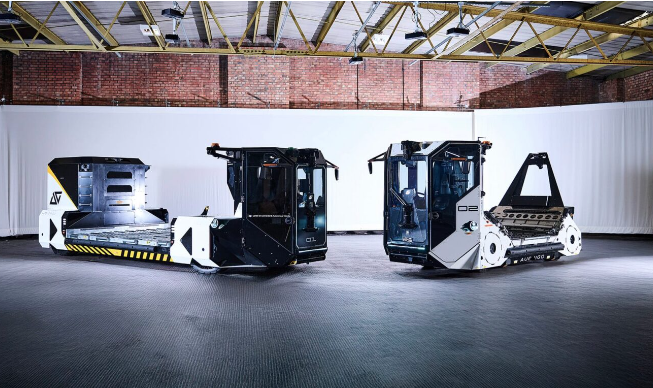
Coventry’s Aurrigo International has taken a practical, industrial view of autonomy: focus on well-bounded environments where the technology can deliver immediate cost and safety benefits. Rather than promising citywide driverless fleets overnight, Aurrigo has built small, purpose-built vehicles for airports and industrial sites, shuttles, tugs and cargo movers, and packaged them into scalable operations. In 2025 the company launched an international licensing and hub programme designed to scale its airport solutions globally, signalling a shift from bespoke pilots (in the project sense of the word) to a capital-efficient roll-out model that several airports are already trialling.
''Rather than promising citywide driverless fleets overnight, Aurrigo has built small, purpose-built vehicles for airports and industrial sites, shuttles, tugs and cargo movers, and packaged them into scalable operations"
That commercial pragmatism is visible in the machines themselves. Aurrigo’s latest auto-cargo system, an autonomous airside vehicle for moving heavy loads between aircraft and logistics hubs, debuted internationally with a focus on obstacle detection, fleet coordination and integration with existing ground-handling workflows. The approach is proving persuasive to airports and carriers that judge success in throughput and downtime rather than in press coverage.
Why airports? They combine constricted geography, repeatable routes and high-value operations. By proving autonomy where the variables are constrained, Aurrigo is able to turn reliability into a marketable asset, and make a persuasive business case for replacing routine human tasks with supervised automation.
Indeed, it has been an extremely busy and productive few months for Aurrigo International plc, with a major partnership with Swissport recently announced that will see the company conduct its first-ever global pilot of autonomous ground handling technologies at Zurich Airport, marking an important step in Swissport’s determination to be a pioneer in next-generation intelligent Ground Service Equipment (iGSE). This follows on from a funding round that raised £14.1m to accelerate growth, identify larger manufacturing facilities and increase its technical and manufacturing teams.
Oxa: software, simulation and the slow science of trust
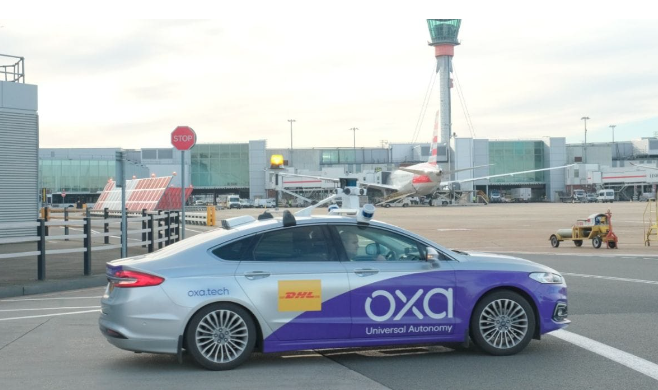
If Aurrigo is the engineer behind the gate, Oxa is the software brain that wants to make any vehicle “self-driving, anywhere, at any time.” Born from the Oxford robotics ecosystem (it was formerly Oxbotica), Oxa has followed a research-driven arc: rigorous simulation, conservative safety envelopes and a relentless focus on verification. That conservatism has paid reputational dividends. Oxa’s work has included Europe’s first zero-occupancy fully autonomous on-road journey, a milestone that demonstrated safe operation in public environments without a safety operator in the vehicle.
''Oxa has followed a research-driven arc: rigorous simulation, conservative safety envelopes and a relentless focus on verification''
Beyond the transport media headlines, Oxa has invested in the invisible but crucial art of assurance. The company has been experimenting with generative AI to stress-test autonomy stacks in virtual environments, enabling route mapping and failure-mode exploration without needing to wait for rare real-world edge cases to occur. In 2024 the firm also won industry recognition for trust and transparency, an award that underlines a central truth about autonomy today: public acceptance will track not just capability but explainability.
Oxa’s ambition is systemic. If you can decouple the autonomy software from a particular vehicle and prove it in high-fidelity simulation, you lower the cost and time for operators to adopt autonomy. That’s attractive to logistics companies, local authorities and specialist vehicle makers who want a tested autonomy OS rather than a bespoke engineering project.
Oxa is building the future of Industrial Mobility Automation (IMA), where self-driving technology tackles the most pressing challenges facing logistics and manufacturing. Integrating NVIDIA Cosmos World Foundation Models into its Oxa Foundry development framework means it can leverage Cosmos to more quickly generate and test driving scenarios - cutting both time and cost compared to real-world testing. This marks a major step toward speeding up the commercial rollout of Oxa’s technology in the US$2 trillion Industrial Mobility Automation market.
Waymo: the robotaxi arrives in Europe (finally)
Waymo, the Silicon Valley giant born inside Google, has long been the benchmark for fully autonomous urban mobility. It amassed prodigious data, built purpose-designed sensor rigs and proved that large-scale, fully driverless ride-hailing could operate reliably in select US cities. For years Europe watched from the sidelines as regulatory regimes, road topologies and public attitudes made the continent a more complex place to deploy. That’s changing: in October 2025 Waymo announced plans to expand to London with driverless, no-human-behind-the-wheel ride-hailing services slated to start in 2026 - a landmark moment that brings one of autonomy’s most ambitious commercial models to European streets.
''In October 2025 Waymo announced plans to expand to London with driverless, no-human-behind-the-wheel ride-hailing services slated to start in 2026 - a landmark moment that brings one of autonomy’s most ambitious commercial models to European streets''
Why London? Its dense demand for ride-hailing, relatively mature regulatory engagement and a vibrant public transport ecosystem make it a logical testbed for a robotaxi product that must operate alongside trains, buses and taxis. Waymo’s move is also symbolic: large, safety-conscious operators bringing robotaxis to European megacities signals that the conversation has moved from “if” to “how fast” and “under what rules.”
What these achievements add up to
Taken together, the work of these three firms sketches a credible industrial roadmap for Europe’s autonomy sector. Aurrigo demonstrates that focused, mission-critical applications (airside logistics, shuttles) can unlock revenue early. Oxa shows how software rigor, virtual testing and transparency can reduce risk and accelerate deployment across vehicle types. And Waymo proves that the business model of fully autonomous ride-hailing, the high-volume, consumer-facing endgame, is prepared to cross the Atlantic and adapt to European regulatory and urban realities.
There’s an important political dimension as well. European regulators have been cautious but not obstructionist: pilots and carefully framed trials are encouraged, and public procurement at airports and ports can move faster than municipal politics. That dynamic lets industrial players stitch together pilots, standards and public trust before scaling.
''There’s an important political dimension as well. European regulators have been cautious but not obstructionist: pilots and carefully framed trials are encouraged, and public procurement at airports and ports can move faster than municipal politics''
The path from proof-of-concept to mass adoption is very seldom linear. Technical challenges remain, edge cases in perception, weather resilience and safe human-vehicle interaction and societal questions about jobs, data and urban design still need answers. But the present phase is different from the hype cycles of a decade ago. Companies are now selling solutions to paying customers, integrating with legacy systems and openly demonstrating safety cases in public forums.
For Europe specifically, the next wave will be integration: software like Oxa’s needs to be certified against shared standards; operational players like Aurrigo must demonstrate interoperable fleet management; and platform operators like Waymo will need to work closely with cities and transport agencies to complement (and not cannibalise) existing mobility networks.
A cautious optimism
If the last decade was about imagination and prototype, the next 10 years look set to be more about craftsmanship and regulation. The wins are incremental but meaningful: automated tugs moving cargo across runways; verified autonomy stacks proving themselves in simulation and on roads; and internationally scaled robotaxis preparing to weave into city life.
Each of those advances chips away at the old binary, driver-operated versus driverless argument, in favour of a multidimensional reality where autonomy is a layered ecosystem of hardware, software, operations and policy.
In that ecosystem, Aurrigo, Oxa and Waymo are playing complementary roles - the kind that, when combined, could genuinely reshape how Europe moves people and goods. The question now is not whether autonomous vehicles will matter in this continent’s transport future, but how equitably and safely that future will be built.
Share your story
Do you have an innovation, research results or an other interesting topic you would like to share with the professionals in the infrastructure, traffic management, safety, smart mobility and parking industry? The Intertraffic website and social media channels are a great platform to showcase your stories!
Please contact our Sr Brand Marketing Manager Carola Jansen-Young.
Are you an Intertraffic exhibitor?
Make sure you add your latest press releases to your Company Profile in the Exhibitor Portal for free exposure.

Get up to speed on the mobility industry - our newsletter straight to your inbox!