
The lift to experience
Visitors to Intertraffic Amsterdam’s 2026 edition are cordially invited to take a ride into the… present. Autonomous Vehicles are no longer representative of the future, they are the here and now, and the new levels of automated innovation can be seen first-hand during the week of 10-13 March.
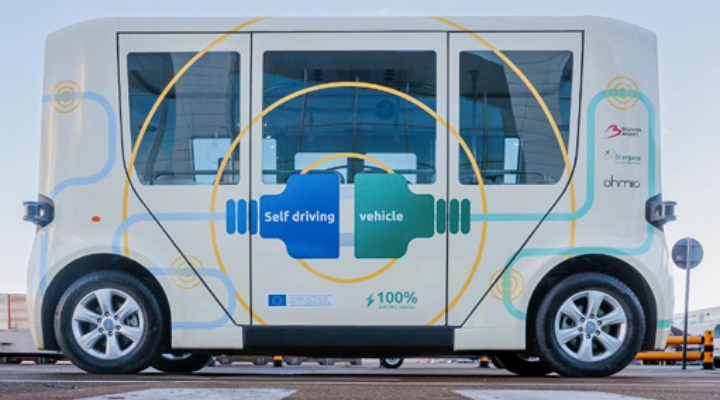
Ohmio, one of the companies at the forefront of the AV revolution, will be demonstrating their autonomous shuttle, in the outdoor environs of the RAI – Joost Ortjens, Ohmio’s Director EMEA and Corporate Development, tells us what we can expect from a customer experience point of view and what it means for the future of driverless vehicles.
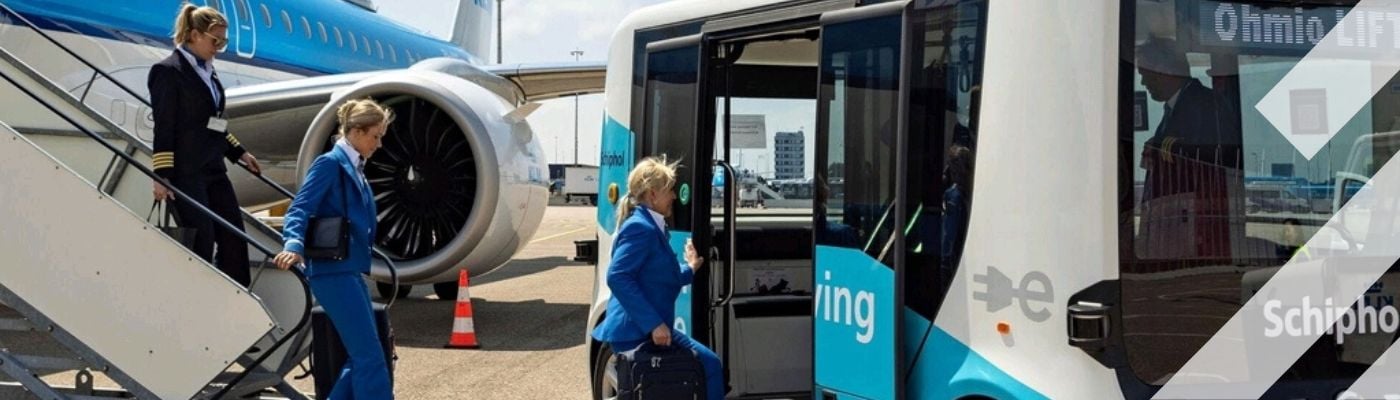
“Firstly, it’s a 16-person capacity shuttle, as you would find at some of the airports we work with,” he explains. “We have worked with Schiphol, Brussels, and JFK, Newark and Riverside in the US, as examples. I don’t want to give away too much, but in April we are going to do something that we haven’t done before, but it’ll be a milestone with an additional layer of intelligence and autonomy.”
Source: Ohmio
Focus for now, though, is on the logistics of setting up a week of shuttle demos at Intertraffic – and providing visitors with a meaningful experience. So, we asked Ortjens, what’s the thinking behind the demos, what can visitors expect and what problem does an autonomous shuttle such as LIFT solve?
“If you are going to downsize a large bus, you basically cut it into three, four or five pieces. You would have a lot of advantages because the vehicles get smaller and you serve a certain line more frequently and you can easily go into towns with little streets and cobblestones because your fantastic, fully electric vehicle is smaller. But,” he insists, “you would need five drivers instead of one. So per passenger, you're going to increase costs tremendously.
"If you operated five smaller buses instead of one large one you would have a lot of advantages because with smaller vehicles you can serve a certain line more frequently and you can easily go into towns with little streets and cobblestones because your fantastic, fully electric vehicle is smaller. You would, however, need five drivers…"
“And it gets even worse if you offer an on-demand service which means if there's nobody that needs the service, the bus stops and it's parked somewhere. So, downsizing and on-demand mobility with a small shuttle is practically impossible to do because it's so expensive unless you remove the driver. You take the driver out of the equation, and you automate it. Then,” he says, “you have solved the key problem of downsizing large vehicles to something that's much more practical to go into cities and operate on demand. And that is basically what we do.”
FIRST & LAST & ALWAYS
This is the perfect definition of the term “last mile”. But, as Ortjens adds, it's more than that.
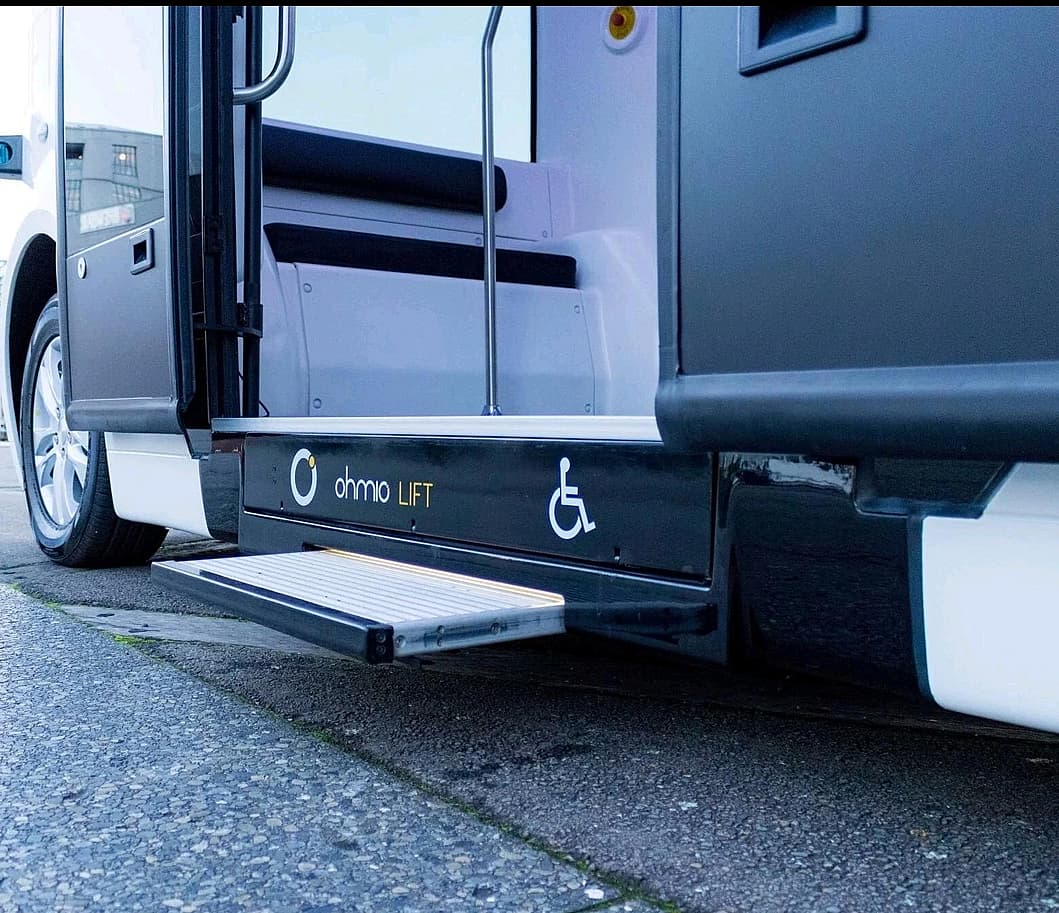
“It’s first mile as well as last mile, because we are not intending to pick up passengers and take them 30km. We pick up passengers at, for instance, a train station and take them to a building or an office nearby. This could be elderly people, or mobility impaired – anyone that has a problem with the first or last mile of their journey. We developed a vehicle for these people, and this is exactly what we are going to show at Intertraffic.”
"It’s first mile as well as last mile, because we are not intending to pick up passengers and take them 30km. We pick them up at a train station and take them to a building or an office nearby"
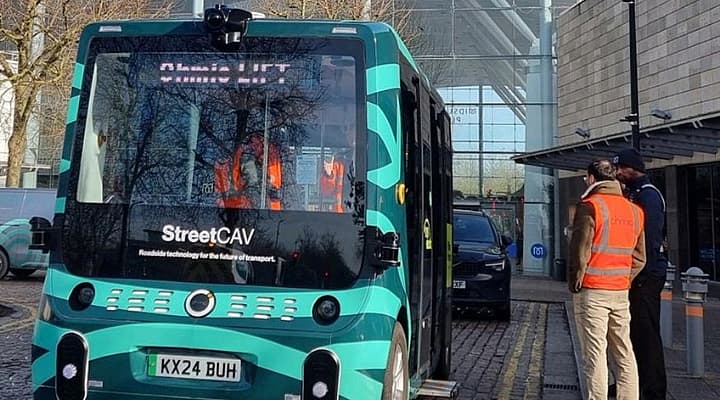
The demo circuit that the shuttle will drive is deliberately not overly complicated, but it is designed to show visitors what it is capable of.
Share your story
Do you have an innovation, research results or an other interesting topic you would like to share with the professionals in the infrastructure, traffic management, safety, smart mobility and parking industry? The Intertraffic website and social media channels are a great platform to showcase your stories!
Please contact our Sr Brand Marketing Manager Carola Jansen-Young.
Are you an Intertraffic exhibitor?
Make sure you add your latest press releases to your Company Profile in the Exhibitor Portal for free exposure.
Get up to speed on the mobility industry - our newsletter straight to your inbox!