

Mobility champions: What Europe and South America can teach us about smart travel
For decades, urban transport policy focused on one overriding objective: moving cars as efficiently as possible. Today, some of the world's most innovative cities are pursuing an altogether different goal. Rather than asking ‘how do we accommodate ever-increasing traffic’, they are asking how to make driving the option people need least often.
The most successful "mobility champions" in Europe and South America are proving that smart mobility is about much more than just the technology. Smartphone apps and digital ticketing systems matter, of course, but the real breakthrough comes when public transport, cycling and walking become easier, cheaper and more convenient than reaching for the car keys.
Intertraffic takes a brief look at how three European cities and three South American counterparts are proving how this can be achieved.
Copenhagen: Making Cycling the Obvious Choice
.png)
Source: CasadPhotop
Few cities have become as synonymous with active travel as Copenhagen. More than a transport strategy, cycling has become part of the city's DNA.
"Few cities have become as synonymous with active travel as Copenhagen. More than a transport strategy, cycling has become part of the city's DNA"
What makes Copenhagen remarkable is that its success has not relied on persuading its citizens to make travel ‘sacrifices’. Instead, it has invested heavily in making cycling the most logical option for short and medium-distance journeys. Dedicated cycle superhighways with separated bike lanes, cyclist-prioritised junctions and secure parking facilities create a network that feels safe and efficient.
Technology supports the system through traffic-signal coordination, journey-planning tools and real-time travel information, but the real innovation is behavioural. Residents are subtly encouraged to cycle because it is often the fastest way to travel across the city.
Rather than attempting to change attitudes first, Copenhagen changed the very experience of getting around and the attitudes followed.
Vienna: Public Transport as a Public Service
Source: Meinzahn
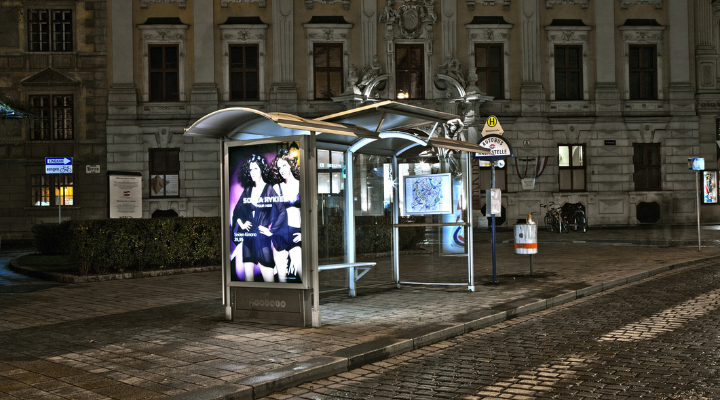
Vienna has become one of Europe's most admired public transport cities by focusing relentlessly on affordability and simplicity.
The Austrian capital's annual transit pass, offered at a highly accessible price, transformed public transport from an occasional purchase into an everyday utility. Combined with extensive tram, metro and bus networks, the result is a system that residents can depend upon for almost every journey.
Vienna's approach demonstrates an important lesson in smart mobility: convenience frequently outweighs technology. While digital ticketing and passenger information systems play a role, the city has concentrated on reducing the mental effort required to use public transport.
"Vienna's approach demonstrates an important lesson in smart mobility: convenience frequently outweighs technology"
People do not necessarily need complex incentives. When a transport system is reliable, affordable and available, it becomes the default choice.
Helsinki: The Mobility-as-a-Service Pioneer

Source: G Bruev
If Copenhagen represents infrastructure and Vienna represents accessibility, Helsinki showcases digital integration.
The Finnish capital, consistently leads the Oliver Wyman Forum Urban Mobility Readiness Index for future readiness due to its highly reliable rail networks, modern cycling infrastructure and promotion of connected vehicles, became internationally known for pioneering the concept of Mobility-as-a-Service (MaaS). The idea is simple but transformative: instead of owning a car, citizens gain access to a range of transport options through a single digital platform.
Journey planning, ticket purchasing, bike hire, public transport and shared mobility services can all be managed through one interface. Users can compare modes, costs and travel times in real time.
"The behavioural shift is subtle but powerful. Citizens are not told to stop driving; they are shown easier alternatives"
The significance extends beyond convenience. By presenting mobility as a service rather than a collection of separate transport systems, Helsinki encourages residents to think less about vehicle ownership and more about access.
The behavioural shift is subtle but powerful. Citizens are not told to stop driving; they are shown easier alternatives.
Bogotá: Reclaiming Streets for People
Source: Felzum
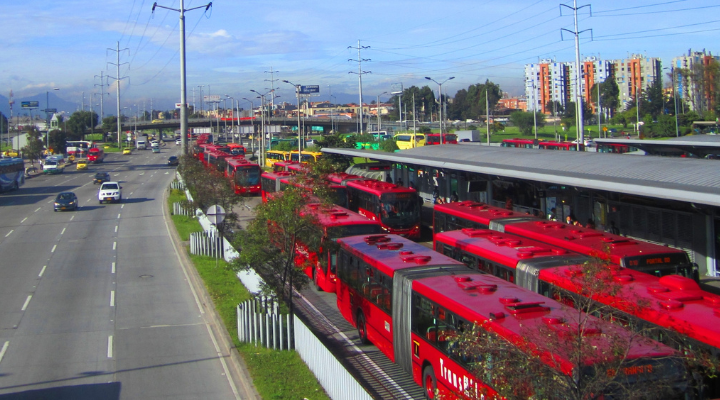
Across the Atlantic, Bogotá has become one of the most influential mobility laboratories in the developing world.
The Colombian capital's Bus Rapid Transit network transformed public transport by delivering metro-like performance at a fraction of the cost. Dedicated lanes allow buses to avoid congestion, making journeys faster and more predictable.
"The Colombian capital's Bus Rapid Transit network transformed public transport by delivering metro-like performance at a fraction of the cost."
Equally important has been the city's investment in cycling infrastructure and its famous Ciclovía programme, which closes major roads to motor vehicles on designated days and opens them to cyclists, runners and pedestrians.
These initiatives create something often overlooked in transport policy: cultural change. Citizens experience their city differently when streets are designed for people rather than vehicles.
Bogotá's success illustrates how smart mobility can be as much about social innovation as digital innovation.
Curitiba: The Original Innovator
Source: Paulo Nabas
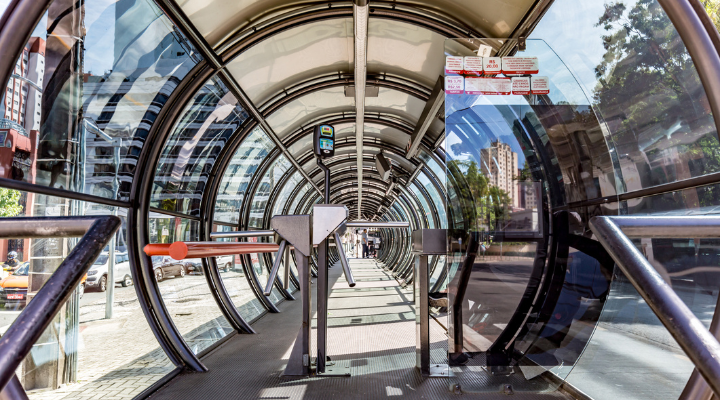
Long before "smart cities" became a global trend, the Brazilian city of Curitiba was experimenting with integrated urban mobility.
Curitiba pioneered many of the principles later adopted around the world, including high-capacity bus corridors, integrated ticketing and land-use planning aligned with transport infrastructure.
"Curitiba pioneered many of the principles later adopted around the world, including high-capacity bus corridors, integrated ticketing and land-use planning aligned with transport infrastructure."
What remains impressive is the holistic nature of Curitiba's approach. Transport planning is not treated as a standalone activity but as part of a wider strategy for urban development.
Residents are encouraged to choose public transport because routes are efficient, transfers are straightforward, and services are closely connected to where people live and work.
The lesson is clear: smart mobility works best when transport, housing and city planning operate together.
Santiago: Connecting the Mobility Ecosystem

Source: Mariana Ianovska
The Chilean capital Santiago has emerged as one of South America's leaders in transport integration and digital mobility.
The city has modernised its public transport system through unified payment platforms, smart ticketing and increasingly sophisticated passenger information systems. Metro, buses and other transport services operate as parts of a connected network rather than separate entities.
Real-time information helps passengers make informed decisions, while integrated fares reduce barriers between transport modes.
Santiago's approach highlights a key evolution in mobility policy. Success is no longer measured solely by the performance of individual transport services but by how seamlessly they work together.
"For users, the experience feels less like navigating a transport network and more like accessing a mobility service."
Beyond Technology
What unites all six cities, from Finland to Chile, is that technology alone is not driving change - far from it.
Smartphone apps, contactless payments and real-time information are valuable tools, but they are not the primary reason people opt to leave their cars at home. The most successful mobility champions combine digital innovation with infrastructure, pricing, urban design and behavioural insight.
In every case, the strategy is broadly the same: make sustainable travel easier, faster, cheaper or more enjoyable than driving. Or, if and where possible, a heady cocktail of all four.
"The most successful mobility champions combine digital innovation with infrastructure, pricing, urban design and behavioural insight."
That represents a significant shift from traditional transport policy. Instead of attempting to force behavioural change, these cities have redesigned the conditions under which travel and transport decisions are made.
The result is a model of smart mobility that relies less on persuasion and more on practicality. When the alternatives are genuinely better, people do not need to be nudged towards them or gradually convinced. They simply make that choice themselves.

Get up to speed on the mobility industry - our newsletter straight to your inbox!