

“It’s alright, we’ve got you.” How Arrive are writing a new mobility chapter
Arrive’s modus operandi is to make travelling through cities and countries as easy as possible, harnessing existing mobility data to give cities the insight and tools to make better decisions – but how does the new and expanded multi-layered organization facilitate turning the snappy marketing soundbites into seamless practice? Kevin Borras delves into the group’s innovative inner workings with CEO Cameron Clayton
There’s an old saying about collective thinking – two heads are often better than one. In the urban mobility sphere, Arrive is setting out to prove that it most certainly applies to its group of innovative brand leaders. After all, every journey ends in an arrival, and Arrive is simplifying that experience for everyone.
In June of 2025, the EasyPark Group, the renowned provider of digital parking and mobility solutions, rebranded and expanded its offerings under the new corporate name Arrive. As of the rebrand Arrive consists of, or rather brings together, well known mobility brands, EasyPark, Flowbird, ParkMobile, Parkopedia and RingGo, with a number of others, notably Your Parking Space and Yellowbrick, part of the group’s broader, expanding, global mobility portfolio.
The collection of market-leading brands may well have their roots in several different countries, but they are all adhering to the shared purpose of making cities more livable. The mission: to build the world’s leading global mobility platform to ease movements in cities.
“The new corporate identity mirrors Arrives' entire portfolio” says Arrive’s CEO, Cameron Clayton. “Our combined ability to address mobility on multiple fronts means we’re better positioned than ever before to truly improve the way people travel, the way businesses operate, and the way cities think about mobility.
"Our combined ability to address mobility on multiple fronts means we’re better positioned than ever before to truly improve the way people travel"
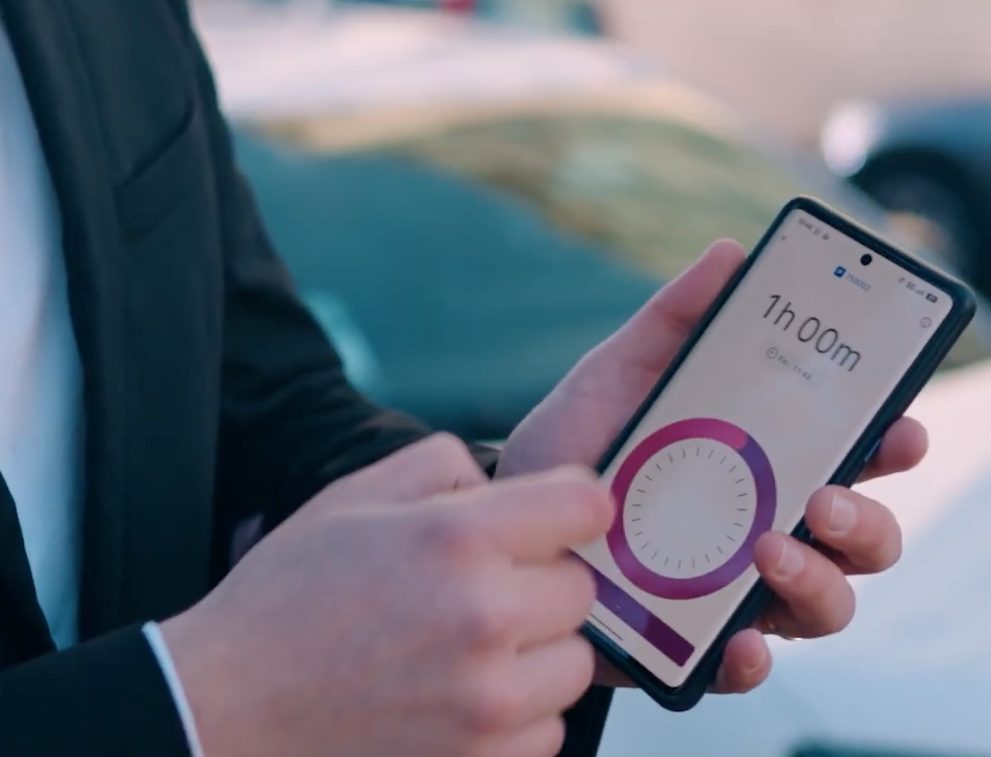
“Part of our strategy is connected infrastructure”, continues Clayton. “We have so many points from which we can collect data. From pay and display machines on the streets and our mobile parking payment apps to ticketing machines and Open Payment validators for public transport.
(Source: Arrive)
“Through our insights team and evolving platforms, Arrive can act as a single point of reference where a city can come to engage with all of its data. This is empowering operators, decision makers and businesses to make smarter urban mobility decisions, easing travel and improving urban life for everyone.”
ACTIONS & INSIGHTS
The concept of unified mobility data will give cities a clearer, more actionable view of how supply and demand interact across their networks. These insights can be used effectively to ensure that policy changes create a balanced, sustainable mobility ecosystem and by bringing these solutions together under one “roof” the concept has been made entirely tangible and feasible.
New developments recently announced in London act as a sign of how the smart mobility sector is using technology to improve targeted parts of movement in cities, something that Arrive is right at the heart of in its own areas of expertise.
Says Clayton: “Transport for London has just announced they're going to be bringing in more AI-powered cameras to ease bus and active travel congestion. I see that as a good proof point of a city saying: ‘Here's how we can use technology to improve our inhabitants’ lives by making buses run more smoothly’ . That's fundamentally what we do at Arrive. We have a whole host of technology all in different bits of the city.
“The apps, the connected infrastructure, connected parking meters and so on can all help cities identify how and where parking is working and how and where it isn't. So we can get to the optimal 80% parking density in a city, which reduces the number of cars circling to find somewhere to park” he continues.
"The apps, the connected infrastructure, connected parking meters and so on can all help cities identify how and where parking is working and how and where it isn't"
“Cars circling is a big part of the traffic in cities, so tackling it is extremely beneficial. Similarly, we have technology that's improving off-street parking structures, the idea being if you make that experience more appealing, by making it ticketless and with automated payment, you make that more inviting, you have fewer people parking on the street and cities can free up space. We offer that on several markets globally already and will continue to expand and develop our solutions this year as well.”
MORE THAN PARKING
“We are making it easier to move around cities. In a lot of cities you can end up with three apps just to pay for the metro with your phone,” Clayton explains.“One to buy the ticket, one to turn your phone into an NFC device and one for the actual journey. That's where we come in. We have the data, we have the technology - if you optimize it, you make the whole experience better.”
(Source: Arrive)
PUZZLING-SOLVING ON A GLOBAL SCALE
What Arrive is doing, perhaps oversimplifying things, is solving a mobility challenge. The different aspects of Arrive’s solution portfolio solves different parts of the mobility challenge. The mission is to be a mostly invisible network that ensures travellers can move, swapping modes smoothly and seamlessly, emerging where and when they are needed and fading in to the background where and when they aren’t.
So what other challenges are there for mobility solution providers? And how are you addressing those challenges?
“The Parkopedia team recently demoed an indoor mapping solution at the Consumer Electronics Show in January" responds Clayton. “They have mapped about 1000 parking structures across Europe, and you can have a full 3D map of an indoor multi storey car park that you don't need GPS to navigate through. The car is able to guide you through it without GPS. That's a great example of how that technology is developing.
(Source: Arrive)
“That's a more driver focused solution” he adds, “and it's also integrating with existing systems. One thing we talk about is accessibility and providing the best payment path for whatever you're doing in the city and in parking, for example, that looks different depending on who the end user is.”
"One thing we talk about is accessibility and providing the best payment path for whatever you're doing in the city and in parking, for example, that looks different depending on who the end user is."
THE FRICTION-FREE JOURNEY
One of Arrive’s strengths lies in its ability to provide telling, actionable answers to ultra-smart mobility questions.
“If you're an urban professional, your car might automate the whole process itself. You don't even have to get the app out. It's in your car you pull up, it knows you've pulled up in an EasyPark, ParkMobile or a RingGo location. It starts the session and ends it when you leave. It's a totally seamless process. Providing that friction-free customer experience is absolutely key to the mobility ecosystem.”
So how would the ‘ideal world’ mobility ecosystem function? What can it do that the current iteration cannot? Is it, Intertraffic wonders, a non-intrusive constant travel companion, always on hand when you need it?
“Ideally you should only need one service to get from point A to point B,” answers Clayton. “You should not have to think about the different segments. In that perfect world we appear where you need us, whether it’s EasyPark, RingGo or ParkMobile - otherwise we're in the background, enabling the system, and you don't necessarily know that we're behind it, but we are. We’re saying, essentially: ‘it’s alright. We’ve got you.’”
“An important part of this is also that we provide cities with the insights on how to make mobility smooth within cities. One size does not fit all, but we can see what it all means through the insights that we have. We can also see what works best for a city depending on what kind of people are living in it. Not every city is fully digital. Cities are complex entities, consisting of a series of systems that affect each other, but are not Always connected. These systems generate data but data on its own is just noise. We are building a global mobility platform to turn data into actionable insights, intelligent workflows and tools so we can succeed in making cities more livable.”
"In that perfect world we emerge where you need us, whether it’s EasyPark, RingGo or ParkMobile - otherwise we're in the background, enabling the system, and you don't necessarily know that we're behind it"
FROM INSIGHT TO FORESIGHT
Arrive is focused on delivering a single unified platform that helps cities see, understand, and improve every mobility asset, to harness the richness of a city’s mobility data. The next step is to turn that data not only into insight, but into foresight, regardless of what kind of system is being managed – parking, transport, payments, automotive or, ultimately, a full mobility ecosystem.
Cities will prioritize digitization to gain a clearer view of the mobility patterns behind daily fluctuations and by capturing more comprehensive, longitudinal data, they will be better equipped to establish demand over time.
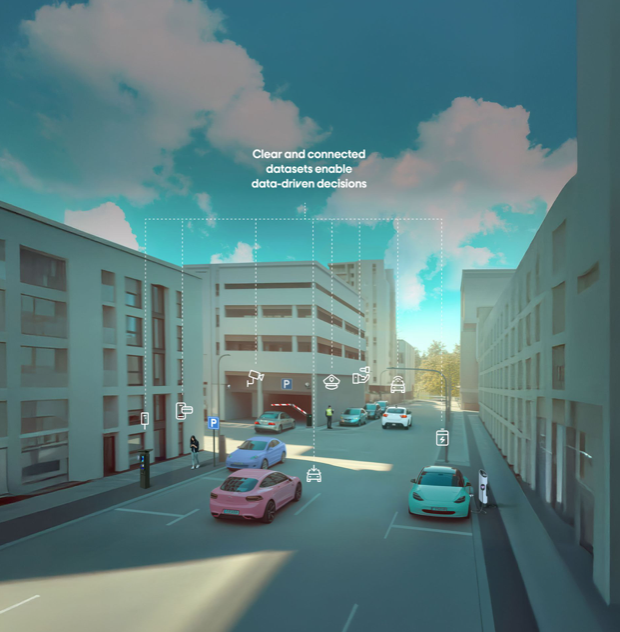
With clearer, connected datasets, cities will be able to make more data-driven decisions. This will strengthen their ability to use aggregated, trend-based insights to develop policies around long-term mobility patterns rather than temporary spikes.
And, as AI becomes more powerful and widely used, the demand for accurate, representative data will continue to grow. This will allow city planners to model the long-term impact of policy changes in a controlled, reliable environment before they are introduced in the real world.

(Source: Arrive)
“Our Mobility Compass highlights the shifts already shaping the future of mobility,” says Cameron Clayton, in conclusion. “It shows a world where connected systems, data-based insights, and more integrated services will help cities create a smarter mobility ecosystem. From Open Market [recognised as a smarter, joined-up, competitive approach to parking and mobility] to advances in parking, transport, data, payments, automotive, AI, and cybersecurity, these insights show what will shape the next era of urban mobility.
"Our mobility outlook highlights the shifts already shaping the future of mobility,” says Cameron Clayton, in conclusion. “It shows a world where connected systems, data-based insights, and more integrated services will help cities create a smarter mobility ecosystem"
“And as these changes gain momentum, we’re ready to harness them, using smarter, integrated solutions to help cities and operators create systems that are inclusive, efficient, and built to last. So we’re not just imagining the future, we’re leading it. We’re building the foundation for a future where every arrival is simpler, faster, and seamless, because travel is more than a journey. It’s how you arrive.”
Share your story
Do you have an innovation, research results or an other interesting topic you would like to share with the professionals in the infrastructure, traffic management, safety, smart mobility and parking industry? The Intertraffic website and social media channels are a great platform to showcase your stories!
Please contact our Sr Brand Marketing Manager Carola Jansen-Young.
Are you an Intertraffic exhibitor?
Make sure you add your latest press releases to your Company Profile in the Exhibitor Portal for free exposure.

Get up to speed on the mobility industry - our newsletter straight to your inbox!