
Two campaigns, one goal: Making the UK's roads safer for everyone
Road Safety Week and Roadworker Safety Week are shining a spotlight on two inextricably linked challenges: protecting those who use the UK’s road network and those who work on it.
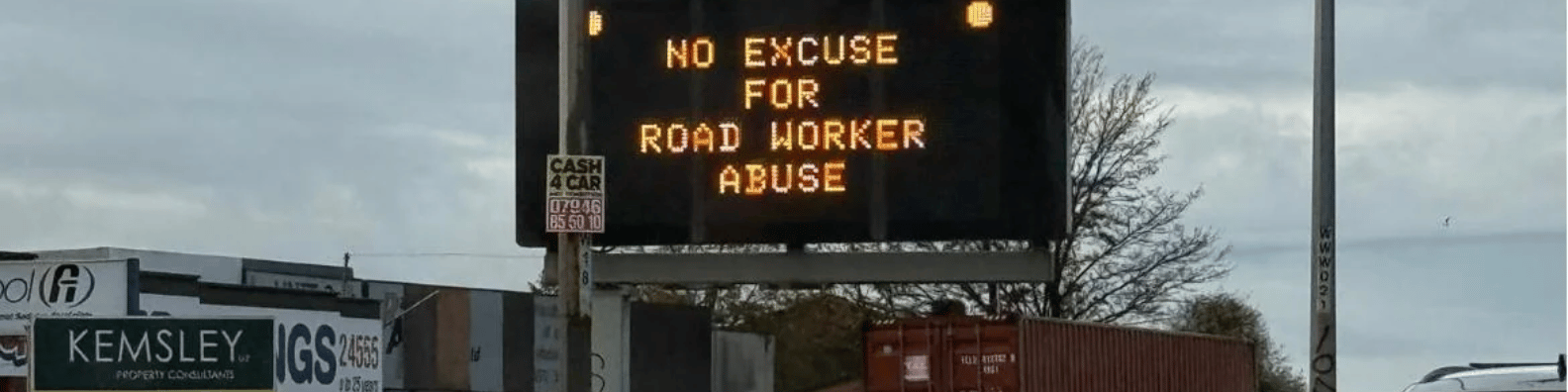
This week sees the focus turn to two important campaigns with a common goal: making the UK's roads safer for everyone who uses them. Although organised independently and addressing different aspects of road safety, Brake's Road Safety Week and Roadworker Safety Week, led by the Incursions Working Group (IWG) and No Excuse for Roadworker Abuse (NEFRA), highlight issues that are inextricably linked.
For Europe's transport and highways industries, the message is an important one. Road safety cannot be considered solely in terms of preventing collisions between vehicles, cyclists and pedestrians. It must also encompass the people who build, maintain and improve the infrastructure on which everyone depends.
Both campaigns are seeking to change attitudes and behaviours, encourage greater responsibility and turn awareness into practical action.
Putting people at the heart of road safety
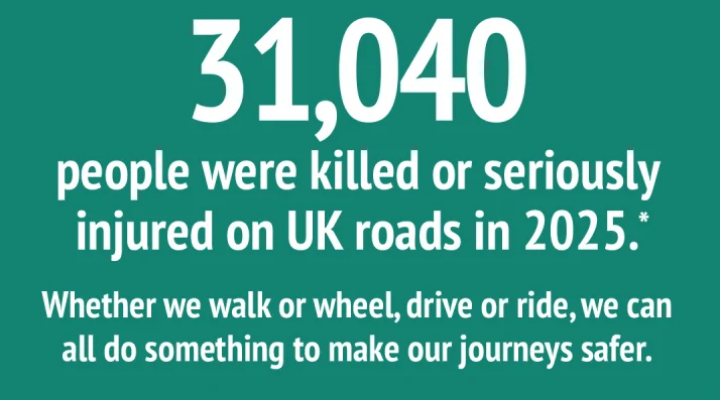
Running from 15–21 November, Road Safety Week is organised annually by Brake, the road safety charity. It is one of the UK's largest annual road safety awareness campaigns, bringing together thousands of schools, businesses, emergency services, community groups and individuals.
This year's theme, 'Safe People on the Move', focuses on the responsibility everyone has to help make roads safer, whether walking, wheeling, cycling, riding or driving.
For Europe's transport and highways industries, the message is an important one. Road safety cannot be considered solely in terms of preventing collisions between vehicles, cyclists and pedestrians
The campaign reinforces an important principle of the UK's Highway Code: those who have the potential to cause the greatest harm have the greatest responsibility to protect more vulnerable road users.
Brake is encouraging people to think about how their behaviour affects others, from driving speeds and distractions to the risks faced by pedestrians and cyclists. It is also highlighting the importance of modern technology, safer driving practices and the need to create environments in which people can travel with confidence.
A central part of the campaign is the opportunity to share experiences of road crashes and their consequences. Behind every casualty statistic is an individual, a family and a community affected by what can be a life-changing event.
Brake's work also extends beyond awareness-raising. Through its campaign, the charity is calling on government and other stakeholders to commit to measures that prevent road deaths and serious injuries.
Its free campaign resources include educational materials for schools, toolkits for employers, videos, infographics and webinars addressing issues such as speed, distraction and driver fatigue.
The wider objective is to make road safety an everyday consideration rather than something that receives attention only following a serious incident.
Protecting the people working on our roads
Running from 16–20 November, Roadworker Safety Week addresses another important dimension of road safety: the risks faced by people working on or alongside the UK's road network.
The wider objective is to make road safety an everyday consideration rather than something that receives attention only following a serious incident.
The initiative is being driven jointly by the Incursions Working Group (IWG) and No Excuse for Roadworker Abuse (NEFRA), two industry groups with complementary objectives.
The IWG was established in 2017 and brings together around 50 organisations, including highway authorities, contractors, traffic management companies, designers, technology providers and other industry suppliers.
Its work centres on understanding and preventing vehicle incursions into roadworks, where motorists enter restricted areas and put workers at risk. This includes analysing incidents, sharing experience, developing guidance and assessing technologies that could provide better protection.
The scale of the problem is considerable. The group has collected approximately 25,000 incursion records relating to strategic roads in England since its establishment. Its 2025 survey found that 94% of responding roadworkers had witnessed an incursion.
National Highways recorded 1,633 incursions on England's motorways and major A-roads during 2025. More recent figures also show that 53% of the 814 incidents recorded between January and July 2026 involved motorists entering restricted areas to gain an advantage, often by seeking a shortcut around queues.
These are not simply breaches of traffic management arrangements. They represent potentially life-threatening situations for people working just metres away from moving traffic.
National Highways recorded 1,633 roadworks incursions on England's motorways and major A-roads during 2025. More recent figures also show that 53% of the 814 incidents recorded between January and July 2026 involved motorists entering restricted areas to gain an advantage, often by seeking a shortcut around queues.
The IWG is encouraging the industry to share information and learn from incidents, while also examining how roadworks can be designed and planned to reduce exposure to live traffic in the first place. Technology, improved traffic management, warning systems and vehicle mitigation measures all have a role to play.
No excuse for abuse
Alongside the physical dangers posed by vehicle incursions, Roadworker Safety Week is highlighting the unacceptable behaviour experienced by people working on the network.
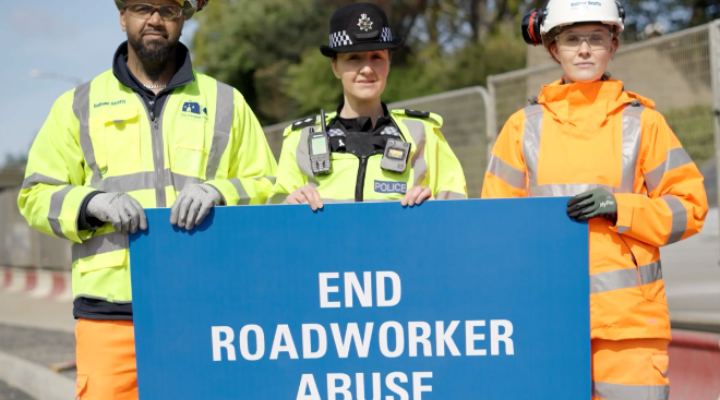
NEFRA (No Excuse for Roadworker Abuse) is bringing together clients, contractors, supply chain partners, workforce representatives and industry bodies to tackle verbal abuse, threats, intimidation and physical aggression directed at roadworkers and traffic officers.
Its ambition is to eliminate roadworker abuse, improve reporting and establish a stronger evidence base to support changes in public behaviour and industry practice.
Importantly, abuse is not restricted to physical assaults. Aggressive driving, threatening language, intimidation and deliberately ignoring traffic management measures can all create an environment in which workers feel unsafe, even when nobody is physically injured.
NEFRA is promoting consistent incident reporting through its RAISE reporting initiative, helping the industry understand the extent of the problem and build a stronger case for action.
The message is that roadworkers have the same right to safety, dignity and respect at work as anyone else. Being subjected to abuse or intimidation should never be regarded as an inevitable part of the job.
The message is that roadworkers have the same right to safety, dignity and respect at work as anyone else. Being subjected to abuse or intimidation should never be regarded as an inevitable part of the job.
Paula Parsons, Chair of NEFRA, says that “Between June and July, we opened a survey to the industry on the subject of abuse, because we know we’re not seeing the full extent of the reporting.
“We had a phenomenal response with just under 1,000 people taking part in the survey. Abuse is becoming the norm. Over 80% of road workers have experienced verbal abuse while they’ve been at work, with over 15% of those abused every week or more often than once a week. Almost half of those surveyors experience threats of intimidation, and 33%, so a third of those, have had objects thrown at them, with a quarter of them experiencing some sort of aggression.
“The confidence in reporting remains lacklustre, I would say, and I think that’s because the perception is that if we report it, it’s not going to lead to any action. Around 43% of those who undertook the survey said ‘we get abused, but we don’t actually report it’. That is one of the things that we need to change.”
Turning awareness into action
Roadworker Safety Week 2026 has a five-day programme designed to move beyond simply highlighting the problem.
Day one focused on AI and technology, including the launch of a revision to Raising the Bar guidance. Day two concentrated on empowering reporting and the importance of collecting evidence promptly following incidents. Wednesday, day three, is earmarked to address prosecutions and the role of police evidence, including video footage.
Day four turns attention to planning and conflict avoidance, examining how better site design and preparation can reduce the likelihood of confrontations and dangerous situations, while Friday focuses on workforce wellbeing and support for colleagues affected by abuse.
The programme reflects the breadth of the challenge. Protecting roadworkers requires a combination of engineering, technology, effective planning, enforcement, education and a change in public attitudes.
A shared responsibility
Although Road Safety Week and Roadworker Safety Week have different organisers and distinct areas of focus, their messages are closely connected.
A safer road network is one where pedestrians and cyclists can travel without fear, drivers understand their responsibilities, and those undertaking essential construction and maintenance work can do so without being exposed to unacceptable risks.
For the wider European highways and transport technology community, the UK's campaigns provide a useful reminder that investment in safer infrastructure must go hand in hand with investment in people, behaviour and working practices.
Technology can help. Better vehicle safety systems, intelligent traffic management, improved roadworks protection and more effective incident reporting all have the potential to reduce risk. But technology alone cannot compensate for irresponsible behaviour or a lack of consideration for others.
NEFRA’s Paul Parsons concludes: “Around 80% of the people surveyed said they have seen their colleagues being abused and 13% of those surveyed have considered leaving the industry because of the abuse that they’re seeing.”
Ultimately, road safety is a shared responsibility. The people travelling on the network and the people working to keep it operational are part of the same transport ecosystem.
The two campaigns may be separate, but their underlying ambition is identical: to ensure that everyone who uses or works on our roads has the opportunity to get home safely at the end of the day.
Share your story
Do you have an innovation, research results or an other interesting topic you would like to share with the professionals in the infrastructure, traffic management, safety, smart mobility and parking industry? The Intertraffic website and social media channels are a great platform to showcase your stories!
Please contact our Sr Brand Marketing Manager Carola Jansen-Young.
Are you an Intertraffic exhibitor?
Make sure you add your latest press releases to your Company Profile in the Exhibitor Portal for free exposure.



Get up to speed on the mobility industry - our newsletter straight to your inbox!