
Predict and prevent: how AI traffic intelligence is reshaping road safety
The UK Government has just published the latest road casualty statistics for 2025 and they offer a familiar mixture of progress and frustration. Fatalities on Britain’s roads have edged downward again, yet the overall number of people killed or seriously injured remains stubbornly high. At the same time, 3000km away in Greece, UK-based Valerann has secured a major motorway deployment for its AI-powered traffic management platform, Lanternn. Those two stories are inextricably linked. Or at least they could be.

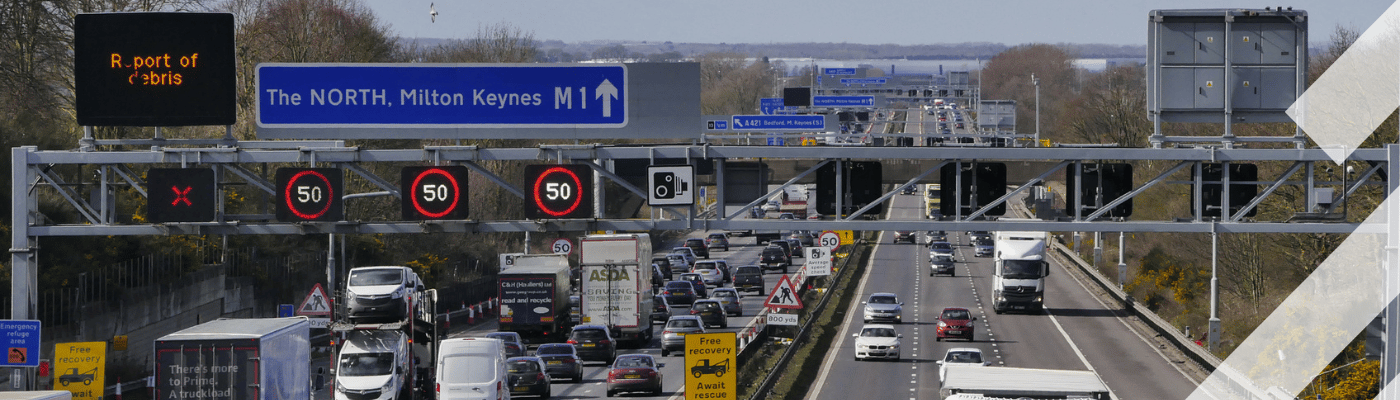
Source: Dimitry Dedyukhin
Viewed separately, the two developments are routine industry news. Together, however, they tell a much bigger story about the future of road safety, one in which artificial intelligence, data fusion and predictive analytics are becoming central tools in the effort to reduce accidents before they happen.
“Physical infrastructure upgrades, enforcement and driver education remain vital, but increasingly the sector is looking toward real-time intelligence systems capable not merely of responding to incidents, but of anticipating them”
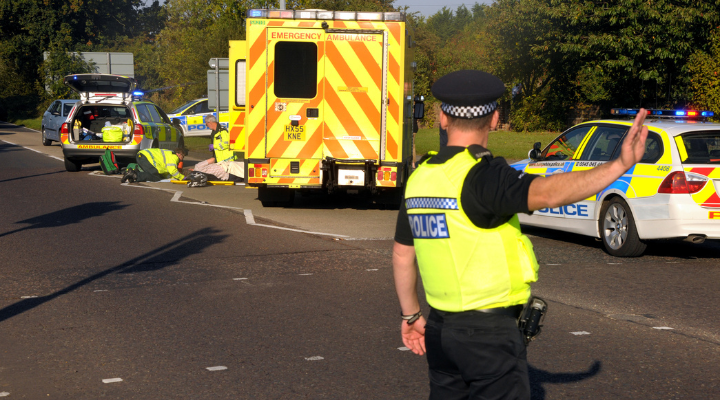
According to the Department for Transport’s provisional figures for the year ending June 2025, Great Britain recorded 1,579 road fatalities and nearly 30,000 killed or seriously injured (KSI) casualties. While fatalities fell by 3% year-on-year, the broader trend remains relatively flat, continuing a decade-long plateau in serious road harm. Particularly concerning, though, was a rise in motorcyclist deaths, which increased 14% compared with the previous year.
REAL-TIME INTELLIGENCE
For transport authorities and motorway operators, these figures reinforce a growing consensus: traditional road safety measures alone are no longer sufficient. Physical infrastructure upgrades, enforcement and driver education remain vital, but increasingly the sector is looking toward real-time intelligence systems capable not merely of responding to incidents, but of anticipating them.
Source: Martin Brayley
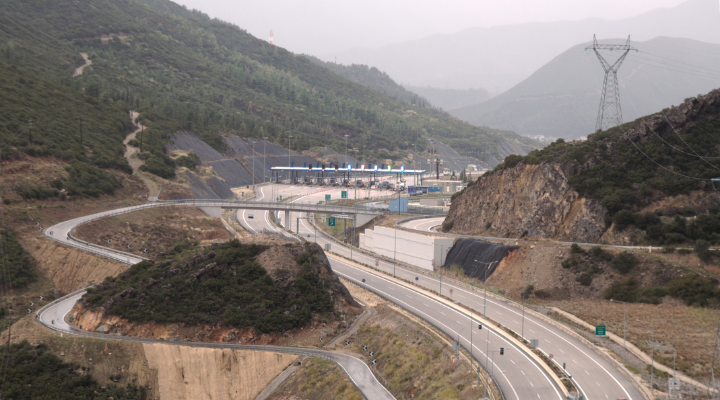
That is precisely the direction being pursued by Valerann, whose Lanternn platform has now been deployed on Greece’s Ionia Odos motorway corridor. The project marks the first AI-driven motorway traffic management deployment of its kind in the country and represents another milestone in the rapid evolution of predictive traffic operations.
The significance of the Greek deployment extends beyond a single motorway. It reflects how the intelligent transport systems (ITS) sector is shifting from isolated data collection toward integrated, AI-powered operational ecosystems.
Historically, motorway operators relied on fragmented streams of information: CCTV feeds, inductive loops, weather stations, emergency calls and operator observations. While effective to a point, these systems often created delayed or incomplete situational awareness. Operators could identify an incident once congestion had already formed, but they struggled to detect developing risks in real time.
AI-powered data fusion changes that equation entirely.
“Machine learning algorithms identify anomalies based on previously learned patterns, predict traffic instability and flag emerging safety risks before they escalate into full incidents”
PREDICT & SURVIVE
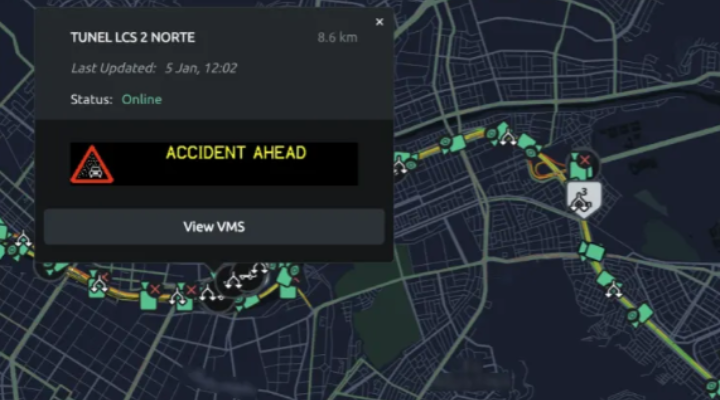
Platforms such as Lanternn aggregate and analyse in real-time multiple live inputs, including roadside sensors, floating vehicle data, navigation applications, weather feeds and camera analytics, into a unified operational layer. Machine learning algorithms then identify anomalies based on previously learned patterns, predict traffic instability and flag emerging safety risks before they escalate into full incidents.
Source: Valerann
The implications for road safety are profound.
A sudden drop in average vehicle speed on a motorway section, combined with deteriorating weather conditions and irregular lane-changing behaviour, may indicate an elevated crash probability minutes before any collision occurs. Instead of dispatching responders only after a queue forms, operators can proactively activate variable message signs, adjust speed harmonisation systems, or alert patrol units in advance.
This evolution from reactive management to predictive intervention is increasingly viewed as one of the most important developments in modern traffic operations.
It also arrives at a critical moment for Europe’s transport networks. Across the EU, preliminary 2025 road fatality figures showed approximately 19,400 deaths: a 3% reduction compared with 2024, but still far from the bloc’s long-term Vision Zero ambitions.
The challenge isn’t just reducing average congestion - it’s identifying precisely where risk accumulates within complex and dynamic road environments.
“Emerging AI frameworks are now capable of combining sparse detector information with floating vehicle data to produce highly accurate network-wide traffic state predictions, even when sensing infrastructure is incomplete”
PRACTICAL CONSEQUENCES
Artificial intelligence excels in that domain because traffic patterns are inherently probabilistic. Congestion waves, driver behaviour, weather conditions and incident chains all interact simultaneously. Human operators can monitor portions of this ecosystem, but AI systems look at the situation holistically, continuously processing thousands of variables across entire motorway corridors in real time.
Recent academic research into multi-source traffic inference highlights the increasing sophistication of these systems. Emerging AI frameworks are now capable of combining sparse detector information with floating vehicle data to produce highly accurate network-wide traffic state predictions, even when sensing infrastructure is incomplete.
For road operators, that capability has practical operational consequences.
Motorway control centres traditionally faced a difficult trade-off: either invest heavily in dense physical infrastructure networks or accept blind spots in coverage. AI-driven inference models reduce that dependency by extracting richer insights from existing infrastructure. In effect, software intelligence becomes a force multiplier for physical assets.
This is particularly relevant in countries such as the UK, where major motorway networks already contain extensive but ageing ITS infrastructure. Rather than replacing entire roadside systems, operators can increasingly layer AI analytics over existing assets to improve performance and safety outcomes, complementing with available data from crowdsourced applications, navigation apps and historical data.
Source: Jonathan Mitchell
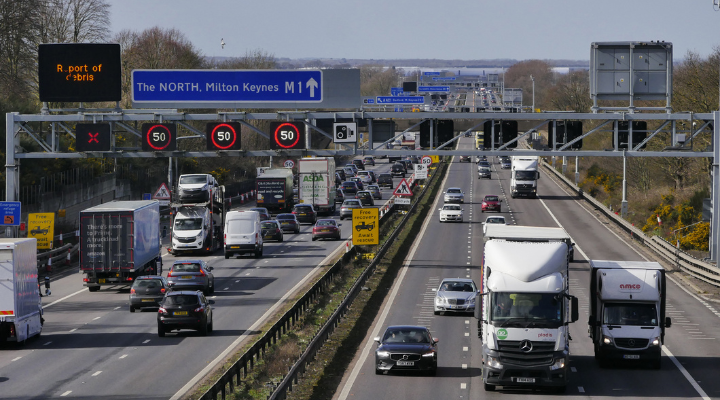
The UK’s own experience with smart motorways illustrates both the opportunities and the sensitivities involved. Over the past decade, dynamic lane management, variable speed limits and stopped-vehicle detection technologies have transformed sections of the strategic road network. Yet public debate around safety has also intensified, especially concerning incident detection reliability and emergency response times.
AI-based predictive systems may help address some of those concerns by significantly reducing detection latency and improving operational awareness. Instead of relying solely on fixed infrastructure alerts, operators can validate incidents through multiple converging data streams simultaneously.
“Over the past decade, dynamic lane management, variable speed limits and stopped-vehicle detection technologies have transformed sections of the strategic road network, yet public debate around safety has also intensified”
This multi-layered intelligence approach is becoming increasingly attractive for motorway concessionaires and transport ministries alike.
MANAGING MOTORWAY MOMENTUM
In Greece, the Ionia Odos deployment forms part of a broader push toward digitally connected transport corridors across southern Europe. The motorway itself plays a strategic logistical role, linking key ports and freight routes along the European E65 corridor. By integrating AI-powered operational management, motorway authorities are aiming not only to improve safety but also to enhance resilience, reduce congestion-related emissions and optimise incident response coordination.
The commercial momentum behind such systems is accelerating rapidly.
It’s worth noting that in 2025, Valerann also secured a €3.6 million European Space Agency-supported contract to develop an AI-enabled network-wide road traffic monitoring platform using satellite and terrestrial data sources. The initiative reflects a growing industry movement toward combining connected infrastructure with space-based observation technologies to achieve nationwide traffic intelligence capabilities.
Source: Filippos Nikolakopoulos
The rationale behind the use of satellites to harmonise data and to be able to have data exchange in low coverage areas is quite straightforward. Traditional roadside systems provide highly localised visibility, while satellite and connected vehicle data can deliver broader network context. Combined through AI fusion engines, these layers create a more comprehensive operational picture.
The result is a transport ecosystem increasingly defined not by isolated infrastructure assets, but by interoperable streams of data intelligence.
THE NAME OF THE GAIN
For policymakers reviewing the UK’s latest casualty figures, this transition raises important strategic questions. If fatalities and serious injuries have plateaued despite decades of conventional intervention, where will the next major safety gains come from?
The answer may lie less in concrete and steel, and more in predictive digital infrastructure.
That does not mean AI alone will solve the road safety challenge. Data quality, interoperability, cybersecurity and governance all remain critical concerns. Predictive systems also require careful operational validation to avoid false positives or over-reliance on automation.
“AI alone will not solve the road safety challenge. Predictive systems require careful operational validation to avoid false positives or over-reliance on automation”
Nevertheless, the direction of travel is becoming increasingly clear.
Road operators are no longer satisfied with understanding what has already happened on their networks. They want to know what is happening now and increasingly, what is likely to happen next.
As Britain analyses another year of casualty statistics and Greece rolls out a new generation of AI-enabled motorway operations, the connection between the two becomes unmistakable. One story highlights the enduring scale of the road safety challenge. The other points toward the technologies that may finally begin to change the trajectory.
In the intelligent transport sector, prediction is rapidly becoming prevention.
Share your story
Do you have an innovation, research results or an other interesting topic you would like to share with the professionals in the infrastructure, traffic management, safety, smart mobility and parking industry? The Intertraffic website and social media channels are a great platform to showcase your stories!
Please contact our Sr Brand Marketing Manager Carola Jansen-Young.
Are you an Intertraffic exhibitor?
Make sure you add your latest press releases to your Company Profile in the Exhibitor Portal for free exposure.


Get up to speed on the mobility industry - our newsletter straight to your inbox!